Crime

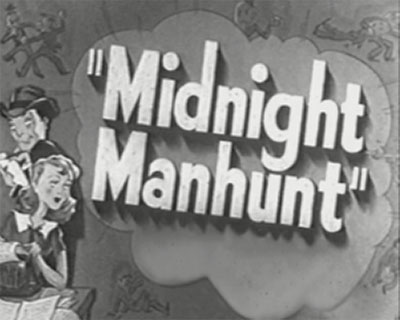
Midnight Manhunt (1945)

4/5 (2)

“Midnight Manhunt” is a mystery-thriller film directed by William C. Thomas and released in 1945. The movie follows the story of a manhunt for a killer who is on the loose in a large city.

The film’s protagonist is James A. Brooks (William Gargan), a private detective who is hired to investigate the murder of a famous actor. The police believe that the actor’s assistant, Steve Randall (George Zucco), is the killer and are actively searching for him.

As James investigates the case, he discovers that there may be more to the story than what the police initially believed. He begins to suspect that the killer may be someone else entirely and sets out to uncover the truth.

As the manhunt for Steve Randall intensifies, James races against the clock to solve the case before an innocent man is wrongfully convicted. Along the way, he encounters a cast of suspicious characters, including a shady nightclub owner and a femme fatale.

In the end, James is able to solve the case and catch the real killer, who is revealed to be someone unexpected. The film ends with James triumphant and the city safe once again.

Overall, “Midnight Manhunt” is a classic whodunit-style thriller that keeps the audience guessing until the very end. The film features a strong performance by William Gargan as the determined detective and a cast of memorable characters.

Directors:
William C. Thomas

Writer:
David Lang

Stars:
William Gargan, Ann Savage, Leo Gorcey

Rate this Movie

Baby Face Morgan (1942)

3/5 (1)

“Baby Face Morgan” is a 1942 crime drama film directed by Arthur Dreifuss and starring Richard Cromwell, Mary Carlisle, and Robert Armstrong. The film follows the story of an ambitious young man named Morgan (played by Cromwell), who rises through the ranks of organized crime to become a powerful gangster.

The film begins with Morgan as a teenager living in a small town. He is bored with his mundane life and dreams of becoming rich and famous. When a group of gangsters come to town, Morgan sees an opportunity to join their ranks and sets out to impress them with his toughness and quick thinking.

Morgan’s efforts pay off and he is recruited by the gangsters to work for them in the city. He quickly rises through the ranks, becoming a trusted member of the organization. Along the way, he becomes involved with a nightclub singer named Judy (played by Carlisle), who is also involved with the gang’s leader, Butch (played by Armstrong).

As Morgan’s power within the organization grows, he begins to clash with Butch, who sees him as a threat to his own leadership. The tension between the two men eventually leads to a violent confrontation, with Morgan emerging as the victor.

Despite his success, Morgan begins to realize the toll that his criminal lifestyle has taken on him and those around him. He begins to question his choices and the people he has aligned himself with, including Judy, who he learns has been using him for her own gain.

In the end, Morgan decides to turn his back on the criminal world and start anew. He leaves behind his former life and the people he once considered friends and allies, including Judy. The film ends with Morgan walking off into the distance, ready to start a new chapter in his life.

Overall, “Baby Face Morgan” is a classic example of the gangster film genre, exploring themes of power, ambition, and the corrupting influence of crime. The film features strong performances from its lead actors and a compelling storyline that keeps the audience engaged from start to finish.

Directors:
Arthur Dreifuss

Writer:
Edward Dein, Jack Rubin, Oscar Brodney

Stars:
Richard Cromwell, Mary Carlisle, Robert Armstrong

Rate this Movie

Behave Yourself (1951)

3/5 (1)

“Behave Yourself!” is a classic crime-comedy film from 1951 directed by George Beck and starring Farley Granger and Shelley Winters. The film revolves around a newlywed couple, Bill and Kate, who adopt a lost dog, but soon find themselves embroiled in a criminal conspiracy.

After bringing the dog home, the couple discovers that it was previously owned by a gangster, and its collar contains a valuable diamond. When the gangster comes looking for the dog, he mistakes Bill for a private detective and hires him to retrieve the diamond.

As Bill tries to solve the case, he encounters a variety of colorful characters, including a nightclub singer, a shady private detective, and a psychotic killer. Along the way, he and Kate find themselves in increasingly dangerous situations and must work together to outsmart the criminals and stay alive.

Despite the danger, the film is filled with comedic moments, particularly the interactions between the bumbling Bill and his witty wife Kate. Ultimately, the couple manages to solve the case and turn the tables on the criminals, ending the film on a satisfying note. “Behave Yourself!” is a charming and entertaining film that remains a classic of the crime-comedy genre.

Directors:
George Beck

Writer:
George Beck, Frank Tarloff

Stars:
Farley Granger, Shelley Winters, William Demarest

Rate this Movie

The Kid Sister (1945)

4/5 (2)

“The Kid Sister” is a romantic comedy film released in 1945, directed by Edward F. Cline and starring Jane Powell, Kent Taylor, and Edgar Bergen. The film follows the story of a young woman named Patricia (Jane Powell) who falls in love with her older sister’s fiancé, and the comedic mishaps that ensue.

The film begins with Patricia’s sister, Joan (played by Gloria DeHaven), announcing her engagement to her boyfriend, Richard (played by Kent Taylor). Patricia is excited for her sister, but soon begins to develop feelings for Richard herself.

As Patricia tries to hide her feelings, she inadvertently causes a series of misunderstandings and complications. She joins a dating service to find a new boyfriend, but ends up getting matched with Richard. Patricia then tries to sabotage their relationship, but her plans backfire and she ends up making a fool of herself.

Meanwhile, Edgar Bergen and his ventriloquist dummy Charlie McCarthy provide additional comedic relief as they try to help Patricia win Richard’s heart.

In the end, after a series of misunderstandings and mishaps, Patricia and Richard confess their love for each other, and Patricia’s sister graciously steps aside, allowing the couple to be together.

Overall, “The Kid Sister” is a lighthearted and charming romantic comedy that showcases the talents of Jane Powell and the comedic timing of Edgar Bergen and his famous dummy, Charlie McCarthy.

Directors:
Sam Newfield

Writer:
Fred Myton

Stars:
Roger Pryor, Judy Clark, Frank Jenks

Rate this Movie

Killer Dill (1947)

4/5 (2)

“Killer Dill” is a 1947 American crime comedy film directed by Lewis D. Collins and starring Stuart Erwin, Lionel Stander, and Ann Savage.

The movie follows the misadventures of two con artists, Harry (Stuart Erwin) and Willie (Lionel Stander), who come up with a scheme to cheat a wealthy businessman, J. Hamilton Gibbs (Frank Fenton), out of $15,000. The duo convinces Gibbs to invest in a fake oil well venture, promising him a huge return on his investment.

However, their plans are complicated when Harry falls in love with Gibbs’ daughter, Helen (Ann Savage), who is suspicious of the oil well venture and starts investigating it. As the two con artists try to cover their tracks and maintain their scheme, they become entangled in a web of lies, deceit, and murder.

As the movie progresses, the tension rises as Harry and Willie must use all their cunning and street smarts to avoid getting caught and stay alive. The movie reaches its climax with a dramatic showdown between the con artists and the law, and the final twist leaves the audience surprised.

Overall, “Killer Dill” is a classic crime comedy that showcases the talents of its lead actors and keeps the audience entertained with its clever plot twists and witty dialogue.

Directors:
Lewis D. Collins

Writer:
Alan Friedman, John O’Dea

Stars:
Stuart Erwin, Anne Gwynne, Frank Albertson

Rate this Movie

Charade (1953)

5/5 (1)

“Charade” is a 1953 American crime drama film directed by Roy Kellino and starring James Mason, Pamela Mason, and Robert Flemyng.

The film tells the story of a wealthy businessman named Charles Calvin (James Mason), who is found dead in his office under suspicious circumstances. Calvin’s wife, Lucy (Pamela Mason), becomes the prime suspect in the murder, and is forced to go on the run from the police and the real killer.

As Lucy tries to clear her name and solve the mystery of her husband’s death, she becomes entangled with a suave and mysterious stranger named Peter Joshua (Robert Flemyng). Joshua offers to help Lucy uncover the truth behind her husband’s murder, but as the two become closer, Lucy begins to suspect that Joshua may not be who he appears to be.

As Lucy navigates the dangerous world of espionage and deception, she must also confront her own past and the secrets that she has been keeping from those closest to her. In the end, Lucy is able to uncover the truth behind her husband’s murder and find a measure of closure, but not without paying a heavy price.

“Charade” is a gripping and suspenseful thriller that explores the themes of trust, betrayal, and the consequences of past actions. It features strong performances from its lead actors, and is notable for its stylish and sophisticated visuals, as well as its memorable score by composer Dimitri Tiomkin. The film has since become a classic of the film noir genre and a beloved example of mid-century Hollywood cinema.

Directors:
Stanley Donen

Writer:
Peter StoneMarc Behm

Stars:
Cary Grant, Audrey Hepburn, Walter Matthau

Rate this Movie

Nancy Drew… Reporter (1939)

4/5 (1)

“Nancy Drew… Reporter” is a 1939 American mystery film directed by William Clemens and starring Bonita Granville as the amateur sleuth Nancy Drew. The film follows Nancy Drew as she investigates a series of burglaries and tries to clear the name of a wrongly accused friend.

The story begins with Nancy Drew working as a journalist for a local newspaper. When a series of burglaries occur in the town, Nancy decides to investigate and write an article about the crimes. Her investigation leads her to suspect a local pawnbroker named Zephyr Jones, who has a history of shady dealings.

However, things become more complicated when Nancy’s friend and fellow journalist Ted Nickerson is wrongfully accused of the burglaries. Nancy is determined to clear Ted’s name and sets out to find evidence that will prove his innocence.

As Nancy delves deeper into the case, she uncovers a web of deceit and corruption involving some of the town’s most prominent citizens. With the help of her friends, including her loyal housekeeper Hannah Gruen and her boyfriend Ted, Nancy eventually solves the case and brings the real culprit to justice.

“Nancy Drew… Reporter” is a thrilling and suspenseful mystery film that captures the spirit of the popular book series. Bonita Granville delivers a charismatic and engaging performance as Nancy Drew, making the character a beloved icon of the mystery genre. The film also features a strong supporting cast and impressive production values for its time.

Directors:
William Clemens

Writer:
Kenneth Gamet, Carolyn Keene

Stars:
Bonita Granville, John Litel, Frankie Thomas

Rate this Movie

Double Exposure (1944)

3/5 (1)

“Double Exposure” is a 1944 film noir directed by William Berke. The film follows the story of a photographer named Chris Cross (played by Chester Morris), who is obsessed with a woman named Kitty March (played by Nancy Kelly). Chris’s obsession reaches dangerous levels when he accidentally takes a picture of a murder and Kitty becomes the prime suspect.

Chris, who has been using his camera to take pictures of Kitty without her knowledge, finds himself in a difficult situation when he realizes that the photo he took of the murder scene has also captured Kitty in the background. Chris decides to protect Kitty by manipulating the evidence, but his actions only make matters worse.

As the police investigation intensifies, Chris’s dark secrets are slowly revealed, and his mental instability is brought to light. Chris’s former lover, a woman named Adele (played by Constance Dowling), also resurfaces and becomes involved in the unfolding events.

Ultimately, the truth is revealed, and Chris is forced to confront the consequences of his actions. The film ends on a somber note, with Chris being led away by the police, his obsession with Kitty ultimately leading to his downfall.

Directors:
William Berke

Writer:
Winston Miller, Maxwell Shane, Ralph Graves

Stars:
Chester Morris, Nancy Kelly, Jane Farrar

Rate this Movie

Clipped Wings (1936)

3/5 (1)

“Clipped Wings” is a 1936 American drama film directed by Stuart Paton and starring Lloyd Hughes, Lois Wilson, and William Henry. The film tells the story of a group of pilots who are training for the National Air Races.

Hughes plays the lead role of Tom Gray, a talented pilot who is forced to quit flying after he suffers an injury during a competition. He takes a job as an aircraft mechanic and meets a young woman named Betty (Lois Wilson), who is also a pilot. The two fall in love, but their relationship is threatened by the jealousy of another pilot, Bob (William Henry).

The film features several exciting aerial scenes, as well as a romantic subplot and some dramatic moments. The story explores themes of perseverance, love, and competition, and is notable for its portrayal of the early days of aviation.

Overall, “Clipped Wings” is a well-crafted drama with solid performances from the cast. It offers a fascinating glimpse into the world of early aviation and the passion and determination of those who pursued their dreams of flight.

Directors:
Stuart Paton

Writer:
Paul Willett

Stars:
Lloyd Hughes, Rosalind Keith, William Janney

Rate this Movie

Bowery Blitzkrieg (1941)

3/5 (1)

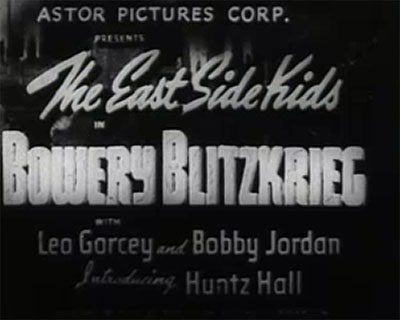
“Bowery Blitzkrieg” is a 1941 American film directed by Wallace Fox and starring the comedy team of the Bowery Boys. The film is a part of the popular “Bowery Boys” film series that was popular during the 1940s and 1950s.

The plot revolves around the Bowery Boys, led by their leader Muggs (Leo Gorcey), who get caught up in a scheme involving a crooked boxing promoter named “Longy” (Huntz Hall). Longy is involved in a plot to fix a boxing match and has hired a group of thugs to help him. The Bowery Boys are initially recruited to work for Longy, but they eventually realize that they are being used and decide to take matters into their own hands.

The film features a lot of physical comedy, slapstick humor, and some boxing action scenes. It also has some musical numbers and romantic subplots. The Bowery Boys’ chemistry and comedic timing are on full display in this film, and it is considered to be one of the better entries in the “Bowery Boys” series.

Directors:
Wallace Fox

Writer:
Brendan Wood, Donn Mullahy, Sam Robins

Stars:
Leo Gorcey, Bobby Jordan, Huntz Hall

Rate this Movie

Thunder in the City (1937)

3/5 (1)

“Thunder in the City” is a 1937 British film directed by Marion Gering and starring Edward G. Robinson and Nigel Bruce. The film follows the story of Dan Armstrong (Robinson), an American businessman who travels to Britain to convince the locals to invest in his new venture – a project to build a new type of aircraft.

Upon arriving in Britain, Armstrong is met with skepticism from the locals, who are wary of his brash American ways. However, he manages to win over some influential people, including Sir Christopher Strong (Bruce), a wealthy aristocrat with a passion for aviation. Together, they work to promote Armstrong’s new aircraft to the British public, but they face stiff competition from a rival company.

As Armstrong and Sir Christopher battle to win over investors, they also find themselves competing for the affections of Lady Edwina Esketh (Constance Bennett), a glamorous socialite who is torn between her love for Sir Christopher and her attraction to Armstrong.

The film explores themes of ambition, competition, and romance, and features some stunning aerial footage of early aviation. Although it received mixed reviews upon its release, “Thunder in the City” is now considered a classic example of British cinema from the 1930s, and it remains a popular choice for fans of vintage movies.

Directors:
Marion Gering

Writer:
Robert E. Sherwood, Aben Kandel, Ákos Tolnay

Stars:
Edward G. Robinson, Nigel Bruce, Constance Collier

Rate this Movie

International Crime (1938)

3/5 (1)

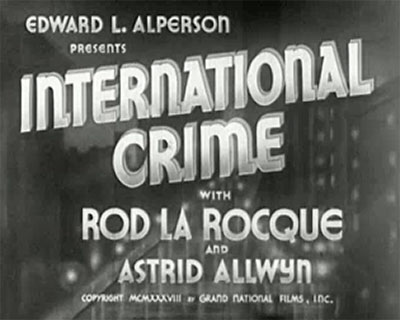
“International Crime” is a 1938 American crime drama film directed by Charles Lamont and starring Rod La Rocque, Astrid Allwyn, and Thomas E. Jackson. The film tells the story of a detective who must infiltrate a criminal organization to bring down their leader and stop their illegal activities.

The film opens with the murder of a wealthy businessman, which is believed to be the work of an international criminal organization led by a mysterious figure known only as “The Voice.” Detective Jack Murphy (La Rocque) is assigned to investigate the case, but he is met with resistance from his superiors who believe that the case is too big for him to handle.

Undeterred, Murphy decides to go undercover to infiltrate the criminal organization and gather evidence against The Voice. He enlists the help of a female reporter, Kay Wallace (Allwyn), who is eager to get a story on the criminal organization. Together, they start to unravel the web of corruption and crime that is plaguing the city.

As Murphy gets closer to The Voice, he discovers that the criminal organization has a far-reaching network that spans across the globe. He also learns that The Voice is planning a major heist that could threaten national security. With time running out, Murphy must race against the clock to stop The Voice and his organization before it’s too late.

Overall, “International Crime” is a thrilling crime drama that keeps the audience on the edge of their seats. The film features a strong performance by La Rocque as the determined detective and Allwyn as the fearless reporter. The story is well-crafted and keeps the viewer guessing until the very end.

Directors:
Charles Lamont

Writer:
Theodore A. Tinsley, Jack Natteford, John W. Krafft

Stars:
Rod La Rocque, Astrid Allwyn, Thomas E. Jackson

Rate this Movie

Windjammer (1937)

3/5 (1)

“Windjammer” is a 1937 American drama film directed by Edward Sloman and starring George O’Brien and Constance Worth. The story follows Captain Willoby (O’Brien), a tough and experienced sailor who takes command of a windjammer ship and faces numerous challenges as he tries to complete a dangerous voyage.

The film opens with Captain Willoby being assigned to take command of the windjammer ship, “Mary Ann,” which is scheduled to sail from San Francisco to Australia. He meets with the owner of the ship, Mr. Thorpe, and his daughter, Barbara (Worth), who is also on board. Willoby is immediately attracted to Barbara, but she is engaged to another man, a wealthy businessman named Stephen Wayne.

As the ship sets sail, Willoby faces a mutiny attempt by some of the crew members who are unhappy with his leadership. He manages to put down the mutiny and gain the respect of the crew. However, his problems are far from over. The ship encounters a fierce storm, and Willoby must use all his skills and experience to keep the ship afloat. Along the way, he and Barbara grow closer, and she begins to question her engagement to Wayne.

As the ship approaches Australia, Wayne appears on board and demands that Barbara return with him. Willoby intervenes and fights Wayne, eventually throwing him overboard. The ship finally reaches its destination, and Willoby and Barbara profess their love for each other.

Overall, “Windjammer” is an exciting and dramatic film that showcases the dangers and challenges of life at sea, as well as the strength and courage of those who sail on the high seas.

Directors:
Ewing Scott

Writer:
Daniel Jarrett, James Gruen, Roul Haig

Stars:
George O’Brien, Constance Worth, William Hall

Rate this Movie

Jamaica Inn (1939)

3/5 (1)

Jamaica Inn is a 1939 British thriller film directed by Alfred Hitchcock, based on the novel of the same name by Daphne du Maurier. The film tells the story of Mary Yellan (played by Maureen O’Hara), a young woman who goes to live with her aunt and uncle at their remote and eerie inn on the Cornish coast of England.

Upon arriving at the inn, Mary discovers that her uncle, Joss (played by Leslie Banks), is the leader of a gang of smugglers who use the inn as a base for their illegal activities. She also meets Jem Trehearne (played by Robert Newton), a handsome and mysterious man who is also involved with the smugglers. As Mary becomes increasingly drawn into their world, she must decide whether to keep their secrets or risk everything to expose them.

The film is known for its suspenseful atmosphere, stunning cinematography, and powerful performances, particularly by O’Hara and Banks. It was a critical and commercial success upon its release, and is still considered one of Hitchcock’s finest early works.

Directors:
Alfred Hitchcock

Writer:
Daphne Du Maurier, Sidney Gilliat, Joan Harrison

Stars:
Maureen O’Hara, Robert Newton, Charles Laughton

Rate this Movie

Captain Scarface (1953)

4/5 (2)

“Captain Scarface” is a crime drama film released in 1953. The story revolves around a gangster named Steve Morgan, aka “Captain Scarface” (played by Barton MacLane), who is the head of a smuggling ring. Morgan, who is known for his ruthless ways, is constantly evading the law and is wanted by the police.

One day, Morgan meets a young woman named Terry (played by Virginia Grey) and falls in love with her. However, Terry is unaware of Morgan’s criminal activities and believes that he is a legitimate businessman. When Terry finds out the truth about Morgan’s criminal past, she is shocked and tries to convince him to leave his life of crime.

Meanwhile, the police are hot on Morgan’s trail and are determined to bring him to justice. Morgan realizes that his time is running out and decides to take one last risk. He plans a huge smuggling operation that could make him a fortune but also puts him in grave danger.

As the operation unfolds, the police close in on Morgan and his gang, and a tense shootout ensues. In the end, Morgan is shot and killed, and Terry is left to mourn the loss of the man she loved.

Overall, “Captain Scarface” is a classic crime drama that explores themes of love, betrayal, and the consequences of a life of crime.

Directors:
Paul Guilfoyle

Writer:
Charles Lang

Stars:
Barton MacLane, Virginia Grey, Leif Erickson

Rate this Movie