Crime

The Kennel Murder Case (1933)

3/5 (1)

“The Kennel Murder Case” is a 1933 American mystery film directed by Michael Curtiz and starring William Powell and Mary Astor. The film is based on the novel of the same name by S.S. Van Dine and follows the story of Philo Vance, a wealthy amateur detective who is called in to investigate a murder at a dog show.

The film opens with the murder of Archer Coe, a wealthy businessman and dog enthusiast who is found dead in his study. The primary suspect is his jealous ex-wife, but Vance (played by Powell) believes there is more to the case than meets the eye. With the help of his faithful butler, Ernest (played by Eugene Pallette), Vance sets out to solve the mystery.

As Vance investigates, he encounters a cast of eccentric characters, including Coe’s mistress, his business partner, and a group of dog enthusiasts who are all potential suspects. The case becomes more complicated when another murder occurs at the dog show, and Vance must use his intellect and deductive reasoning to unravel the truth.

“The Kennel Murder Case” is a classic whodunit that features intricate plotting, witty dialogue, and colorful characters. Powell’s portrayal of Vance is charming and suave, and the film’s clever twists and turns keep the audience engaged until the very end. The film is a must-see for fans of classic mysteries and detective stories.

Directors:
Michael Curtiz

Writer:
S.S. Van Dine, Robert N. Lee, Peter Milne

Stars:
William Powell, Mary Astor, Eugene Pallette
Rate this Movie

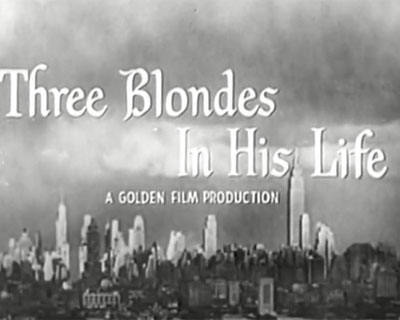
Three Blondes in His Life (1961)

4/5 (2)

“Three Blondes in His Life” is a 1961 crime thriller directed by Leon Chooluck and starring Jock Mahoney, Jo Morrow, and Merry Anders. The film follows the story of a private investigator named Mike Farrell who becomes entangled in a dangerous web of deception and murder.

Mike Farrell (played by Mahoney) is hired by a wealthy businessman to investigate his daughter’s fiancé, who is suspected of embezzlement. As Mike delves deeper into the case, he discovers that the fiancé is actually innocent and that the real culprit is the businessman’s secretary, a beautiful blonde named Lila (played by Anders).

However, before Mike can apprehend Lila, he is sidetracked by the arrival of another blonde, a former flame named Doris (played by Morrow), who needs his help to clear her name in a murder case. As Mike juggles both cases, he finds himself drawn to the mysterious and alluring Lila, even as he begins to suspect her involvement in a larger criminal conspiracy.

As the plot thickens, Mike becomes embroiled in a deadly game of cat and mouse, in which he must outwit both Lila and her criminal cohorts to stay alive. Along the way, he uncovers a shocking conspiracy involving corrupt businessmen and organized crime.

“Three Blondes in His Life” is a fast-paced and suspenseful thriller that showcases the talents of its cast and director. The film’s intricate plot, clever twists, and charismatic characters keep audiences engaged and guessing until the very end.

Directors:
Leon Chooluck

Writer:
George Moskov, William Francis

Stars:
Jock Mahoney, Greta Thyssen, Jesse White

Rate this Movie

The File On Thelma Jordan (1950)

4/5 (2)

“The File on Thelma Jordan” is a 1950 film noir directed by Robert Siodmak and starring Barbara Stanwyck and Wendell Corey. The film follows the story of Thelma Jordan, a seductive and mysterious woman who becomes entangled in a web of deceit and murder.

Thelma Jordan (played by Stanwyck) is a wealthy woman who seeks the help of Assistant District Attorney Cleve Marshall (played by Corey) when she discovers that her aunt’s estate is being embezzled. However, Cleve is more interested in Thelma than the case, and the two begin an illicit affair.

As the story unfolds, it becomes clear that Thelma is not the innocent victim she first appeared to be. She is actually involved in a criminal scheme and is using Cleve to cover her tracks. When her ex-lover, Tony Laredo, shows up and threatens to expose her, Thelma is forced to take drastic action, leading to a tragic outcome.

Throughout the film, the audience is kept in suspense as the true nature of Thelma’s character is slowly revealed. The film is a classic example of film noir, with its use of shadows, moody lighting, and morally ambiguous characters.

“The File on Thelma Jordan” is a gripping thriller that showcases the talents of its lead actors and director. The film’s complex storyline and unexpected twists and turns keep audiences on the edge of their seats until the very end.

Directors:
Robert Siodmak

Writer:
Marty Holland, Ketti Frings

Stars:
Barbara Stanwyck, Wendell Corey, Paul Kelly

Rate this Movie

The Girl Was Young (Young and Innocent) (1937)

3/5 (1)

“The Girl Was Young” (also known as “Young and Innocent”) is a 1937 British thriller film directed by Alfred Hitchcock, based on the novel “A Shilling for Candles” by Josephine Tey. The film follows the story of Robert Tisdall, a man wrongly accused of murder, and Erica Burgoyne, a young girl who helps him clear his name.

The film opens with the murder of famous actress Christine Clay in a seaside town. Robert Tisdall (played by Nova Pilbeam) is the last person seen with her and is quickly suspected of the crime. While running from the police, Robert meets Erica Burgoyne (played by Pilbeam as well), a young girl who believes in his innocence and helps him evade the authorities.

Together, they set out to prove Robert’s innocence and uncover the true killer. As they investigate, they encounter a variety of suspects, including a jealous ex-husband, a mysterious woman in black, and a wealthy businessman with a dark secret. Along the way, they must navigate a series of perilous situations, including a daring escape from a crowded courtroom and a dramatic chase through the woods.

Ultimately, Robert and Erica are able to identify the real killer and clear Robert’s name. The film ends with the two of them walking off into the distance, happy and relieved to have put the ordeal behind them. “The Girl Was Young” is a suspenseful and engaging thriller that showcases Hitchcock’s trademark style and storytelling abilities.

Directors:
Alfred Hitchcock

Writer:
Josephine Tey, Charles Bennett, Edwin Greenwood

Stars:
Nova Pilbeam, Derrick De Marney, Percy Marmont

Rate this Movie

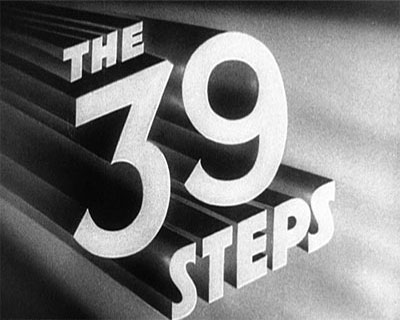
The 39 Steps (1935)

4.67/5 (3)

“The 39 Steps” is a 1935 British thriller film directed by Alfred Hitchcock and based on the novel of the same name by John Buchan. The movie follows the story of Richard Hannay, a man who becomes embroiled in a web of espionage and murder after a chance encounter with a spy.

The plot centers around Hannay, played by Robert Donat, who is falsely accused of the murder of a spy he met at a music hall. Hannay goes on the run and becomes involved in a dangerous conspiracy involving a secret organization called “The 39 Steps.” Along the way, he meets a woman named Pamela, played by Madeleine Carroll, who becomes his reluctant ally in his quest to clear his name and uncover the truth behind the conspiracy.

The film is notable for its innovative use of suspense and tension, as well as its clever and intricate plot. Hitchcock employs his signature techniques, including elaborate camera work and masterful editing, to create a thrilling and entertaining cinematic experience.

“The 39 Steps” has become a classic of the thriller genre and is widely regarded as one of Hitchcock’s best films. It has been remade several times, but the original remains a favorite among film buffs and Hitchcock fans.

Directors:
Alfred Hitchcock

Writer:
John Buchan, Charles Bennett, Ian Hay

Stars:
Robert Donat, Madeleine Carroll, Lucie Mannheim

Rate this Movie

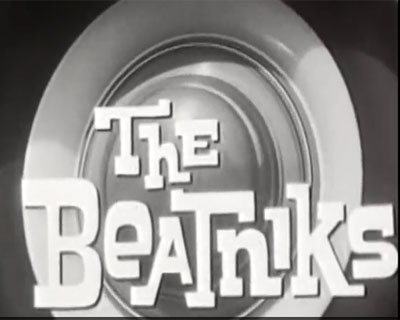
The Beatniks (1960)

3/5 (1)

“The Beatniks” is a 1960 American film directed by Paul Frees and written by Arthur C. Pierce. The film is a low-budget crime drama that explores the seedy world of beatnik culture in 1960s America.

The story follows a group of beatniks, led by the charismatic and manipulative Eddie (Tony Travis), who use their poetry and music to swindle unsuspecting victims. One night, they are involved in a hit-and-run accident, and Eddie convinces the group to go on the run to avoid the police.

As they travel across the country, tensions rise within the group, and Eddie’s manipulative and abusive behavior becomes increasingly apparent. The other members of the group, including the troubled young musician Nick (Peter Breck), begin to question their involvement with Eddie and his criminal activities.

“The Beatniks” is a product of its time, and the film’s portrayal of beatnik culture is often exaggerated and stereotypical. However, it does offer a fascinating glimpse into the counterculture of the early 1960s and the disillusionment and dissatisfaction of many young people at the time.

The film’s soundtrack, featuring music by jazz saxophonist Charles “Charlie” Mariano, is a highlight and captures the cool, improvisational style of the beatnik era. Overall, “The Beatniks” is an interesting and entertaining film that provides a unique perspective on a fascinating period in American cultural history.

Directors:
Paul Frees

Writer:
Paul Frees

Stars:
Tony Travis, Karen Kadler, Peter Breck

Rate this Movie

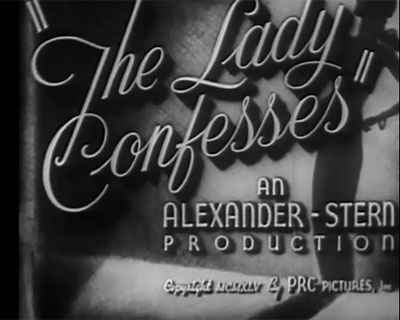
The Lady Confesses (1945)

2.5/5 (2)

“The Lady Confesses” is a 1945 film noir directed by Sam Newfield and produced by Sigmund Neufeld. The film follows the story of the wealthy socialite Vera Stanley (played by Mary Beth Hughes) who is accused of murdering her husband.

Vera’s husband is found dead in their home, and the police quickly focus their investigation on her. Despite her protests of innocence, the evidence seems to be stacked against her, and she is arrested and put on trial. However, as the trial proceeds, a number of people come forward with information that casts doubt on Vera’s guilt.

Among those who come forward is the detective assigned to the case, Lieutenant Joe Morgan (played by Hugh Beaumont), who begins to suspect that Vera may be innocent after all. Together, Vera and Joe work to uncover the truth and identify the real killer.

As they delve deeper into the case, they uncover a web of lies and deceit that leads them to a surprising conclusion. The film features several twists and turns, and the audience is kept in suspense until the very end.

“The Lady Confesses” was well-received by audiences and critics alike for its engaging plot and strong performances, particularly by Mary Beth Hughes in the lead role. It is considered a classic example of film noir and is still enjoyed by fans of the genre today.

Directors:
Sam Newfield

Writer:
Irwin Franklyn, Helen Martin

Stars:
Mary Beth Hughes, Hugh Beaumont, Edmund MacDonald

Rate this Movie

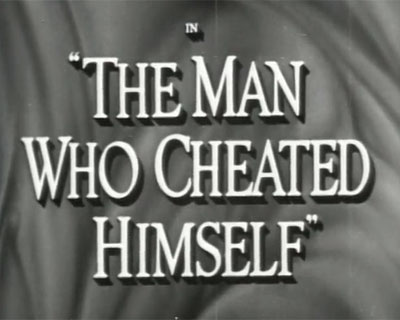
The Man Who Cheated Himself (1951)

3/5 (1)

“The Man Who Cheated Himself” is a 1951 film noir directed by Felix E. Feist. The movie stars Lee J. Cobb as Lt. Ed Cullen, a police detective in San Francisco who falls in love with a wealthy socialite named Lois Frazer (Jane Wyatt) while investigating her husband’s murder.

Lois confesses to Ed that she killed her husband in self-defense after he tried to attack her, but Ed decides to cover up the crime and make it look like a robbery gone wrong. He believes that Lois is innocent and wants to protect her from the scandal that would follow if the truth came out.

However, Ed’s younger brother Andy (John Dall), who is also a police detective, becomes suspicious of Ed’s behavior and starts to investigate the case himself. Andy uncovers evidence that implicates Lois in the murder and confronts Ed about it. Ed eventually confesses to his involvement in the cover-up, but it’s too late to save Lois. She’s already fled the city and committed suicide in despair over her husband’s death and the guilt of her actions.

The film ends with Ed and Andy reconciling and Ed accepting the consequences of his actions, which include losing his job and facing criminal charges.

Directors:
Felix E. Feist

Writer:
Seton I. MillerPhilip MacDonald

Stars:
Lee J. Cobb, Jane Wyatt, John Dall

Rate this Movie

The Lodger: A Story of the London Fog (1927)

4/5 (1)

“The Lodger: A Story of the London Fog” is a silent film directed by Alfred Hitchcock and released in 1927. The film is based on the novel of the same name by Marie Belloc Lowndes and tells the story of a mysterious lodger who may be a serial killer.

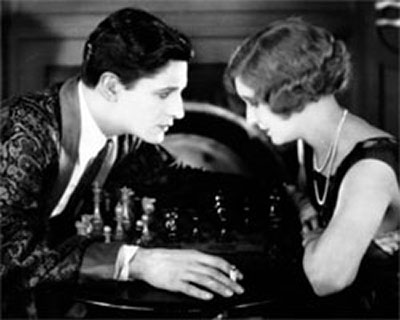
The film is set in London during a period of time when a serial killer known as “The Avenger” is on the loose, targeting young blonde women. When a new lodger (Ivor Novello) arrives at a boarding house run by Mr. and Mrs. Bunting, he seems to fit the description of the killer, and Mrs. Bunting becomes increasingly suspicious of him.

As the lodger’s behavior becomes increasingly erratic, Mrs. Bunting becomes convinced that he is the Avenger and enlists the help of her policeman fiance to track him down. However, as they close in on the lodger, they begin to uncover evidence that suggests he may not be the killer after all.

The film is notable for its use of innovative camera techniques and its exploration of themes such as guilt, suspicion, and the dangers of mob mentality. It was one of Hitchcock’s earliest successes and helped establish him as a master of suspense. The film also marks the first of many collaborations between Hitchcock and actress Alma Reville, who would later become his wife and a key creative collaborator.

Directors:
Alfred Hitchcock

Writer:
Marie Belloc Lowndes, Eliot Stannard, Alfred Hitchcock

Stars:
June Tripp, Ivor Novello, Marie Ault

Rate this Movie

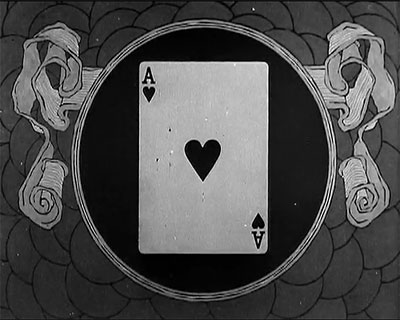
The Ace of Hearts (1921)

3/5 (1)

“The Ace of Hearts” is a silent film released in 1921, directed by Wallace Worsley. The movie follows the story of a secret society that seeks to eliminate people they believe are unworthy of life.

The movie is set in San Francisco, and Lilith (played by Leatrice Joy) is the daughter of a wealthy man. She falls in love with one of the members of the secret society, Forrest (played by John Bowers). Lilith is soon initiated into the society, and Forrest reveals to her that their next target is a man named Farallone (played by Lon Chaney).

Lilith discovers that the society uses a deck of cards to determine who their next victim will be. Forrest is the Ace of Hearts, and he chooses the targets. Lilith draws the King of Hearts and is given the task of carrying out the assassination of Farallone.

However, Lilith starts to have doubts about the morality of the society’s actions. She meets Farallone and discovers that he is a kind man who does not deserve to die. She decides to warn him about the society’s plans and risks her own life in the process.

In the end, the society’s plan is foiled, and Forrest is killed in the process. Lilith and Farallone end up together, and Lilith is relieved to have put an end to the society’s ruthless actions.

“The Ace of Hearts” is notable for its striking visual style, use of shadow and dramatic lighting, and exploration of themes such as morality, love, and loyalty. It was well-received upon its release and is considered a classic of the silent era.

Directors:
Wallace Worsley

Writer:
Gouverneur Morris, Ruth Wightman

Stars:
Leatrice Joy, John Bowers, Lon Chaney

Rate this Movie

The Phantom Fiend (The Lodger) (1932)

3/5 (1)

“The Lodger” is a 1932 film directed by Maurice Elvey, and also known as “The Phantom Fiend” in some countries. It is a thriller based on the novel of the same name by Marie Belloc Lowndes, which was inspired by the Jack the Ripper murders.

The film takes place in London, where a serial killer known as “The Avenger” is targeting young blonde women. At the same time, a mysterious man calling himself Mr. Slade (Ivor Novello) rents a room from a family of landladies. The family has two daughters, Daisy (June Tripp) and her older sister, a model named Kitty (Marie Ault).

As the murders continue, Kitty becomes increasingly suspicious of Slade, who seems to have a strange fascination with the killings. She discovers that Slade goes out at night wearing a long dark coat and carrying a bag, which he claims contains a musical instrument. Meanwhile, Daisy and Slade become romantically involved.

Kitty contacts the police, who start to investigate Slade. As the evidence mounts against him, Slade confesses to the killings. However, in a twist ending, it is revealed that Slade is actually the brother of one of the victims, who was driven to commit the murders out of a desire for revenge. The real killer is still at large, and the film ends with Slade’s execution.

The film is notable for its innovative use of sound, which was still a relatively new technology at the time. It also features a memorable performance by Ivor Novello as the enigmatic Mr. Slade. “The Lodger” has been remade several times, including in 1944 by John Brahm and in 2009 by David Ondaatje.

Directors:
Maurice Elvey

Writer:
Marie Belloc Lowndes, Miles Mander, Paul Rotha

Stars:
Ivor Novello, Elizabeth Allan, A.W. Baskcomb

Rate this Movie

Secret Police (1939)

3/5 (1)

“Secret Police” is a crime drama film released in 1939, directed by Edmond T. Gréville. The movie is set in Paris, during the interwar period, and follows the story of Inspector Clément Bonnet, a detective working for the French Secret Police.

The film opens with the assassination of a political figure, which sets off a chain of events that leads Bonnet on a dangerous investigation. As he delves deeper into the case, Bonnet discovers a conspiracy involving a group of international spies, who are plotting to overthrow the French government and install a puppet regime.

With the help of his loyal assistant, Max, Bonnet embarks on a thrilling cat-and-mouse game with the spies, using all of his skills and resources to uncover their plans and bring them to justice.

The film is notable for its atmospheric portrayal of Paris, with stunning shots of the city’s streets, cafes, and landmarks. The performances by the cast, including Jules Berry as Bonnet and Suzy Prim as Max, are also noteworthy, with Berry bringing a charismatic and suave presence to the role of the detective.

Overall, “Secret Police” is a gripping and suspenseful thriller that offers a fascinating glimpse into the world of international espionage and political intrigue. It is a classic of the crime drama genre and remains a favorite among film enthusiasts to this day.

Directors:
James P. Hogan

Writer:
Garnett Weston, Herman C. McNeile

Stars:
John Howard, Heather Angel, H.B. Warner

Rate this Movie

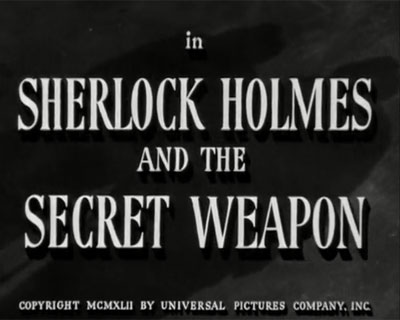
Sherlock Holmes and the Secret Weapon (1943)

3/5 (1)

“Sherlock Holmes and the Secret Weapon” is a classic mystery film released in 1943, starring Basil Rathbone as Sherlock Holmes and Nigel Bruce as Dr. John Watson. The movie is based on the story “The Dancing Men” by Sir Arthur Conan Doyle.

The film is set in World War II, with Holmes and Watson working to protect a new secret weapon being developed by the British military. However, the weapon’s inventor, Dr. Franz Tobel, has been kidnapped by the Nazis and taken to Germany.

Holmes and Watson are contacted by Tobel’s assistant, Charlotte Eberli, who seeks their help in rescuing Tobel and preventing the Nazis from obtaining the secret weapon. Together, the three embark on a dangerous mission to Germany, where they must outwit Nazi agents and rescue Tobel.

Along the way, they encounter various obstacles and challenges, including a Nazi assassin named Heinrich von Bork, who is determined to stop them at any cost. But with Holmes’ sharp wit and deductive reasoning, and Watson’s loyal support, they manage to uncover the secrets behind Tobel’s invention and thwart the Nazis’ plans.

The film features excellent performances by Rathbone and Bruce, who bring the iconic characters of Holmes and Watson to life. The story is fast-paced and full of twists and turns, keeping the audience on the edge of their seats until the very end.

Overall, “Sherlock Holmes and the Secret Weapon” is a thrilling and entertaining movie that combines classic mystery with wartime espionage, and is a must-watch for fans of the genre.

Directors:
Roy William Neill

Writer:
Edward T. Lowe Jr., Scott Darling, Edmund L. Hartmann

Stars:
Basil Rathbone, Nigel Bruce, Lionel Atwill

Rate this Movie

Panic In The Streets (1950)

3/5 (1)

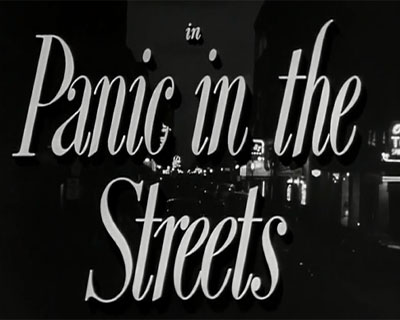
“Panic in the Streets” is a 1950 film noir directed by Elia Kazan. The film is a thriller about a manhunt for a murderer infected with pneumonic plague. The story is set in New Orleans, where a seaman named Ortega is found dead with symptoms of the plague. Dr. Clinton Reed (played by Richard Widmark), a public health official, realizes the danger of an outbreak and tries to convince the authorities to take immediate action to prevent the spread of the disease.

Reed teams up with police captain Tom Warren (played by Paul Douglas) to track down the killer, who is also infected with the plague and could potentially infect others. The manhunt takes them through the dark alleys and seedy underworld of New Orleans, as they search for clues and try to find the killer before he can infect more people.

As they close in on the killer, tensions rise, and the situation becomes more desperate. The clock is ticking as Reed and Warren race against time to find the killer and prevent a deadly epidemic from breaking out.

The film was praised for its realism and suspenseful atmosphere, and it won an Academy Award for Best Original Screenplay. It is considered a classic of the film noir genre and a must-see for fans of suspenseful thrillers.

Directors:
Elia Kazan

Writer:
Richard Murphy, Daniel Fuchs, Edna Anhalt

Stars:
Richard Widmark, Paul Douglas, Barbara Bel Geddes

Rate this Movie

Outside The Law (1921)

3/5 (1)

“Outside the Law” is a silent film released in 1921, directed by Tod Browning, and starring Priscilla Dean, Lon Chaney, and Wheeler Oakman. The film tells the story of a gangster named “Black” Mike Sylva (played by Oakman) and his efforts to recruit a young thief named “Fingers” (played by Dean) to join his criminal organization.

Fingers’ father was a notorious criminal who was killed in a shootout with the police, and she has been raised by her uncle, who is also a thief. When her uncle is caught and sent to prison, Fingers is left alone and vulnerable. Black Mike sees her potential as a skilled pickpocket and offers her a job, but Fingers is initially hesitant to join his gang.

Meanwhile, a police detective named “Silent” Madden (played by Chaney) is hot on Black Mike’s trail and becomes suspicious of Fingers’ involvement with the gang. He befriends her and tries to convince her to help him catch Black Mike and his associates.

As Fingers becomes more involved with the gang, she begins to develop feelings for Black Mike’s right-hand man, “Dapper” Bill Ballard (played by Ralph Lewis). When she discovers that Black Mike plans to double-cross and kill Bill, she decides to help Silent Madden and the police take down the gang.

The film climaxes with a thrilling chase and shootout between the police and the gang, with Fingers and Bill caught in the middle. In the end, justice is served, and Fingers is given a second chance at life, thanks to Silent Madden’s compassion and understanding.

“Outside the Law” was a critical and commercial success upon its release, cementing Lon Chaney’s reputation as a master of character acting and Tod Browning’s status as a skilled director of crime dramas.

Directors:
Tod Browning

Writer:
Gardner Bradford, Tod Browning, Lucien Hubbard

Stars:
Priscilla Dean, Wheeler Oakman, Lon Chaney

Rate this Movie