Crime

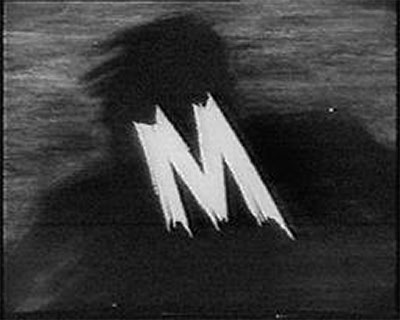
M (1931)

4/5 (1)

“M” is a German thriller film released in 1931, directed by Fritz Lang and starring Peter Lorre, Ellen Widmann, and Inge Landgut. The film tells the story of a child murderer who terrorizes the city of Berlin, and the efforts of both the police and the criminal underworld to capture him.

The film opens with the murder of a young girl, and we see the impact that the crime has on the city as panic and fear spread throughout the community. The police launch an intensive investigation, but their efforts are hampered by the murderer’s cunning and elusive nature.

Meanwhile, the criminal underworld also takes notice of the killings, and a group of gangsters form their own search party to find the murderer and bring him to justice. When the murderer is eventually caught, he is put on trial, and we see the conflict between the desire for justice and the need for compassion and mercy.

Peter Lorre delivers a chilling and unforgettable performance as the child murderer, portraying him as a disturbed and tortured individual who is unable to control his own impulses. Fritz Lang’s masterful direction creates a dark and suspenseful atmosphere that captures the anxiety and paranoia of a city in crisis.

The film explores themes of crime and punishment, justice and mercy, and the uneasy relationship between the law and the criminal underworld. “M” is widely regarded as a classic of German cinema and a landmark in the history of thriller films.

Directors:
Fritz Lang

Writer:
Thea von Harbou, Fritz Lang, Egon Jacobsohn

Stars:
Peter Lorre, Ellen Widmann, Inge Landgut

Rate this Movie

Money Madness (1948)

3/5 (1)

“Money Madness” is a crime drama film released in 1948, directed by Sam Newfield and produced by Sigmund Neufeld. The film stars Hugh Beaumont, Frances Rafferty, Harlan Warde, and Robert Clarke.

The story follows a successful businessman named David Carroll (played by Hugh Beaumont) who becomes obsessed with making more money. His obsession drives him to neglect his wife, Julie (played by Frances Rafferty), and his young son, Tommy (played by Tommy Ivo). David begins to engage in risky investments, putting his family’s future at risk.

Things take a turn for the worse when David’s business partner, Phil Vernon (played by Harlan Warde), embezzles a large sum of money and frames David for the crime. David is arrested and faces a lengthy prison sentence.

With her husband behind bars, Julie struggles to support herself and their son. She eventually learns the truth about Phil’s deception and works to clear David’s name. In the end, David is exonerated and reunited with his family.

The film highlights the dangers of greed and the importance of family and honesty.

Directors:
Sam Newfield

Writer:
Al Martin

Stars:
Hugh Beaumont, Frances Rafferty, Harlan Warde

Rate this Movie

My Favorite Brunette (1947)

4/5 (2)

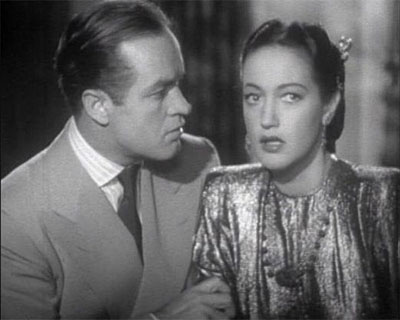
“My Favorite Brunette” is a 1947 American comedy film directed by Elliott Nugent and starring Bob Hope and Dorothy Lamour. The film tells the story of Ronnie Jackson (Bob Hope), a baby photographer, who dreams of becoming a detective like his idol, Sam McCloud (Alan Ladd).

One day, a beautiful woman named Carlotta Montay (Dorothy Lamour) enters his studio and asks for his help. She wants him to deliver a roll of film to her boyfriend, who is a private investigator, but Ronnie accidentally gets the wrong film and finds himself in the middle of a murder plot.

Ronnie is mistaken for the private investigator and is kidnapped by a group of criminals who want him to find a valuable item hidden in the mansion of the wealthy Baron Montay (Reginald Denny). With the help of Carlotta, Ronnie tries to uncover the truth and save his own life.

Throughout the film, Ronnie imagines himself as a hard-boiled detective, with Lamour playing the role of his femme fatale. The movie is filled with comedic moments and witty one-liners from Bob Hope, making it a classic example of a film noir spoof. In the end, Ronnie manages to save the day and gets the girl, but not before enduring a series of comical misadventures.

Directors:
Elliott Nugent

Writer:
Edmund Beloin, Jack Rose, Bob Hope

Stars:
Bob Hope, Dorothy Lamour, Peter Lorre

Rate this Movie

Dick Tracy Detective (1945)

3/5 (1)

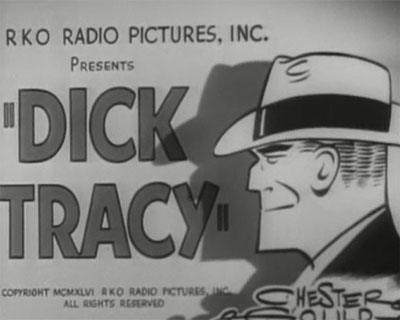
“Dick Tracy Detective” is a 1945 crime drama film directed by William A. Berke and starring Morgan Conway as the famous detective Dick Tracy.

The film follows the story of Dick Tracy as he investigates a series of crimes committed by a ruthless gang of criminals led by Steve “The Claw” Michel. The Claw and his gang have been terrorizing the city, committing robberies and murders without being caught.

As Tracy gets closer to unraveling the mystery behind The Claw, he discovers that the criminal mastermind has a personal vendetta against him. With the help of his trusted colleagues, Tracy sets out to bring The Claw to justice and put an end to his reign of terror.

Throughout the film, Tracy faces dangerous and thrilling challenges, including a high-speed car chase and a deadly confrontation with The Claw in a final showdown.

“Dick Tracy Detective” is a classic crime drama that captures the spirit of the iconic comic book character. Conway delivers a solid performance as Tracy, and the film’s action-packed plot and suspenseful twists keep viewers engaged until the end. The film remains a must-see for fans of crime dramas and the Dick Tracy franchise.

Directors:
William Berke

Writer:
Eric Taylor, Chester Gould

Stars:
Morgan Conway, Anne Jeffreys, Mike Mazurki

Rate this Movie

D.O.A. (1950)

4/5 (1)

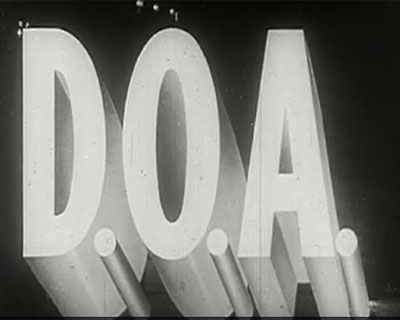
“D.O.A.” is a 1950 film noir directed by Rudolph Maté and starring Edmond O’Brien and Pamela Britton.

The film follows the story of Frank Bigelow, a small-town accountant who arrives in San Francisco for a weekend of fun. However, after a night of heavy drinking, Frank wakes up to discover that he has been poisoned and has only a few days to live.

Desperate to find out who poisoned him and why, Frank embarks on a dangerous and thrilling investigation, leading him to a seedy underworld of crime and corruption. He encounters a cast of characters, including a shady nightclub owner and a mysterious blonde, all of whom may hold the key to his death.

As Frank’s health rapidly deteriorates, he races against time to uncover the truth and bring his killer to justice before it’s too late.

“D.O.A.” is a classic film noir that showcases the genre’s characteristic themes of corruption, crime, and moral ambiguity. O’Brien delivers a compelling performance as the doomed protagonist, and the film’s fast-paced and suspenseful plot keeps viewers on the edge of their seats. The film remains a classic of the genre and a must-see for fans of film noir.

Directors:
Rudolph Maté

Writer:
Russell Rouse, Clarence Greene

Stars:
Edmond O’Brien, Pamela Britton, Luther Adler

Rate this Movie

Dick Tracy Meets Gruesome (1947)

3/5 (1)

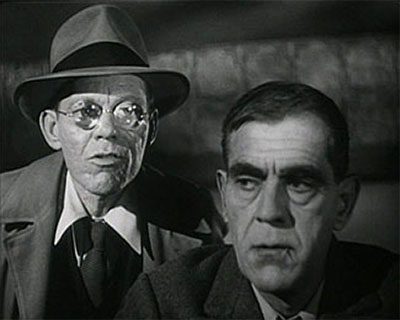
“Dick Tracy Meets Gruesome” is a 1947 crime thriller film based on the popular comic strip character Dick Tracy. The film was directed by John Rawlins and stars Ralph Byrd as Dick Tracy, Anne Gwynne as Tess Trueheart, and Boris Karloff as Gruesome.

In the film, Dick Tracy is investigating a series of robberies and murders that appear to be connected to a notorious criminal named Gruesome. Gruesome is a mysterious and dangerous figure who has eluded the police for years, and Tracy is determined to bring him to justice.

As Tracy gets closer to Gruesome, he finds himself facing numerous dangers, including being held captive by the criminal mastermind and his henchmen. With the help of his loyal partner, Pat Patton, and his girlfriend Tess Trueheart, Tracy must use all of his detective skills to outsmart Gruesome and bring him to justice.

Throughout the film, Tracy and Gruesome engage in a thrilling game of cat-and-mouse, with Tracy always one step behind Gruesome. But in the end, Tracy is able to outwit Gruesome and bring him to justice, foiling his plans and saving the day.

“Dick Tracy Meets Gruesome” is a classic crime thriller filled with suspense, action, and intrigue, and is a must-see for fans of the genre and the Dick Tracy character.

Directors:
John Rawlins

Writer:
Robertson White, Eric Taylor, William Graffis

Stars:
Boris Karloff, Ralph Byrd, Anne Gwynne

Rate this Movie

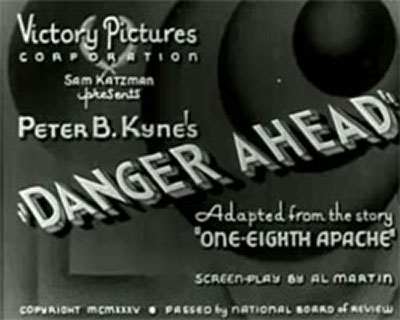
Danger Ahead (1935)

3/5 (1)

“Danger Ahead” is a 1935 adventure film directed by Albert Herman and starring Dick Foran, Ann Doran, and Gordon Westcott.

The film follows the story of Bob Martin, a young engineer who is hired by a construction company to oversee the building of a new railroad. As he works on the project, he discovers that a rival company is trying to sabotage the construction in order to secure the rights to build the railroad themselves.

Bob and his team must face many challenges and dangers as they try to complete the railroad on time, including floods, rockslides, and attacks from the rival company’s hired thugs. Along the way, Bob falls in love with the daughter of the owner of the construction company, but their romance is threatened by the sabotage and danger around them.

As the deadline for completion of the railroad approaches, Bob and his team must work tirelessly to overcome the obstacles in their way and finish the project on time. In the end, they are successful, and the new railroad is built, bringing prosperity to the area and thwarting the plans of the rival company.

“Danger Ahead” is a classic adventure film filled with action, romance, and suspense, and is a must-see for fans of the genre.

Directors:
Albert Herman

Writer:
Peter B. Kyne, Al Martin

Stars:
Lawrence Gray, Sheila Bromley, J. Farrell MacDonald

Rate this Movie

Dick Tracy’s Dilemma (1947)

3/5 (1)

“Dick Tracy’s Dilemma” is a 1947 crime thriller film based on the popular comic strip character Dick Tracy. The film was directed by John Rawlins and stars Ralph Byrd as Dick Tracy, Lyle Latell as Pat Patton, and Kay Christopher as Tess Trueheart.

In the film, Dick Tracy is investigating a series of murders that seem to be linked to a new nightclub in town. As he delves deeper into the case, he discovers that the owner of the nightclub, Louie the Wolf, is using it as a front for his illegal activities.

Tracy’s investigation is complicated when he discovers that his own brother, Gordon, is involved with Louie and is being blackmailed. Tracy must navigate his loyalty to his family and his duty as a police officer while trying to bring Louie to justice.

Throughout the film, Tracy faces many obstacles and dangers, including being kidnapped and locked in a room with a ticking time bomb. But with the help of his loyal friend and partner Pat Patton, and his girlfriend Tess Trueheart, Tracy is able to solve the case and bring the criminals to justice.

“Dick Tracy’s Dilemma” is a classic crime drama filled with suspense, action, and intrigue, and is a must-see for fans of the genre and the Dick Tracy character.

Directors:
John Rawlins

Writer:
Robert Stephen Brode, Chester Gould

Stars:
Ralph Byrd, Lyle Latell, Kay Christopher

Rate this Movie

Cosmo Jones, Crime Smasher (1943)

3/5 (1)

“Cosmo Jones, Crime Smasher” is a crime-comedy film released in 1943, directed by James Tinling and starring Frank Graham as the titular character, Cosmo Jones. The film follows Cosmo, a bumbling police officer, as he tries to solve a series of crimes in his city.

Cosmo is initially assigned to guard a wealthy businessman named Mr. Grisson (played by Jerome Cowan), who is receiving threatening letters. However, things quickly become more complicated when Grisson is found dead and Cosmo becomes the prime suspect. Despite his incompetence, Cosmo is determined to clear his name and find the real killer.

As he investigates the case, Cosmo encounters a colorful cast of characters, including a seductive nightclub singer, a suspicious janitor, and a gang of thieves. Along the way, he stumbles into several slapstick situations, including a memorable scene in which he accidentally destroys a car while attempting to apprehend a suspect.

Despite his many mistakes, Cosmo eventually manages to crack the case and bring the criminals to justice. The film ends with Cosmo receiving a promotion and the admiration of his fellow officers.

Overall, “Cosmo Jones, Crime Smasher” is a lighthearted and entertaining film that blends elements of crime drama and comedy. The film showcases the comedic talents of Frank Graham and the enduring appeal of the crime genre in American cinema.

Directors:
James Tinling

Writer:
Michael L. Simmons, Walter Gering, Frank Graham

Stars:
Frank Graham, Edgar Kennedy, Gale Storm

Rate this Movie

Cause for Alarm! (1951)

3.5/5 (2)

“Cause for Alarm!” is a film noir released in 1951, directed by Tay Garnett and starring Loretta Young and Barry Sullivan. The film follows the story of a woman named Ellen Jones (played by Young), who becomes increasingly paranoid after her husband George (played by Sullivan) is diagnosed with a heart condition and dies suddenly.

Ellen becomes convinced that her husband’s doctor, Dr. Ranney (played by Bruce Cowling), is responsible for her husband’s death and is now trying to harm her as well. She writes a letter to the district attorney accusing Dr. Ranney of murder, but her plan backfires when her husband’s friend and colleague, Lieutenant Ed Cullen (played by Charles Drake), becomes suspicious of her behavior.

As the investigation unfolds, it becomes clear that Ellen’s accusations are unfounded and that she is suffering from a severe case of paranoia. Her mental state continues to deteriorate, leading to a dramatic confrontation with Lt. Cullen.

The film explores themes of grief, paranoia, and the dangers of jumping to conclusions without evidence. It also highlights the pressures faced by women in the 1950s, particularly the pressure to conform to traditional gender roles and the stigma surrounding mental illness.

Overall, “Cause for Alarm!” is a gripping and suspenseful film that delves into the darker aspects of the human psyche, while also highlighting the importance of seeking help and support when struggling with mental health issues.

Directors:
Tay Garnett

Writer:
Mel Dinelli, Tom Lewis, Lawrence B. Marcus

Stars:
Loretta Young, Barry Sullivan, Bruce Cowling

Rate this Movie

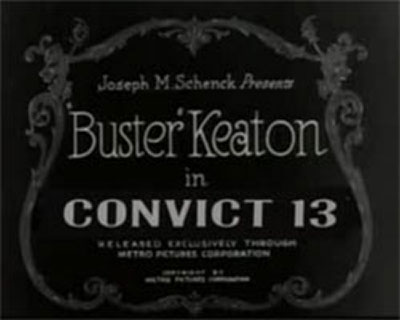
Convict 13 (1920)

4/5 (1)

“Convict 13” is a 1920 silent comedy film directed by and starring Buster Keaton. The film follows Keaton’s character, a young man who is mistaken for a prison inmate and sentenced to death by hanging. However, during the execution, a bolt of lightning strikes the gallows, knocking out the guards and allowing Keaton to escape.

As Keaton attempts to flee, he comes across a golfer who has been knocked unconscious. Keaton takes the man’s clothes and impersonates him, joining a group of wealthy golfers on the course. Despite his lack of experience, Keaton manages to hold his own on the links, using his own unique style and techniques.

As the game progresses, Keaton must dodge the suspicious prison guards and the real golfer’s angry girlfriend. The film culminates in a hilarious and thrilling finale as Keaton faces off against his pursuers on the golf course.

“Convict 13” is known for its inventive physical comedy and Keaton’s acrobatic stunts, as well as its creative use of sound effects and camera tricks. The film also showcases Keaton’s skill as a filmmaker, as he directed and edited the film himself. “Convict 13” remains a classic example of early silent comedy and a testament to Keaton’s enduring talent and influence.

Directors:
Edward F. Cline, Buster Keaton

Writer:
Edward F. Cline, Buster Keaton

Stars:
Buster Keaton, Sybil Seely, Joe Roberts

Rate this Movie

Borderline (1950)

3/5 (1)

“Borderline” is a 1950 film noir directed by William A. Seiter and starring Fred MacMurray, Claire Trevor, and Raymond Burr. The film follows a border patrol officer named Johnny Macklin (MacMurray) who falls in love with a woman named Madeleine Haley (Trevor) while investigating a smuggling operation on the U.S.-Mexico border.

As Macklin delves deeper into the case, he becomes increasingly suspicious of Madeleine’s involvement and her true motives. He is also targeted by the ruthless smugglers, led by a man named Pete Ritchie (Burr), who will stop at nothing to protect their operation.

As the tension builds and the danger increases, Macklin must navigate a complex web of deceit and betrayal to uncover the truth and bring the smugglers to justice. Along the way, he must also confront his own feelings for Madeleine and the moral dilemmas he faces as a law enforcement officer.

“Borderline” is known for its gripping storyline and atmospheric visuals, as well as the strong performances of its lead actors. The film explores themes of love, loyalty, and the corrupting influence of power, and remains a classic example of the film noir genre.

Directors:
William A. Seiter

Writer:
Devery Freeman

Stars:
Fred MacMurray, Claire Trevor, Raymond Burr

Rate this Movie

Bulldog Drummond in Africa (1938)

4/5 (1)

“Bulldog Drummond in Africa” is a 1938 adventure film directed by Louis King and starring John Howard, Heather Angel, and H.B. Warner. The film is part of a series of movies based on the popular British detective character Bulldog Drummond, created by H.C. McNeile.

In this installment, Drummond (Howard) and his fiancee Phyllis (Angel) travel to Africa to investigate the disappearance of an archeologist. Once they arrive, they discover that a mysterious and dangerous cult is responsible for the kidnapping, and that they are plotting to use the archeologist’s discovery to gain control of the region.

As they pursue the cult, Drummond and Phyllis face a variety of challenges and obstacles, including deadly animals and treacherous terrain. With the help of their African guide, they must navigate the dangers of the wilderness and outsmart the cult’s leaders in order to rescue the archeologist and stop their evil plans.

“Bulldog Drummond in Africa” is known for its thrilling action sequences and exotic setting, and was one of several films in the Bulldog Drummond series. The films were popular during the 1930s and 1940s and were known for their fast-paced action, suspense, and charismatic leading man.

Directors:
Louis King

Writer:
Garnett Weston, Herman C. McNeile

Stars:
John Howard, Heather Angel, H.B. Warner

Rate this Movie

Bulldog Drummond’s Peril (1938)

4/5 (1)

“Bulldog Drummond’s Peril” is a 1938 adventure film directed by James P. Hogan and starring John Barrymore, John Howard, and Louise Campbell. The film is part of a series of movies based on the popular British detective character Bulldog Drummond, created by H.C. McNeile.

The plot of the film revolves around Drummond (Howard) and his friend Algy (Reginald Denny) who travel to Morocco to rescue a kidnapped millionaire, who has been taken by a gang of ruthless criminals led by the evil Mikhail Valdin (Barrymore). Along the way, they encounter various dangers and obstacles, including treacherous terrain and hostile locals.

As they pursue the kidnappers, Drummond and his companions must use all their wits and skills to outsmart the criminals and save the millionaire. The film features several action-packed set pieces, including a thrilling car chase and a dramatic showdown in a desert fortress.

“Bulldog Drummond’s Peril” was one of several films in the Bulldog Drummond series, which was popular during the 1930s and 1940s. The films were known for their fast-paced action and suspense, as well as their charismatic leading man.

Directors:
James P. Hogan

Writer:
Stuart Palmer, Herman C. McNeile

Stars:
John Barrymore, John Howard, Louise Campbell

Rate this Movie

Bluebeard (1944)

3/5 (1)

“Bluebeard” is a 1944 film directed by Edgar G. Ulmer and starring John Carradine as a 19th-century French artist and serial killer named Gaston Morrell, who is based on the infamous French legend of Bluebeard.

Morrell is a successful artist who preys on young women, luring them to his home with the promise of modeling for his paintings. He then kills them and stores their bodies in a secret room in his house.

One day, Morrell meets Lucille, a beautiful young woman who has just moved to Paris. They quickly fall in love, but Lucille is unaware of Morrell’s dark secret. As their relationship develops, Morrell becomes increasingly paranoid and fearful of being caught, particularly after a detective begins investigating the disappearances of the missing women.

Despite his efforts to protect Lucille from his true nature, Morrell eventually reveals his murderous tendencies to her. In the end, Morrell is caught and brought to justice, but not before he has one final showdown with Lucille.

The film is notable for its moody and atmospheric cinematography, as well as Carradine’s portrayal of Morrell as a tortured artist struggling with his own demons. It also explores themes of obsession, betrayal, and the destructive power of unchecked desire.

Directors:
Edgar G. Ulmer

Writer:
Arnold Lipp, Werner H. Furst, Pierre Gendron

Stars:
John Carradine, Jean Parker, Nils Asther

Rate this Movie