Crime

Five Minutes to Live (1961)

3/5 (1)

“Five Minutes to Live” is a crime drama film from 1961 that follows a ruthless bank robber named Johnny Cabot (played by Johnny Cash) who, along with his accomplice, Fred Dorella (played by Vic Tayback), kidnaps the wife of a bank manager to force him to rob his own bank.

As the story unfolds, the bank manager, Ken Wilson (played by Donald Woods), struggles to come up with a plan to save his wife and thwart Cabot’s plan. Meanwhile, Cabot’s hold over Dorella begins to weaken as Dorella grows more and more uneasy about the situation and Cabot’s violent tendencies.

As the clock ticks down, tensions rise, and the characters are forced to confront the consequences of their actions. The film builds to a tense and violent climax as the characters’ paths intersect in a dramatic showdown. Ultimately, the fate of the characters is left uncertain, leaving the audience to draw their conclusions about what happens next.

Directors:
Bill Karn

Writer:
Cay Forester, Palmer Thompson, Robert L. Joseph

Stars:
Johnny Cash, Donald Woods, Cay Forester
Rate this Movie

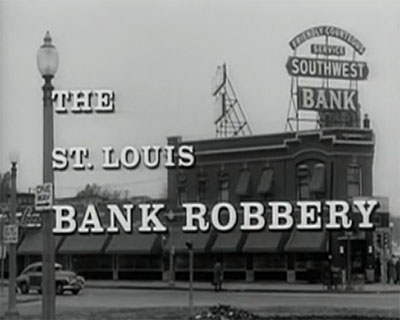
The Great Saint Louis Bank Robbery (1959)

3/5 (1)

“The Great Saint Louis Bank Robbery” is a 1959 crime film directed by Charles Guggenheim and John Stix, and starring Steve McQueen, Crahan Denton, and David Clarke. The movie is based on a real-life bank robbery that occurred in St. Louis, Missouri in 1953.

The film tells the story of a group of criminals who plan and execute a daring heist on a bank in downtown St. Louis. The leader of the gang is George Fowler (played by Crahan Denton), a career criminal who has carefully planned every aspect of the robbery. The other members of the gang include a young getaway driver named Gino (played by Steve McQueen) and a veteran safecracker named John Egan (played by David Clarke).

The robbery goes according to plan, and the gang manages to steal over $1 million in cash and bonds. However, things quickly begin to unravel as the police launch an intense investigation into the crime. Gino becomes paranoid and starts to suspect that the other members of the gang are planning to double-cross him. Egan becomes increasingly unstable and starts to drink heavily, while Fowler tries to keep everything under control.

As the police close in, the gang members turn on each other, leading to a violent and dramatic conclusion. The film ends with a sobering message about the consequences of crime and the dangers of greed.

“The Great Saint Louis Bank Robbery” is a gritty and suspenseful crime drama that explores the motivations and psychology of the criminals involved in the heist. The film features strong performances from the cast, particularly Steve McQueen in one of his early roles. It is also notable for its use of on-location filming in St. Louis, which adds to the authenticity and realism of the movie. Overall, it is a classic crime film that has stood the test of time.

Directors:
Charles Guggenheim, John Stix

Writer:
Richard T. Heffron

Stars:
Steve McQueen, Crahan Denton, David Clarke

Rate this Movie

The Fatal Hour (1940)

3/5 (1)

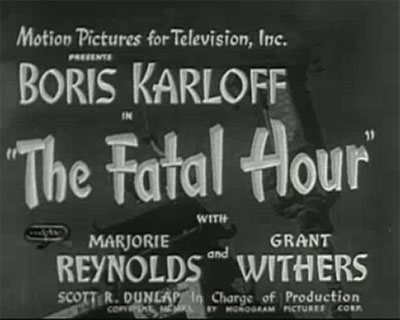
“The Fatal Hour” is a 1940 American crime film directed by William Nigh and starring Boris Karloff, Marjorie Reynolds, and Grant Withers. The film tells the story of a police detective named James Lee Wong (played by Boris Karloff) who is tasked with solving a murder case in San Francisco’s Chinatown.

The murder victim is a wealthy businessman named Gordon McLeod, who is found dead in his office with a Chinese character painted on his chest. The police suspect that the killer is someone from Chinatown, and Wong is brought in to help with the investigation.

Wong is a brilliant detective who is respected by both the police and the Chinese community. He begins to investigate the case, and he quickly realizes that the murder is linked to a smuggling ring operating in Chinatown. He also discovers that McLeod had been secretly working with the smugglers to bring in a valuable jade Buddha statue from China.

As Wong delves deeper into the case, he becomes the target of the smugglers, who are determined to stop him from uncovering their operation. They hire a hitman named Marloff (played by Grant Withers) to kill Wong, but the detective manages to outwit him and gather enough evidence to solve the case.

In the final scenes of the movie, Wong confronts the smugglers and reveals their scheme to the police. He also clears the name of a young Chinese man who had been wrongly accused of the murder. The film ends with Wong being hailed as a hero and a symbol of justice for the Chinese community.

“The Fatal Hour” is a classic crime film that explores themes of race, identity, and cultural conflict. It is notable for its portrayal of a Chinese-American detective as the main character, which was a rarity in Hollywood films of the time. The movie is also remembered for Boris Karloff’s commanding performance as James Lee Wong, which helped establish him as a leading actor in the detective genre.

Directors:
William Nigh

Writer:
Scott Darling, George Waggner, Hugh Wiley

Stars:
Boris Karloff, Marjorie Reynolds, Grant Withers

Rate this Movie

Trapped (1949)

4/5 (1)

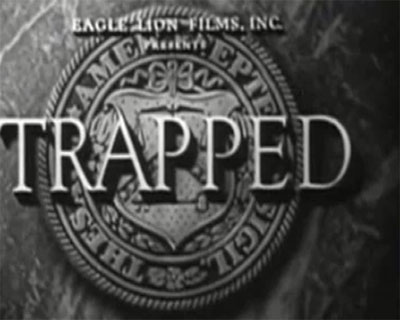
“Trapped” is a 1949 film noir directed by Richard Fleischer and starring Lloyd Bridges, Barbara Payton, and John Hoyt. The movie tells the story of a U.S. Treasury agent, Tris Stewart (played by Lloyd Bridges), who is assigned to track down a counterfeiting ring operating in Los Angeles.

Stewart is a dedicated and determined agent who will stop at nothing to bring the criminals to justice. He uses a variety of tactics to get closer to the gang, including posing as a criminal himself and befriending one of the members, a nightclub singer named Meg Dixon (played by Barbara Payton).

As Stewart gets closer to the truth, he realizes that the gang’s leader, a man named Emile (played by John Hoyt), is a ruthless and dangerous criminal who will do whatever it takes to protect his operation. Emile orders his men to eliminate Stewart, and the agent finds himself in a desperate fight for survival.

Stewart’s investigation leads him to a climactic showdown with Emile and his men, and the final scenes of the movie are filled with suspense and action. In the end, Stewart triumphs over the criminals and brings them to justice, but not without facing numerous obstacles and dangers along the way.

“Trapped” is a classic film noir that showcases the genre’s trademark elements, including gritty crime scenes, flawed characters, and a sense of moral ambiguity. The movie is notable for its fast-paced action and suspenseful plot, as well as the strong performances by its cast. It remains a favorite among fans of film noir and crime dramas.

Directors:
Richard Fleischer

Writer:
Earl Felton, George Zuckerman

Stars:
Lloyd Bridges, Barbara Payton, John Hoyt

Rate this Movie

Please Murder Me (1956)

4/5 (1)

“Please Murder Me” is a crime drama film released in 1956. The movie revolves around a criminal defense lawyer named Craig Carlson, played by Raymond Burr, who takes on the case of a man named Joe Keats, who has been accused of murdering his wife. Keats claims to be innocent and hires Carlson to defend him.

As Carlson investigates the case, he begins to suspect that Keats is lying and is actually guilty of the crime. However, Keats has an alibi that seems to check out, and Carlson can’t find any solid evidence to prove that he did it. The only other suspect is Keats’ ex-girlfriend, who had motive and opportunity to commit the crime.

As the trial progresses, Carlson becomes more and more convinced that Keats is guilty, but he can’t prove it. In a shocking turn of events, Keats takes the stand and confesses to the murder, revealing that he had been lying all along to protect his ex-girlfriend.

The movie ends with Keats being found guilty and sentenced to death. Carlson is left to reflect on the case and the moral ambiguity of his profession as a criminal defense lawyer.

Directors:
Peter Godfrey

Writer:
Writers
Al C. Ward, Donald Hyde, Ewald André Dupont

Stars:
Angela Lansbury, Raymond Burr, Dick Foran

Rate this Movie

The Great Flamarion (1945)

4/5 (1)

“The Great Flamarion” is a film noir released in 1945, directed by Anthony Mann and starring Erich von Stroheim, Mary Beth Hughes, and Dan Duryea.

The story follows a sharpshooter named Tony (Erich von Stroheim) who performs in a traveling carnival with his assistant, the beautiful Connie (Mary Beth Hughes). Tony is a cold and calculating man who is dissatisfied with his life and his work. He sees himself as a superior marksman who deserves better than performing in a traveling show.

One day, while performing in a new city, Tony meets a wealthy woman named Alicia (Lester Allen), who is interested in his act and invites him to perform at her home. Alicia’s husband, Charles (Dan Duryea), is a gambler who is cheating on her with Connie. When Tony learns of their affair, he decides to use it to his advantage and devises a plan to get rid of both of them and take their money.

Tony convinces Alicia to invest in a phony gold mine and to have Charles go on a trip to the mine to verify its existence. While Charles is away, Tony plans to kill him and make it look like an accident. However, things don’t go as planned and Tony ends up getting caught in his own web of deception.

“The Great Flamarion” is a classic film noir with a twisted plot and a tragic ending. The film’s themes include greed, jealousy, and the corrupting influence of money. The performances of the cast, particularly Erich von Stroheim, are outstanding and add to the film’s dark and foreboding atmosphere.

Directors:
Anthony Mann

Writer:
Anne Wigton, Heinz Herald, Richard Weil

Stars:
Erich von Stroheim, Mary Beth Hughes, Dan Duryea

Rate this Movie

The Hitch-Hiker (1953)

4/5 (1)

“The Hitch-Hiker” is a classic film noir directed by Ida Lupino and released in 1953. The movie tells the story of two friends, Roy Collins (Edmond O’Brien) and Gilbert Bowen (Frank Lovejoy), who are on a fishing trip in Mexico. Along the way, they pick up a hitchhiker named Emmett Myers (William Talman), who turns out to be a dangerous criminal on the run from the police.

As they travel further into Mexico, Roy and Gilbert begin to realize that Emmett is not just a harmless hitchhiker, but a cold-blooded killer who has murdered several people. Emmett forces the two friends to drive him across the country, holding them hostage and threatening to kill them if they don’t do as he says.

Roy and Gilbert’s attempts to escape are repeatedly thwarted by Emmett’s cunning and ruthlessness, and they are forced to rely on their wits and resourcefulness to survive. The tension mounts as they drive deeper into the isolated and unforgiving desert landscape, with Emmett’s threats growing more and more ominous.

“The Hitch-Hiker” is a gripping and suspenseful film that explores themes of trust, survival, and the nature of evil. Ida Lupino’s direction and William Talman’s chilling performance as the remorseless Emmett Myers have made the movie a classic of the film noir genre.

Directors:
Ida Lupino

Writer:
Collier Young, Ida Lupino, Robert L. Joseph

Stars:
Edmond O’Brien, Frank Lovejoy, William Talman

Rate this Movie

Fear in the Night (1947)

3/5 (1)

“Fear in the Night” is a 1947 film noir directed by Maxwell Shane. The movie follows the story of Vince Grayson (played by DeForest Kelley), a young man who begins to have terrifying nightmares after starting a new job as a bank clerk. In his dreams, Vince is haunted by a mysterious figure in a wheelchair who he believes is trying to kill him.

As the nightmares continue, Vince’s grip on reality begins to slip, causing him to act erratically and behave suspiciously. His wife, Betty (played by Ann Doran), becomes concerned for his mental health and urges him to seek help. However, Vince is convinced that his nightmares are real and that the figure in the wheelchair is a danger to his life.

As the plot unfolds, it is revealed that Vince’s fears are rooted in a traumatic event from his past. The film builds to a suspenseful climax as Vince confronts the truth about his nightmares and the identity of the figure in the wheelchair.

“Fear in the Night” is notable for its use of dream sequences and psychological horror elements, which were uncommon in films of the era. The movie was well-received upon its release and has since become a cult classic of the film noir genre.

Directors:
Maxwell Shane

Writer:
Cornell Woolrich, Maxwell Shane

Stars:
Paul KellyDe, Forest Kelley, Kay Scott

Rate this Movie

Suddenly (1954)

4/5 (1)

“Suddenly” is a 1954 American film noir directed by Lewis Allen and starring Frank Sinatra, Sterling Hayden, and Nancy Gates. The movie follows the story of a small town sheriff (Hayden) who must protect the President of the United States during a brief stopover in his town, where an assassin (Sinatra) and his accomplices plan to ambush the President.

The movie explores themes of patriotism, duty, and the psychology of a killer. Sinatra’s character, John Baron, is a war veteran suffering from PTSD who is motivated by his hatred of the government and a desire for revenge. He takes a family hostage in a house overlooking the train station where the President is scheduled to arrive, and threatens to kill them unless the Sheriff cooperates with him.

The tension builds as the Sheriff tries to outsmart Baron and protect the President, leading to a thrilling climax where the two face off in a showdown. The movie was well received by audiences and critics for its suspenseful plot, strong performances, and intense atmosphere. It is now considered a classic of the film noir genre.

Directors:
Lewis Allen

Writer:
Richard Sale

Stars:
Frank Sinatra, Sterling Hayden, James Gleason

Rate this Movie

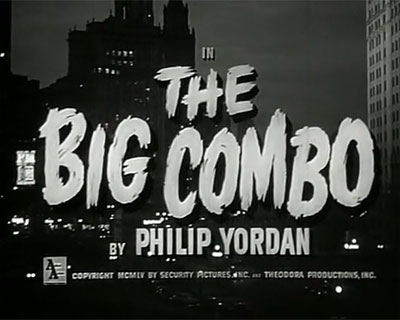
Big Combo (1955)

4/5 (1)

“The Big Combo” is a classic film noir released in 1955. The film is directed by Joseph H. Lewis and stars Cornel Wilde, Richard Conte, and Jean Wallace.

The story follows Police Lieutenant Leonard Diamond (Wilde), who is determined to bring down the ruthless and powerful crime boss Mr. Brown (Conte). Diamond is aided in his investigation by Susan Lowell (Wallace), a former lover of Brown’s who wants to help bring him to justice.

As Diamond delves deeper into Brown’s criminal empire, he becomes more and more obsessed with bringing him down, even if it means breaking the law himself. Brown, meanwhile, is equally determined to keep his criminal empire intact and will stop at nothing to protect his interests.

As the tension between Diamond and Brown grows, the film builds to a tense and violent climax, as Diamond finally confronts Brown in a dramatic showdown.

Overall, “The Big Combo” is a classic film noir that features strong performances from its cast and a gripping story that keeps the audience on the edge of their seats. The film is notable for its stylish visuals, dark tone, and exploration of themes such as obsession, corruption, and power.

Directors:
Joseph H. Lewis

Writer:
Philip Yordan

Stars:
Cornel Wilde, Richard Conte, Jean Wallace

Rate this Movie

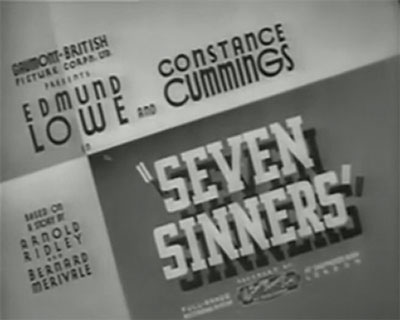
Seven Sinners (1936)

4/5 (1)

In this film, a quick-witted American private investigator embarks on a journey overseas with his romantic interest and trusted sidekick. While on their travels, they stumble upon a lifeless body, but before they can take any action, it vanishes into thin air. Determined to uncover the truth, the P.I. sets out to unravel a complex and malicious criminal organization. Along the way, he must use his intelligence and resourcefulness to outsmart the dangerous individuals behind the sinister plot. The film is filled with suspense, action, and unexpected twists and turns, keeping the audience on the edge of their seats until the very end.

Directors:
Albert de Courville

Writer:
Sidney Gilliat, Frank Launder, Austin Melford

Stars:
Edmund Lowe, Constance Cummings, Thomy Bourdelle

Rate this Movie

The Stranger (1946)

4/5 (1)

“The Stranger” is a 1946 film directed by Orson Welles. The movie follows the story of Franz Kindler, a notorious Nazi war criminal who has been in hiding in a small town in Connecticut under a false identity.

The film begins with the arrival of an investigator named Wilson who is looking for Kindler, although he does not know what he looks like. Wilson is aided in his search by Mary Longstreet, the daughter of a Supreme Court justice who is living in the town. Mary and Wilson fall in love while they try to uncover Kindler’s true identity.

As the investigation progresses, it becomes clear that Kindler is aware of Wilson’s presence and is trying to eliminate him. Wilson eventually discovers Kindler’s true identity and confronts him in a clock tower, where the two engage in a dramatic struggle that results in Kindler’s death.

The film’s themes revolve around guilt, justice, and the consequences of war. It portrays Kindler as a monstrous figure who is haunted by his past and unable to escape the consequences of his actions. The film is notable for its visual style and complex characters, and has been praised as one of Welles’ most underrated films.

Directors:

Writer:

Stars:

Rate this Movie

The Demon Barber of Fleet Street (1936)

3/5 (1)

“The Demon Barber of Fleet Street” is a 1936 British crime-horror film directed by George King. The film is based on the story of Sweeney Todd, a fictional character who murders his customers and then sends their bodies to be turned into meat pies by his accomplice, Mrs. Lovett.

The film follows Todd, a barber who has returned to London after being wrongly imprisoned in Australia for 15 years. Todd sets up his barber shop above Mrs. Lovett’s pie shop and begins luring his customers into a trap, killing them with a razor and then disposing of their bodies. Mrs. Lovett then uses the corpses to make her meat pies, which quickly become popular in the neighborhood.

Todd’s crimes are eventually discovered by a young sailor named Mark Ingerstreet, who has fallen in love with Todd’s daughter, Johanna. Mark sets out to expose Todd and put an end to his reign of terror, but Todd has other plans for Mark and Johanna.

“The Demon Barber of Fleet Street” is a dark and suspenseful film, featuring strong performances by Tod Slaughter as Sweeney Todd and Stella Rho as Mrs. Lovett. The film’s blend of horror and crime elements has made it a cult classic and a notable adaptation of the Sweeney Todd legend.

Directors:
George King

Writer:
Frederick Hayward, H.F. Maltby, George Dibdin-Pitt

Stars:
Tod Slaughter, Stella Rho, John Singer

Rate this Movie

House on Haunted Hill (1959)

4.75/5 (4)

“House on Haunted Hill” is a horror film directed by William Castle in 1959. The film stars Vincent Price as eccentric millionaire Frederick Loren, who invites five guests to spend the night in a supposedly haunted house in exchange for $10,000 each.

The guests, including a test pilot, a newspaper columnist, and the house’s owner, arrive at the house and are met by Loren and his wife Annabelle. As the night progresses, strange and terrifying events occur, including a severed head that appears out of nowhere, a ghostly apparition, and the discovery of a pit filled with acid.

As tensions rise, it becomes clear that one of the guests is trying to scare the others and possibly even murder them. In the end, the identity of the villain is revealed, and a dramatic confrontation takes place, resulting in a thrilling climax.

“House on Haunted Hill” is known for its use of gimmicks, such as “Emergo,” a skeleton that would fly over the audience during certain scenes in theaters. The film has since become a cult classic and is often cited as an influential horror film of its time.

Directors:
William Castle

Writer:
Robb White

Stars:
Vincent PriceCarol OhmartRichard Long

Rate this Movie

The Testament of Dr. Mabuse (1933)

4/5 (1)

“The Testament of Dr. Mabuse” is a German film directed by Fritz Lang and released in 1933. The movie is a sequel to Lang’s earlier work, “Dr. Mabuse the Gambler,” and it follows the story of a criminal mastermind named Dr. Mabuse who has been institutionalized in an insane asylum.

At the beginning of the film, a group of criminals begins to carry out a series of bizarre crimes that seem to be inspired by Dr. Mabuse’s writings. The police are at a loss to explain the crimes, and it is suggested that Dr. Mabuse may be communicating with the criminals from his asylum.

Meanwhile, a new criminal mastermind, known only as “The Great Unknown,” emerges and begins to carry out his own elaborate schemes. The police begin to suspect that The Great Unknown is somehow connected to Dr. Mabuse and his writings.

As the film progresses, it becomes clear that Dr. Mabuse is indeed communicating with the criminals and that he is behind many of the crimes. He has been using his writings to control and manipulate them from his cell.

In the end, the police manage to capture Dr. Mabuse, but not before he has caused chaos and destruction throughout the city. The film ends with a warning that the forces of evil are still at work and that the struggle between good and evil will continue.

Directors:
Fritz Lang

Writer:
Norbert Jacques, Fritz Lang, René Sti

Stars:
Rudolf Klein-Rogge, Otto Wernicke, Thomy Bourdelle

Rate this Movie