Silent Films

Martyrs of the Alamo (1915)

3/5 (1)

“Martyrs of the Alamo” is a silent historical epic film released in 1915, directed by Christy Cabanne and starring Sam De Grasse, Allan Sears, and Walter Long.

The film tells the story of the 1836 Battle of the Alamo in San Antonio, Texas, during the Texas Revolution. The Alamo was a fortified mission complex that was defended by a small group of Texian (American) soldiers against a much larger Mexican army led by General Santa Anna (played by Sam De Grasse).

The film portrays the bravery and sacrifice of the Texian soldiers who fought to the death to defend the Alamo against overwhelming odds. Among the defenders were legendary figures such as Davy Crockett (played by Allan Sears) and Jim Bowie (played by Wallace Reid).

Despite the overwhelming Mexican forces, the Texians held out for 13 days before being overrun and killed. The film depicts the final battle in vivid detail, including the famous cry of “Remember the Alamo!” that became a rallying cry for Texians in their fight for independence.

“Martyrs of the Alamo” was a landmark film in the history of cinema, with its epic scale and realistic battle scenes. The film was also notable for its use of location shooting, with many scenes filmed on location at the actual Alamo mission in San Antonio. The film remains a classic example of the historical epic genre and a tribute to the bravery and sacrifice of the defenders of the Alamo.
Directors:
Christy Cabanne

Writer:
Christy Cabanne, Theodosia Harris

Stars:
Sam De Grasse, Allan Sears, Walter Long

Rate this Movie

Dr. Pyckle and Mr. Pryde (1925)

3/5 (1)

“Dr. Pyckle and Mr. Pryde” is a 1925 silent film directed by Scott Pembroke and starring Stan Laurel.

The film is a parody of Robert Louis Stevenson’s classic novel “Dr. Jekyll and Mr. Hyde,” with Laurel playing the dual roles of Dr. Pyckle and Mr. Pryde. In this version, Dr. Pyckle is a kindly scientist who invents a potion that he believes will bring out the best in people. However, the potion has the unintended side effect of turning him into the evil and monstrous Mr. Pryde.

As Mr. Pryde, Laurel wreaks havoc on the city, causing chaos and destruction wherever he goes. Meanwhile, Dr. Pyckle desperately tries to find a way to reverse the effects of the potion and put an end to Mr. Pryde’s reign of terror.

“Dr. Pyckle and Mr. Pryde” is a hilarious and inventive parody, showcasing Laurel’s comedic talents and skillful use of physical comedy. The film’s special effects and makeup are also impressive for their time, with Laurel’s transformation from Dr. Pyckle to Mr. Pryde being a standout moment. Despite being a parody, the film still manages to capture the eerie and unsettling tone of the original “Dr. Jekyll and Mr. Hyde” story.

Directors:
Scott Pembroke, Joe Rock

Writer:
Tay Garnett

Stars:
Stan Laurel, Julie Leonard, The Wonder Dog Pal

Rate this Movie

Alice in Wonderland (1915) summary

3/5 (1)

The 1915 silent film “Alice in Wonderland” is a loose adaptation of Lewis Carroll’s beloved classic children’s book. The movie was directed by W.W. Young and starred Viola Savoy as Alice.

The film begins with Alice sitting on a riverbank with her sister, reading a book. She falls asleep and has a dream where she follows a white rabbit into a rabbit hole. She finds herself in a strange, fantastical world where she encounters various bizarre characters and has surreal adventures.

Alice meets the Cheshire Cat, the Mad Hatter, and the Queen of Hearts, among other memorable characters. She plays a game of croquet with the Queen, who threatens to have her beheaded when Alice accidentally breaks a rule. Alice is eventually woken up from her dream by her sister.

The film is notable for its creative special effects, which were groundbreaking for their time. It also features a unique, whimsical visual style that captures the spirit of Carroll’s original story.

Overall, “Alice in Wonderland” (1915) is a charming and imaginative adaptation of a beloved classic that remains popular with audiences of all ages.

Directors:
W.W. Young

Writer:
Lewis Carroll, W.W. Young

Stars:
Viola Savoy, Herbert Rice, Harry Marks

Rate this Movie

Dr. Jekyll and Mr. Hyde (1920)

4/5 (1)

“Dr. Jekyll and Mr. Hyde” is a silent film adaptation of Robert Louis Stevenson’s classic novel of the same name. The film was directed by John S. Robertson and stars John Barrymore in the dual roles of Dr. Henry Jekyll and Mr. Edward Hyde.

The story follows Dr. Jekyll, a respected scientist who is working on a potion that can separate a person’s good and evil tendencies. Despite warnings from his friends and colleagues, Jekyll drinks the potion and transforms into the monstrous Mr. Hyde, a brutal and violent man who indulges in his darkest desires.

As Jekyll becomes more and more addicted to the sensation of transforming into Hyde, he loses control over his transformation and begins to fear that he may never be able to return to his original self. Meanwhile, Hyde’s actions become increasingly reckless and dangerous, putting Jekyll’s reputation and relationships at risk.

In the end, Jekyll’s attempts to separate his good and evil selves prove to be a fatal mistake, as he is unable to control his transformations and ultimately destroys himself. The film serves as a cautionary tale about the dangers of giving into one’s darker impulses and the importance of maintaining a sense of balance and control in one’s life.

Directors:
John S. Robertson

Writer:
Robert Louis Stevenson, Clara Beranger, Thomas Russell Sullivan

Stars:
John Barrymore, Martha Mansfield, Brandon Hurst

Rate this Movie

The Mark of Zorro (1920)

4/5 (2)

“The Mark of Zorro” is a silent film released in 1920, directed by Fred Niblo and starring Douglas Fairbanks in the lead role. The film is set in the early 19th century in Spanish California and follows the story of a wealthy young man named Don Diego Vega who returns home from Spain to find his people oppressed by a cruel and corrupt governor.

Disguised as a masked outlaw named Zorro, Diego sets out to right the wrongs committed against his people. He uses his fencing skills, wit, and daring to challenge the governor’s tyranny and protect the weak and innocent.

As Zorro, Diego becomes a hero to the people and a thorn in the governor’s side. However, he must also contend with the governor’s right-hand man, Captain Juan Ramon, who is determined to capture and unmask the elusive Zorro.

The film is filled with thrilling sword fights, daring stunts, and exciting action sequences. It also features a romantic subplot as Diego falls in love with the governor’s beautiful niece, Lolita.

In the end, Zorro triumphs over the governor’s tyranny, and justice is served. The film ends with Diego revealing his true identity to Lolita, and the two live happily ever after.

“The Mark of Zorro” is considered a classic of the silent film era and is credited with popularizing the swashbuckling adventure genre. Douglas Fairbanks’ charismatic performance as Zorro helped make the character an enduring pop culture icon.

Directors:
Fred Niblo

Writer:
Johnston McCulley, Douglas Fairbanks, Eugene Miller

Stars:
Douglas Fairbanks, Marguerite De La Motte, Noah Beery

Rate this Movie

The Martyrs of the Alamo (1915) The Birth of Texas

3/5 (1)

“The Martyrs of the Alamo” is a silent film released in 1915, which tells the story of the Battle of the Alamo in San Antonio, Texas, during the Texas Revolution. The movie is considered to be one of the earliest examples of the Hollywood epic genre, and it was directed by Christy Cabanne and produced by D.W. Griffith.

The film begins with the arrival of William Travis, Jim Bowie, and Davy Crockett at the Alamo, which was a former mission that had been converted into a fort by the Texian rebels. The three heroes become friends and prepare to defend the fort against the Mexican army led by General Santa Anna.

The Texans are outnumbered and outgunned, but they fight fiercely and hold off the Mexican army for 13 days. During this time, tensions rise within the Alamo as some of the defenders begin to question whether they should continue fighting or surrender. Travis famously draws a line in the sand and asks all those who are willing to stay and fight to cross it. All of the men do, including Crockett and Bowie, who are later killed in battle.

The final battle is depicted in great detail, with the Texans bravely fighting to the last man. The film ends with the Mexican army victorious and the Alamo in ruins. However, the sacrifice of the Texans at the Alamo inspired others to join the fight for Texas independence, and the film ends with a caption that reads, “Their heroic struggle inspired the birth of Texas.”

“The Martyrs of the Alamo” was a critical and commercial success, and it helped establish Hollywood’s reputation for producing epic films. The movie remains a classic and is considered to be an important part of Texas history, as it tells the story of the brave Texans who fought and died for their independence.

Directors:
Christy Cabanne

Writer:
Christy CabanneTheodosia Harris

Stars:
Sam De Grasse, Allan Sears, Walter Long

Rate this Movie

The Cat and the Canary (1927)

4/5 (1)

“The Cat and the Canary” is a 1927 horror comedy film directed by Paul Leni and based on the play of the same name by John Willard. The movie takes place in a creepy old mansion where a group of people have gathered for the reading of a will.

The plot revolves around the character of Annabelle West, who has inherited a large fortune from her eccentric uncle. However, there is a catch – Annabelle must spend the night in the mansion along with a group of relatives who may also be in line for the inheritance. If anything happens to Annabelle, the inheritance goes to her other relatives.

As the night progresses, strange things begin to happen, and the guests become increasingly paranoid and suspicious of one another. They are also stalked by a mysterious figure known as “the Cat,” who may or may not be a real person.

The film is notable for its use of atmospheric lighting and camera work, which help to create a sense of dread and unease throughout the movie. The cast is also strong, with Laura La Plante delivering a standout performance as Annabelle West.

Overall, “The Cat and the Canary” is a classic example of early horror cinema and remains a beloved film among fans of the genre.

Directors:
Paul Leni

Writer:
John Willard, Robert F. Hill, Alfred A. Coh

Stars:
Laura La Plante, Creighton Hale, Forrest Stanley

Rate this Movie

The Cabinet of Dr. Caligari (1920)

4/5 (1)

“The Cabinet of Dr. Caligari” is a silent German expressionist film, directed by Robert Wiene and released in 1920. The film tells the story of a young man named Francis who recounts his experience with a sinister hypnotist named Dr. Caligari.

In the film, Francis and his friend Alan visit a fair where Dr. Caligari is exhibiting his somnambulist, Cesare, who has been asleep for twenty-three years. Caligari claims that Cesare can predict the future, and when Alan asks how long he has to live, Cesare predicts that he will be dead by dawn.

Later that night, Alan is found dead, and Francis becomes obsessed with finding the murderer. He suspects that Caligari and Cesare are responsible and starts investigating them. His investigations lead him to discover that Caligari is actually the director of a mental institution and that Cesare is one of his patients.

Francis eventually discovers that Caligari has been using Cesare to commit a series of murders in the town. He confronts Caligari, who reveals that he is insane and that he has been using Cesare as a tool to carry out his evil deeds. In the end, the police catch Caligari and Cesare dies.

The film is known for its use of expressionist visuals, such as distorted and stylized sets, and the use of lighting to create mood and atmosphere. It is considered a classic of German expressionist cinema and a landmark in the history of horror films.

Directors:
Robert Wiene

Writer:
Carl Mayer, Hans Janowitz

Stars:
Werner Krauss, Conrad Veidt, Friedrich Feher

Rate this Movie

The Birth of a Nation (1915)

3/5 (1)

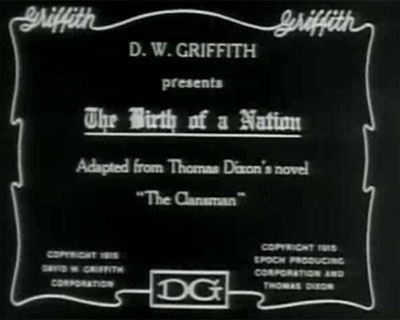
“The Birth of a Nation” is a silent drama film from 1915, directed by D.W. Griffith. The movie is based on the novel “The Clansman” by Thomas Dixon Jr. and is considered a landmark in American cinema, despite its controversial subject matter.

The film follows the story of two families, the Stonemans from the North and the Camerons from the South, during the American Civil War and Reconstruction era. The movie portrays the Southern whites as the heroic defenders of their homes against Northern aggression and the newly freed African Americans as a dangerous and inferior race.

The film is notorious for its portrayal of African Americans as grotesque caricatures and for its glorification of the Ku Klux Klan. The Klan is depicted as a heroic force that helps to restore order and protect white women from the supposedly uncontrollable lust of black men.

“The Birth of a Nation” was met with controversy upon its release, with some groups protesting against its racism and portrayal of African Americans. However, it was also a commercial success and was praised by some for its technical innovations and cinematic techniques, including the use of close-ups, cross-cutting, and camera movement.

Despite its historical significance, “The Birth of a Nation” is now widely criticized for its racist content and has been the subject of much debate about the role of art in perpetuating harmful stereotypes and promoting white supremacy.

Directors:
D.W. Griffith

Writer:
Thomas Dixon Jr., D.W. Griffith, Frank E. Woods

Stars:
Lillian Gish, Mae Marsh, Henry B. Walthall

Rate this Movie

The Phantom of the Opera (1925)

4/5 (1)

“The Phantom of the Opera” is a silent horror film from 1925, based on the novel by Gaston Leroux. The movie was directed by Rupert Julian and starred Lon Chaney as the Phantom.

The film is set in the Paris Opera House, which is said to be haunted by a mysterious figure known as the Phantom. The Phantom, who lives in the catacombs beneath the opera house, becomes obsessed with Christine Daaé (played by Mary Philbin), a young soprano who is just beginning to make a name for herself in the opera world.

The Phantom begins to coach Christine in secret, using his influence to ensure that she gets the lead roles in the productions. He also begins to send her letters and gifts, leading her to believe that they are from an angel sent by her deceased father.

However, when Christine falls in love with Raoul (played by Norman Kerry), a handsome young nobleman, the Phantom becomes jealous and decides to take revenge. He kidnaps Christine and takes her to his lair in the catacombs, where he reveals his face to her for the first time, terrifying her with his grotesque appearance.

Meanwhile, Raoul, with the help of a group of police officers, sets out to rescue Christine and capture the Phantom. In a dramatic finale, the Phantom is pursued through the opera house, leading to a confrontation with Raoul and the police on the roof. The Phantom ultimately meets a tragic end, falling to his death from the roof of the opera house.

“The Phantom of the Opera” is considered a classic of the horror genre and is particularly notable for Lon Chaney’s incredible performance as the Phantom, which required him to wear a painful and elaborate makeup and prosthetic devices.

Directors:
Rupert Julian, Lon Chaney, Ernst Laemmle

Writer:
Gaston Leroux, Walter Anthony, Elliott J. Clawson

Stars:
Lon Chaney, Mary Philbin, Norman Kerry

Rate this Movie

The Lodger: A Story of the London Fog (1927)

4/5 (1)

“The Lodger: A Story of the London Fog” is a silent film directed by Alfred Hitchcock and released in 1927. The film is based on the novel of the same name by Marie Belloc Lowndes and tells the story of a mysterious lodger who may be a serial killer.

The film is set in London during a period of time when a serial killer known as “The Avenger” is on the loose, targeting young blonde women. When a new lodger (Ivor Novello) arrives at a boarding house run by Mr. and Mrs. Bunting, he seems to fit the description of the killer, and Mrs. Bunting becomes increasingly suspicious of him.

As the lodger’s behavior becomes increasingly erratic, Mrs. Bunting becomes convinced that he is the Avenger and enlists the help of her policeman fiance to track him down. However, as they close in on the lodger, they begin to uncover evidence that suggests he may not be the killer after all.

The film is notable for its use of innovative camera techniques and its exploration of themes such as guilt, suspicion, and the dangers of mob mentality. It was one of Hitchcock’s earliest successes and helped establish him as a master of suspense. The film also marks the first of many collaborations between Hitchcock and actress Alma Reville, who would later become his wife and a key creative collaborator.

Directors:
Alfred Hitchcock

Writer:
Marie Belloc Lowndes, Eliot Stannard, Alfred Hitchcock

Stars:
June Tripp, Ivor Novello, Marie Ault

Rate this Movie

The Four Horsemen of the Apocalypse (1921)

3/5 (1)

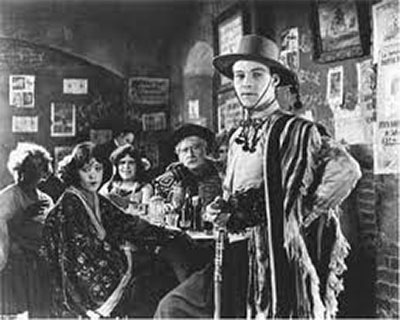
“The Four Horsemen of the Apocalypse” is a silent film directed by Rex Ingram and released in 1921. The film is based on the novel of the same name by Vicente Blasco Ibáñez and is set during World War I.

The story follows the wealthy Argentinian family of Julio Madariaga, who is a staunch supporter of Germany. However, when his grandson Julio Desnoyers falls in love with the Frenchwoman Marguerite Laurier, the family becomes divided by the war.

As the conflict intensifies, Julio Desnoyers and Marguerite are caught up in the chaos of battle, with Julio fighting for the Germans and Marguerite aiding the French resistance. The four horsemen of the apocalypse – Conquest, War, Famine, and Death – serve as a metaphor for the devastation wrought by the war and its impact on the characters.

The film was a major commercial success and helped launch the career of its lead actor, Rudolph Valentino. It also marked a significant milestone in the history of cinema, as one of the first films to portray the war in a realistic and nuanced manner. Despite its age, it remains a powerful and thought-provoking examination of the human cost of war.

Directors:
Rex Ingram

Writer:
Vicente Blasco Ibáñez, June Mathis

Stars:
Rudolph Valentino,Alice Terry, Pomeroy Cannon

Rate this Movie

The Ring (1927)

3/5 (1)

“The Ring” is a silent film directed by Alfred Hitchcock and released in 1927. The film is about a love triangle that develops between two boxers and the woman they both desire.

The main character, Jack “One Round” Sander, is a successful boxer who is in love with a woman named Mabel. Mabel works at a carnival where Jack performs, and she is also courted by a younger boxer named Bob. Despite Jack’s efforts to win Mabel’s heart, she is more interested in Bob.

As the two boxers compete in the ring, their rivalry intensifies. Bob wins a match against Jack and becomes the new champion, but Jack refuses to accept defeat and challenges Bob to a rematch. Meanwhile, Mabel begins to see the darker side of Bob’s personality and becomes afraid of him.

In the climactic fight scene, Jack and Bob face off in the ring once again. As the fight reaches its conclusion, Mabel realizes that she loves Jack and not Bob. Jack ultimately emerges as the victor, and he and Mabel reconcile.

The film is notable for its innovative use of camera angles and techniques, as well as its exploration of themes such as jealousy and competition. It was one of Hitchcock’s earliest successes and helped establish his reputation as a master filmmaker.

Directors:
Alfred Hitchcock

Writer:
Alfred Hitchcock, Alma Reville

Stars:
Carl Brisson, Lillian Hall-Davis, Ian Hunter

Rate this Movie

The Ace of Hearts (1921)

3/5 (1)

“The Ace of Hearts” is a silent film released in 1921, directed by Wallace Worsley. The movie follows the story of a secret society that seeks to eliminate people they believe are unworthy of life.

The movie is set in San Francisco, and Lilith (played by Leatrice Joy) is the daughter of a wealthy man. She falls in love with one of the members of the secret society, Forrest (played by John Bowers). Lilith is soon initiated into the society, and Forrest reveals to her that their next target is a man named Farallone (played by Lon Chaney).

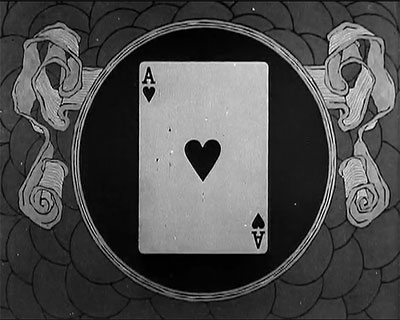
Lilith discovers that the society uses a deck of cards to determine who their next victim will be. Forrest is the Ace of Hearts, and he chooses the targets. Lilith draws the King of Hearts and is given the task of carrying out the assassination of Farallone.

However, Lilith starts to have doubts about the morality of the society’s actions. She meets Farallone and discovers that he is a kind man who does not deserve to die. She decides to warn him about the society’s plans and risks her own life in the process.

In the end, the society’s plan is foiled, and Forrest is killed in the process. Lilith and Farallone end up together, and Lilith is relieved to have put an end to the society’s ruthless actions.

“The Ace of Hearts” is notable for its striking visual style, use of shadow and dramatic lighting, and exploration of themes such as morality, love, and loyalty. It was well-received upon its release and is considered a classic of the silent era.

Directors:
Wallace Worsley

Writer:
Gouverneur Morris, Ruth Wightman

Stars:
Leatrice Joy, John Bowers, Lon Chaney

Rate this Movie

Three Ages (1923)

3/5 (1)

“Three Ages” is a silent comedy film released in 1923 and directed by Buster Keaton and Edward F. Cline. The movie is a parody of D.W. Griffith’s “Intolerance” and tells three parallel stories set in different historical eras, each depicting the trials and tribulations of a young man trying to win the heart of his love interest.

The first story takes place in prehistoric times and follows the adventures of a caveman, played by Buster Keaton, who competes for the love of a woman with a rival tribe. The caveman must use all his wit and strength to win the heart of the woman he loves and escape the dangers of the primitive world around him.

The second story takes place in ancient Rome and follows the exploits of a young gladiator, also played by Buster Keaton, who falls in love with a woman of high social status. He must navigate the dangerous world of the Roman aristocracy and fight off a rival suitor in order to win her heart.

The third and final story takes place in the modern era and follows the misadventures of a young man, played by Buster Keaton, who is trying to win the heart of a woman in the city. He must contend with modern technology and the fast pace of city life while trying to win her affections.

In the end, all three stories converge in a final scene that sees the three main characters of each era meet each other and embrace, symbolizing the timeless nature of love and the universality of human experience.

“Three Ages” was Buster Keaton’s first feature-length film as a director, and it showcased his trademark physical comedy and acrobatics. The film was well-received by critics and audiences alike and helped establish Keaton as one of the most talented and innovative filmmakers of his time.

Directors:
Edward F. Cline, Buster Keaton

Writer:
Clyde Bruckman, Joseph A. Mitchell, Jean C. Havez

Stars:
Buster Keaton, Margaret Leahy, Wallace Beery

Rate this Movie