Silent Films

The Poor Little Rich Girl (1917)

4/5 (1)

“The Poor Little Rich Girl” is a silent film directed by Maurice Tourneur and released in 1917. The film stars Mary Pickford as Gwendolyn, a wealthy and lonely little girl who is ignored by her parents and spends most of her time with her nurse, played by Madlaine Traverse.

Despite her wealth, Gwendolyn is unhappy and yearns for the love and attention of her parents. One night, she falls asleep in her playroom and dreams that she is transported to a fantastical world where she encounters a variety of characters who represent different aspects of her life.

In her dream, Gwendolyn is forced to confront the harsh realities of the world outside of her privileged upbringing. She encounters poverty, illness, and injustice, and realizes that there is more to life than just material wealth.

When she wakes up from her dream, Gwendolyn is a changed person. She reaches out to her parents and finally receives the love and attention she has been craving. The film ends with Gwendolyn happily playing with her parents and realizing that she is not alone in the world.

“The Poor Little Rich Girl” is a classic tale of a child’s search for love and acceptance. Mary Pickford’s performance as Gwendolyn is touching and nuanced, and the film remains a beloved example of early silent cinema.

Directors:
Maurice Tourneur

Writer:
Eleanor Gates, Frances Marion

Stars:
Mary Pickford, Madlaine Traverse, Charles Wellesley
Rate this Movie

The Sheik (1921)

3/5 (1)

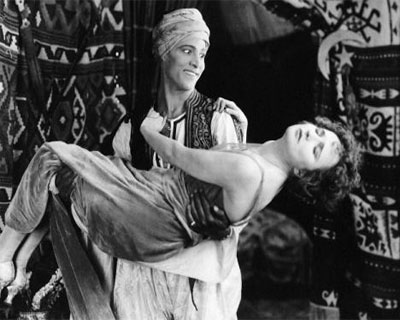
“The Sheik” is a 1921 silent romantic drama film directed by George Melford and starring Rudolph Valentino, Agnes Ayres, and Adolphe Menjou. It is based on the 1919 novel of the same name by Edith Maude Hull.

The film is set in the North African desert, where an independent and spirited Englishwoman named Lady Diana Mayo (Agnes Ayres) is vacationing with her brother. One day, while out riding alone, she is kidnapped by a group of Arab men and taken to the tent of Ahmed Ben Hassan (Rudolph Valentino), a wealthy and powerful Sheik. Ahmed initially plans to ransom Diana back to her brother, but soon finds himself drawn to her beauty and spirit.

Diana initially resists Ahmed’s advances and tries to escape, but gradually begins to fall in love with him. However, their relationship is complicated by the fact that Ahmed is already betrothed to another woman, and by the cultural differences between them. Eventually, Diana is rescued by her brother and taken back to England.

Despite its controversial themes and portrayal of Arab culture, “The Sheik” was a massive commercial success, making Rudolph Valentino a major Hollywood star and sparking a craze for desert romance films. The film was followed by a sequel, “The Son of the Sheik,” in 1926, which was Valentino’s final film before his untimely death at the age of 31.

Directors:
George Melford

Writer:
Edith Maude Hull, Monte M. Katterjohn

Stars:
Rudolph Valentino, Agnes Ayres, Ruth Miller

Rate this Movie

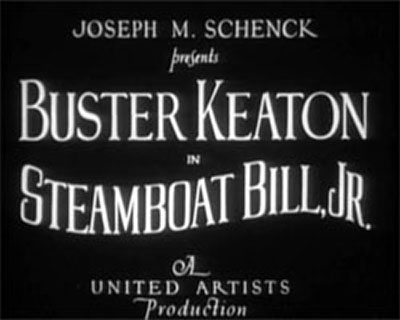
Steamboat Bill, Jr (1928)

4/5 (1)

“Steamboat Bill, Jr.” is a silent comedy film from 1928, directed by Charles Reisner and starring Buster Keaton. The story takes place in a small Mississippi town, where William “Steamboat Bill” Canfield (Ernest Torrence), a gruff and tough riverboat captain, runs a struggling business. He hopes that his son, also named William (Buster Keaton), will come and help him out.

When William Jr. arrives, his father is disappointed to find that he is a weak and effeminate young man who dresses in the latest fashion and plays the ukulele. Despite his father’s disapproval, William Jr. falls in love with Kitty (Marion Byron), the daughter of Steamboat Bill’s rival, the wealthy and successful J.J. King (Tom McGuire).

As a hurricane approaches, the tension between the two families escalates. William Jr. and Kitty get caught in the middle of the chaos, and William Jr. must prove his worth and courage to both his father and Kitty’s father. The film culminates in a thrilling and iconic sequence in which Keaton’s character, caught in the middle of the hurricane, survives by narrowly avoiding a falling building facade, which he passes through a window frame.

Overall, “Steamboat Bill, Jr.” is a classic comedy film that showcases Buster Keaton’s talent for physical humor and his ability to create hilarious and inventive gags. The film is also notable for its impressive stunt work and special effects, which were groundbreaking for their time.

Directors:
Charles Reisner, Buster Keaton

Writer:
Carl Harbaugh

Stars:
Buster Keaton, Tom McGuire, Ernest Torrence

Rate this Movie

October (1927)

3/5 (1)

October (or Oktyabr) is a 1927 silent historical film directed by Sergei Eisenstein, based on the events of the October Revolution in Russia in 1917. The film was commissioned by the Soviet government to commemorate the 10th anniversary of the revolution.

The film depicts the events leading up to and during the October Revolution, including the overthrow of the Provisional Government, the storming of the Winter Palace, and the establishment of Soviet power. The film’s themes emphasize the role of the masses in the revolution and the importance of collective action.

Eisenstein employed his signature montage technique to create a dynamic and dramatic portrayal of the revolution, with striking visual imagery and symbolism. The film features a large ensemble cast, with notable performances by Nikolai Popov as Lenin and Boris Livanov as Trotsky.

October was a significant achievement in the history of Soviet cinema, and it is regarded as a masterpiece of early Soviet filmmaking. Its innovative approach to filmmaking influenced generations of filmmakers around the world, and it remains a landmark in the history of cinema.

Directors:
Grigoriy Aleksandrov, Sergei Eisenstein

Writer:
Sergei Eisenstein, Grigoriy Aleksandrov, John Reed

Stars:
Boris Livanov, Nikolay Popov, Vasili Nikandrov

Rate this Movie

Outside The Law (1921)

3/5 (1)

“Outside the Law” is a silent film released in 1921, directed by Tod Browning, and starring Priscilla Dean, Lon Chaney, and Wheeler Oakman. The film tells the story of a gangster named “Black” Mike Sylva (played by Oakman) and his efforts to recruit a young thief named “Fingers” (played by Dean) to join his criminal organization.

Fingers’ father was a notorious criminal who was killed in a shootout with the police, and she has been raised by her uncle, who is also a thief. When her uncle is caught and sent to prison, Fingers is left alone and vulnerable. Black Mike sees her potential as a skilled pickpocket and offers her a job, but Fingers is initially hesitant to join his gang.

Meanwhile, a police detective named “Silent” Madden (played by Chaney) is hot on Black Mike’s trail and becomes suspicious of Fingers’ involvement with the gang. He befriends her and tries to convince her to help him catch Black Mike and his associates.

As Fingers becomes more involved with the gang, she begins to develop feelings for Black Mike’s right-hand man, “Dapper” Bill Ballard (played by Ralph Lewis). When she discovers that Black Mike plans to double-cross and kill Bill, she decides to help Silent Madden and the police take down the gang.

The film climaxes with a thrilling chase and shootout between the police and the gang, with Fingers and Bill caught in the middle. In the end, justice is served, and Fingers is given a second chance at life, thanks to Silent Madden’s compassion and understanding.

“Outside the Law” was a critical and commercial success upon its release, cementing Lon Chaney’s reputation as a master of character acting and Tod Browning’s status as a skilled director of crime dramas.

Directors:
Tod Browning

Writer:
Gardner Bradford, Tod Browning, Lucien Hubbard

Stars:
Priscilla Dean, Wheeler Oakman, Lon Chaney

Rate this Movie

One Week (1920)

4/5 (1)

“One Week” is a 1920 silent comedy film directed by and starring Buster Keaton, and co-directed by Edward F. Cline. The film follows the story of a newlywed couple, Buster and Sybil (Sybil Seely), who receive a build-it-yourself house as a wedding gift.

Excited to start their new life together, the couple sets out to build the house, but everything goes wrong from the very beginning. They struggle to assemble the house, and the instructions that come with it are confusing and mixed up. As a result, their house ends up being a disaster, with windows and doors in the wrong places and the whole structure tilted at an angle.

As they try to make the best of their new home, they face a series of mishaps and challenges, including a runaway automobile, a lost cow, and a group of thieves who try to steal their home.

Despite all the setbacks, Buster and Sybil remain determined to make their house a home, and they ultimately find a way to turn their disastrous start into a happy ending.

“One Week” is considered a classic of silent comedy and is known for its creative use of physical humor and innovative camera techniques. It was one of Buster Keaton’s earliest and most successful films, helping to establish him as a major star of the silent era.

Directors:
Edward F. Cline, Buster Keaton

Writer:
Edward F. Cline, Buster Keaton

Stars:
Buster Keaton, Sybil Seely, Joe Roberts

Rate this Movie

Nosferatu (1922)

4/5 (1)

“Nosferatu” is a silent horror film directed by German filmmaker F.W. Murnau and released in 1922. The film is an adaptation of Bram Stoker’s novel “Dracula,” but due to copyright issues, the names and certain details were changed.

The plot revolves around a young real estate agent named Hutter, who is sent to Transylvania to sell a property to a wealthy nobleman named Count Orlok. Hutter’s journey is fraught with danger and he soon discovers that Orlok is actually a vampire.

When Hutter returns home, Orlok follows him and begins to terrorize the town, preying on its inhabitants. Hutter’s wife, Ellen, becomes convinced that she can defeat Orlok by sacrificing herself and offering him her blood.

In the climactic scene, Orlok is lured into Ellen’s bedroom and begins to feed on her, but the sunlight suddenly streams in through the window and he is destroyed.

The film is notable for its eerie atmosphere, striking visuals, and groundbreaking use of shadows and light. It has been highly influential in the horror genre, and is widely regarded as a classic of German Expressionist cinema.

Directors:
F.W. Murnau

Writer:
Henrik Galeen, Bram Stoker

Stars:
Max Schreck, Alexander Granach, Gustav von Wangenheim

Rate this Movie

Neighbors (1920)

4/5 (1)

“Neighbors” is a short story by American author and humorist, Robert Benchley. It was first published in the New Yorker magazine in 1920.

The story is about a man who is trying to get some work done in his apartment, but he is constantly interrupted by the noise coming from his neighbor’s apartment next door. The neighbor is a violinist who practices for hours on end every day, and the noise is driving the man insane.

The man tries various tactics to get his neighbor to stop playing the violin, but nothing seems to work. He tries talking to him, banging on the walls, and even playing his own gramophone at full volume to drown out the sound of the violin.

Finally, the man decides to take drastic action and calls the police to report the noise. When the police arrive, they find that the neighbor has been dead for several days, and the violin has been playing on a phonograph that was left on repeat.

In the end, the man realizes that he was the only one who could hear the noise, and that he had been driven to the brink of insanity by his own imagination. The story is a humorous take on the concept of “the grass is always greener on the other side,” and the idea that we often complain about things that we don’t fully understand.

Directors:
Edward F. Cline, Buster Keaton

Writer:

Buster Keaton, Edward F. Cline

Stars:
Buster Keaton, Edward F. Cline, Jack Duffy

Rate this Movie

Metropolis (1925)

4/5 (1)

“Metropolis” is a silent science-fiction film released in 1927, directed by Fritz Lang and produced by UFA. The film stars Gustav Fröhlich, Brigitte Helm, Alfred Abel, and Rudolf Klein-Rogge.

The story takes place in a dystopian future where the wealthy live in luxurious skyscrapers while the working-class toil away in underground factories. The city’s ruler, Joh Fredersen (played by Alfred Abel), seeks to maintain his power by exploiting the workers and suppressing any dissent.

When Joh’s son, Freder (played by Gustav Fröhlich), falls in love with a working-class woman named Maria (played by Brigitte Helm), he becomes aware of the harsh conditions that the workers face. He joins forces with Maria and a mad scientist named Rotwang (played by Rudolf Klein-Rogge) to overthrow his father’s regime and bring about a more equitable society.

The film features groundbreaking special effects and intricate set designs that create a vivid and immersive world. It explores themes of class struggle, social inequality, and the dangers of unchecked technological progress.

“Metropolis” was initially a critical and commercial failure, but it has since become a landmark in the history of cinema and an enduring influence on science-fiction storytelling.

Directors:
Fritz Lang

Writer:
Thea von Harbou, Fritz Lang

Stars:
Brigitte Helm, Alfred Abel, Gustav Fröhlich

Rate this Movie

My Wife’s Relations (1922)

3/5 (1)

My Wife’s Relations is a silent comedy film directed by and starring Buster Keaton. The film was released in 1922 and follows the story of a newlywed couple, Buster and his wife, who have to deal with her large and overbearing family.

The film begins with Buster and his wife getting married and driving away in their car. Along the way, they encounter a series of mishaps, including a flat tire, which leads them to seek help from her family.

Upon arriving, Buster is greeted by a large and rowdy group of in-laws who make it clear that they don’t think much of him. He struggles to fit in and win their approval, but their antics and constant interference make it nearly impossible.

Despite the challenges, Buster’s love for his wife never wavers, and he eventually comes up with a plan to win her family over. He stages a fake robbery, which leads to a series of hilarious misunderstandings and ultimately brings the family together.

The film is known for its physical comedy and Keaton’s impressive stunts, including a memorable scene where he jumps onto a moving train. It also explores themes of family dynamics and the challenges of fitting in with a new family.

Overall, My Wife’s Relations is a classic comedy that showcases Buster Keaton’s talent as a filmmaker and comedian. It is a must-see for fans of silent film and comedy.

Directors:
Edward F. Cline, Buster Keaton

Writer:
Buster Keaton, Edward F. Cline

Stars:
Buster Keaton, Wallace Beery, Monte Collins

Rate this Movie

L’Inferno (1911)

3/5 (1)

“L’Inferno” is a silent Italian film, released in 1911 and directed by Francesco Bertolini, Adolfo Padovan, and Giuseppe de Liguoro. It is based on the first part of Dante Alighieri’s “Divine Comedy,” which describes the journey of Dante through the nine circles of Hell.

The film is divided into 34 segments, each corresponding to one of the cantos of the “Inferno.” It begins with Dante being led by the poet Virgil into the dark forest, where he encounters the three beasts of pride, envy, and avarice. Unable to pass, Dante is guided by Virgil through the gates of Hell, where he witnesses the torments of sinners in the first circle of Limbo.

As Dante and Virgil descend further, they encounter the souls of the damned in each of the circles of Hell. These include the lustful, the gluttonous, the wrathful, the heretics, the violent, the fraudulent, and the treacherous. Dante also encounters some of the historical figures and mythological characters who are punished in Hell, including Cleopatra, Julius Caesar, and Ulysses.

The film is notable for its special effects and innovative techniques, including the use of miniatures and hand-painted backdrops to create the various circles of Hell. It also features impressive costumes and makeup to depict the grotesque and terrifying creatures that Dante encounters in Hell.

Overall, “L’Inferno” is a pioneering film that brought one of the most famous literary works of all time to the screen in a stunning and captivating way. It remains a classic of silent cinema and a testament to the power of Dante’s vision of Hell.

Directors:
Francesco Bertolini, Adolfo Padovan, Giuseppe de Liguoro

Writer:
Dante Alighieri

Stars:
Salvatore Papa, Arturo Pirovano, Giuseppe de Liguoro

Rate this Movie

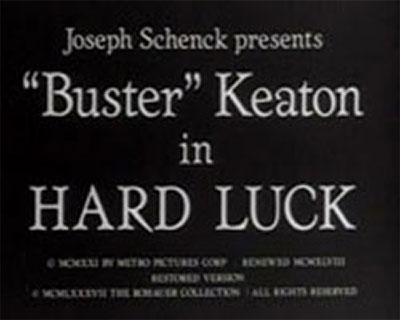
Hard Luck (1921)

3/5 (1)

“Hard Luck” is a 1921 comedy film directed by and starring Buster Keaton. The film follows the misadventures of a young man named Buster (played by Keaton), who has just been released from prison.

Buster’s first stroke of “hard luck” occurs when he is kicked out of his boarding house and forced to live on the streets. He soon meets a young woman (played by Virginia Fox), who he falls in love with. However, she is already engaged to a wealthy man, leading to a series of comedic misunderstandings and mishaps.

Buster’s misfortunes continue as he accidentally steals a watch, leading to a chase by the police and a dramatic rescue involving a high-rise building. The film culminates in a chaotic and hilarious chase sequence involving Buster, the police, and a parade.

As with many of Keaton’s films, “Hard Luck” features physical comedy and stunts, including a memorable scene in which Buster climbs a building and hangs from a clock face.

Overall, “Hard Luck” is a classic example of Keaton’s comedic style, combining slapstick humor with clever storytelling and impressive stunts. The film showcases Keaton’s talent as a writer, director, and performer, and remains a beloved classic of silent cinema.

Directors:
Edward F. Cline, Buster Keaton

Writer:
Edward F. Cline, Buster Keaton

Stars:
Buster Keaton, Virginia Fox, Joe Roberts

Rate this Movie

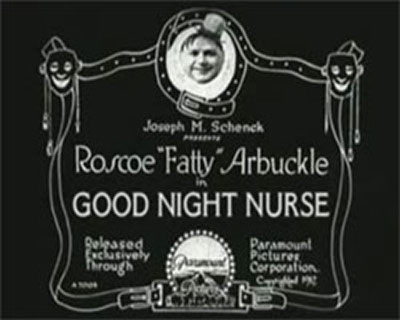
Good Night Nurse! (1918)

3/5 (1)

“Good Night Nurse” is a 1918 silent comedy film directed by Roscoe “Fatty” Arbuckle and starring Arbuckle himself alongside Buster Keaton and Al St. John. The film tells the story of a young man named Roscoe who is hired as a private nurse to care for a wealthy man named John Stuyvesant who is pretending to be ill to avoid paying his debts.

Roscoe is initially unaware of the scheme but soon discovers the truth and becomes embroiled in a series of comedic misadventures as he tries to keep Stuyvesant’s creditors at bay while also trying to woo a pretty nurse named Mary. Meanwhile, Stuyvesant’s scheming wife and her lover plot to get their hands on his money.

As the story unfolds, Roscoe and his friends engage in a series of hilarious antics, including mistaken identities, slapstick fights, and madcap chases. The film is notable for its fast-paced physical comedy and for showcasing the comedic talents of both Arbuckle and Keaton, who would later become a major Hollywood star in his own right.

Overall, “Good Night Nurse” is a classic silent comedy that exemplifies the humor and charm of the era. It is a lighthearted romp filled with laughs and hijinks that will entertain audiences of all ages.

Directors:
Roscoe ‘Fatty’ Arbuckle

Writer:
Roscoe ‘Fatty’ Arbuckle

Stars:
Roscoe ‘Fatty’ Arbuckle, Buster Keaton, Al St. John

Rate this Movie

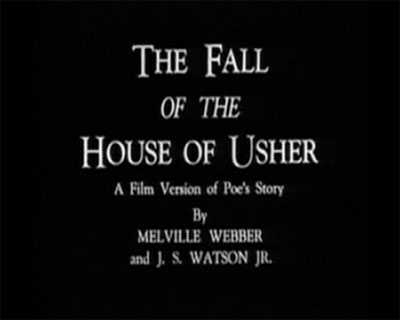
Fall of the House of Usher (1928)

3/5 (1)

“The Fall of the House of Usher” is a silent horror film released in 1928, directed by James Sibley Watson and Melville Webber, and based on the 1839 short story of the same name by Edgar Allan Poe.

The film tells the story of a young man named Allan who visits the decaying mansion of his childhood friend Roderick Usher, who is suffering from a mysterious illness. Allan soon discovers that Roderick’s twin sister, Madeline, is also ill and appears to be suffering from a strange malady. As the story unfolds, Allan becomes increasingly disturbed by the strange events and eerie atmosphere surrounding the Usher family and their crumbling home.

As the plot thickens, the siblings’ condition worsens, and Madeline eventually dies. Roderick, who is convinced that she is still alive and buried alive, becomes more and more unhinged. In the climactic scene, as a violent storm rages outside the mansion, Madeline appears, seemingly risen from the dead, and attacks her brother, causing the house to collapse and bury them both alive.

The film is notable for its expressionistic cinematography, stark black-and-white imagery, and surreal dreamlike sequences that emphasize the psychological torment of the characters. It is considered a classic of early horror cinema and an important example of the avant-garde film movement.

Directors:
James Sibley Watson, Melville Webber

Writer:
Edgar Allan Poe

Stars:
Herbert Stern, Hildegarde Watson, Melville Webber

Rate this Movie

Frankenstein (1910) [Edison]

3/5 (1)

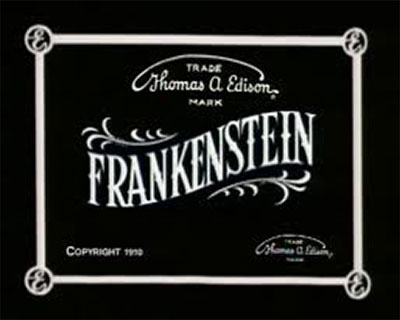
“Frankenstein” is a 1910 silent horror film produced by Thomas Edison and directed by J. Searle Dawley. It is based on Mary Shelley’s novel “Frankenstein; or, The Modern Prometheus”.

The film follows the story of Dr. Frankenstein (Augustus Phillips), a scientist who creates a monster (Charles Ogle) from various body parts. However, the creature becomes uncontrollable and wreaks havoc in the town, terrorizing the inhabitants and causing destruction.

The film’s plot follows the basic storyline of Shelley’s novel but condenses it significantly due to the limitations of the silent film medium. Despite its limitations, the film is notable for its pioneering special effects, including the use of makeup to create the monster’s gruesome appearance.

“Frankenstein” is a landmark film in the horror genre and is regarded as one of the earliest examples of a feature-length horror film. While its special effects and production values may seem primitive by modern standards, the film remains a significant piece of cinema history and an important influence on later horror films.

Directors:
J. Searle Dawley

Writer:
Mary Shelley, J. Searle Dawley

Stars:
Mary Fuller, Charles Ogle, Augustus Phillips

Rate this Movie