Silent Films

Daydreams (1922)

4/5 (1)

“Daydreams” is a 1922 silent comedy film written, directed, and starring Buster Keaton.

The film follows the story of a young man, played by Keaton, who falls asleep and dreams of being transported to a magical world. In this world, he finds himself in various surreal situations, including being chased by a giant spider and performing a high-wire act.

Throughout his dream, the young man also falls in love with a beautiful woman, played by Renée Adorée. He must rescue her from danger, including being held captive by a group of tribal warriors and being pursued by a dangerous train.

As the young man’s dream comes to an end, he awakens to find himself in the real world, but with a newfound sense of adventure and bravery.

“Daydreams” is a classic silent comedy film filled with Keaton’s trademark physical humor and clever visual gags. The surreal dream sequences showcase Keaton’s creativity and imagination, and the film remains a must-see for fans of silent comedy and the work of Buster Keaton.

Directors:
Edward F. Cline, Buster Keaton

Writer:
Roscoe ‘Fatty’ Arbuckle, Edward F. Cline, Buster Keaton

Stars:
Buster Keaton, Renée Adorée,Edward F. Cline

Rate this Movie

Downhill (1927)

3/5 (1)

“Downhill” is a 1927 silent drama film directed by Alfred Hitchcock and starring Ivor Novello, Isabel Jeans, and Robin Irvine.

The film follows the story of Roddy Berwick, a popular and wealthy young man who is falsely accused of fathering a child by a young woman. His reputation is ruined and his friends and family turn against him, leading him to leave school and set out on a downward spiral.

As he struggles to survive in the harsh realities of life, Roddy meets a series of characters who take advantage of him and lead him further down the path of despair. He becomes involved with a dance hall girl, loses his job, and is forced to sleep on the streets.

In the end, Roddy is rescued by his former schoolmaster, who helps him clear his name and rebuild his life. He reconciles with his family and friends, but the experiences he has gone through have left their mark on him.

“Downhill” is a poignant and powerful drama that explores the themes of social class, reputation, and the harsh realities of life. Hitchcock’s skillful direction and Novello’s powerful performance make the film a classic of the silent era, and a must-see for fans of the director and the genre.

Directors:
Alfred Hitchcock

Writer:
Constance Collier, Ivor Novello, Eliot Stannard

Stars:
Ivor Novello, Ben Webster, Norman McKinnel

Rate this Movie

Charlie Chaplin Festival (1938)

4/5 (1)

“Charlie Chaplin Festival” is a compilation film released in 1938 by United Artists, featuring some of the most iconic moments from Charlie Chaplin’s films. The film was created to celebrate Chaplin’s 25 years in the film industry.

The film is divided into several segments, each showcasing a different aspect of Chaplin’s career. The segments include clips from some of his most famous films, such as “The Kid,” “City Lights,” and “Modern Times.”

In addition to the film clips, “Charlie Chaplin Festival” also includes interviews with Chaplin himself, as well as with some of his colleagues in the film industry. These interviews provide insight into Chaplin’s creative process and his approach to filmmaking.

The film also includes a musical score, composed by Chaplin himself, which adds to the overall mood and atmosphere of the film.

Overall, “Charlie Chaplin Festival” is a tribute to one of the greatest comedians in the history of cinema, showcasing the enduring appeal and timelessness of Chaplin’s work. It serves as a reminder of the impact that Chaplin had on the film industry and on popular culture as a whole.

Directors:
Charles Chaplin

Writer:
Charles Chaplin

Stars:
Charles Chaplin, Albert Austin, Lloyd Bacon

Rate this Movie

Charlie Chaplin’s Mabels Strange Predicament (1914)

3/5 (1)

“Mabel’s Strange Predicament” is a silent comedy film produced by Keystone Studios and released in 1914, directed by Mabel Normand and starring Charlie Chaplin. The film is notable for being the first appearance of Chaplin as his iconic character, The Tramp.

The film opens with Mabel (played by Normand) getting locked out of her hotel room in the middle of the night, wearing only a nightgown and slippers. She wanders around the hotel, trying to find a way back into her room, but all the doors are locked. She then encounters The Tramp, a wandering vagabond, who helps her sneak back into her room through a window.

After Mabel falls asleep, The Tramp accidentally wakes her up by snoring loudly. Mabel tries to get him to leave, but he refuses, insisting that he has nowhere else to go. The two then engage in a series of comedic hijinks, including The Tramp stealing a cop’s uniform to sneak out of the hotel, and Mabel pretending to be a wealthy patron in order to avoid paying her bill.

The film ends with The Tramp being chased by a mob of angry people after accidentally setting a dog on fire. Mabel intervenes and helps him escape, and the two part ways.

Overall, “Mabel’s Strange Predicament” is a lighthearted and humorous film that showcases the early comedic talents of Charlie Chaplin and Mabel Normand.

Directors:
Mabel Normand

Writer:
Charles Chaplin, Henry Lehrman

Stars:
Mabel Normand, Charles Chaplin, Chester Conklin

Rate this Movie

Charlie Chaplin’s Kids Auto Race At Venice (1914)

3/5 (1)

“Kids Auto Race At Venice” is a short silent comedy film released in 1914 and directed by Henry Lehrman. The film stars Charlie Chaplin in one of his earliest roles, playing a version of his iconic Tramp character.

The film takes place at a children’s auto race in Venice, California, where a film crew is shooting a documentary. Charlie Chaplin’s character, referred to as the “Little Tramp,” is a bystander who keeps getting in the way of the film crew’s shots.

As the children’s race gets underway, Chaplin’s character becomes increasingly enamored with the camera, vying for attention and trying to get his face on film. He begins to interfere with the race, tripping over wires and distracting the drivers.

Despite the chaos he causes, Chaplin’s character ultimately manages to steal the show, with the filmmakers realizing that his antics would make for a great comedic short film. In the final scene, Chaplin’s character rides off into the sunset, chased by a mob of children.

“Kids Auto Race At Venice” is considered a groundbreaking film in the history of comedy, as it marked the first appearance of Charlie Chaplin’s iconic Tramp character on screen. The film is also notable for its use of improvisation and its blending of documentary footage with comedic elements. It remains a beloved classic of silent film comedy to this day.

Directors:
Henry Lehrman

Writer:
Henry Lehrman, Charles Chaplin

Stars:
Charles Chaplin, Henry Lehrman, Gordon Griffith

Rate this Movie

Charlie Chaplin’s Making A Living (1914)

3/5 (1)

“Making A Living” is a silent comedy film directed by Henry Lehrman and released in 1914. The film stars Charlie Chaplin in his first film role for Keystone Studios, where he would go on to become a major star.

The film follows the exploits of Chaplin’s character, a swindler named Edgar English, who is trying to make a living by any means necessary. He starts off by trying to sell a fake stock certificate to a wealthy man, but when that fails, he tries his hand at journalism, posing as a reporter to get a scoop on a local murder case.

Along the way, Edgar English gets into all sorts of comical situations, including accidentally sitting on a woman’s hat and getting into a fight with a rival journalist. Despite his best efforts, however, he is never able to make a real success of himself, and by the end of the film, he is back to his old tricks, trying to swindle someone out of their money.

Despite its relatively simple plot, “Making A Living” is notable for introducing many of the comedic elements that would become hallmarks of Chaplin’s later work. The film features Chaplin’s signature tramp costume, as well as his distinctive physical humor and facial expressions. It also showcases his talent for improvisation and his ability to turn even the most mundane situations into comedy gold.

While “Making A Living” was not a huge commercial success upon its initial release, it helped to establish Chaplin as a rising star in the world of silent comedy, paving the way for many of his most famous films in the years to come.

Directors:
Henry Lehrman

Writer:
Reed Heustis

Stars:
Charles Chaplin, Emma Clifton, Chester Conklin

Rate this Movie

Cops (1922)

4/5 (1)

“Cops” is a silent comedy film directed by Edward F. Cline and Buster Keaton, and released in 1922. The film follows the misadventures of a young man, played by Buster Keaton, who accidentally finds himself on the wrong side of the law.

The film begins with Buster Keaton’s character, who is referred to only as “The Boy,” trying to impress a young woman by pretending to be a successful businessman. However, his attempts at showing off his wealth backfire when he accidentally locks himself out of his own house and is forced to climb through a window to get back in. Unbeknownst to him, the house has just been burglarized, and when he emerges from the window, he is mistaken for the thief by a passing policeman.

The rest of the film follows The Boy as he tries to evade the police and clear his name. Along the way, he gets into all sorts of comical situations, including accidentally setting off a chain of events that causes chaos in the streets and inadvertently getting involved in a high-speed chase.

Despite his best efforts, The Boy eventually ends up in jail, where he makes a daring escape and ends up causing even more trouble on the streets. The film culminates in a hilarious chase sequence, as The Boy and a gang of police officers pursue each other through the city streets.

In the end, The Boy is able to clear his name and win the affection of the young woman he was trying to impress at the beginning of the film. “Cops” is considered one of Buster Keaton’s most iconic films, and is notable for its inventive stunts and hilarious physical comedy.

Directors:
Edward F. Cline, Buster Keaton

Writer:
Buster Keaton, Edward F. Cline

Stars:
Buster Keaton, Edward F. Cline, Virginia Fox

Rate this Movie

Convict 13 (1920)

4/5 (1)

“Convict 13” is a 1920 silent comedy film directed by and starring Buster Keaton. The film follows Keaton’s character, a young man who is mistaken for a prison inmate and sentenced to death by hanging. However, during the execution, a bolt of lightning strikes the gallows, knocking out the guards and allowing Keaton to escape.

As Keaton attempts to flee, he comes across a golfer who has been knocked unconscious. Keaton takes the man’s clothes and impersonates him, joining a group of wealthy golfers on the course. Despite his lack of experience, Keaton manages to hold his own on the links, using his own unique style and techniques.

As the game progresses, Keaton must dodge the suspicious prison guards and the real golfer’s angry girlfriend. The film culminates in a hilarious and thrilling finale as Keaton faces off against his pursuers on the golf course.

“Convict 13” is known for its inventive physical comedy and Keaton’s acrobatic stunts, as well as its creative use of sound effects and camera tricks. The film also showcases Keaton’s skill as a filmmaker, as he directed and edited the film himself. “Convict 13” remains a classic example of early silent comedy and a testament to Keaton’s enduring talent and influence.

Directors:
Edward F. Cline, Buster Keaton

Writer:
Edward F. Cline, Buster Keaton

Stars:
Buster Keaton, Sybil Seely, Joe Roberts

Rate this Movie

Coney Island (1917)

4/5 (1)

“Coney Island” is a 1917 silent comedy film directed by Roscoe Arbuckle and starring Arbuckle, Mabel Normand, and Al St. John. The film is set at the famous Coney Island amusement park in New York, and follows the antics of a group of characters who work and play there.

Arbuckle plays a bumbling waiter named Fatty who has a crush on a beautiful dancer named Mabel (Normand). Mabel is also pursued by a wealthy playboy named Larry (St. John), who competes with Fatty for her affections.

As the story unfolds, the characters become embroiled in a series of humorous misadventures, including mistaken identities, pranks, and a wild ride on a rollercoaster. Along the way, they encounter a colorful cast of supporting characters, including a strongman, a fortune teller, and a pickpocket.

“Coney Island” is known for its slapstick humor and fast-paced action, as well as the chemistry between Arbuckle and Normand, who were frequent collaborators in silent comedy. The film is also notable for its early use of location shooting and its depiction of the vibrant culture and atmosphere of Coney Island during the early 20th century.

Directors:
Roscoe ‘Fatty’ Arbuckle

Writer:
Roscoe ‘Fatty’ Arbuckle

Stars:
Roscoe ‘Fatty’ Arbuckle, Buster Keaton, Joe Bordeaux

Rate this Movie

Broken Blossoms (1919)

4/5 (1)

“Broken Blossoms” is a 1919 silent drama film directed by D.W. Griffith and starring Lillian Gish, Richard Barthelmess, and Donald Crisp. The film tells the story of a young girl named Lucy Burrows (Gish) who is mistreated by her father, a brutish prizefighter named Battling Burrows (Crisp), and finds solace in the kindness of a Chinese man named Cheng Huan (Barthelmess).

Cheng Huan is a Buddhist who has come to London to spread the teachings of his religion. When he meets Lucy, he takes her under his wing and protects her from her abusive father. The two develop a close friendship, which eventually turns into a romantic love affair.

However, their relationship is met with disapproval from both the Chinese and Western communities, and when Lucy’s father discovers their relationship, he becomes enraged and takes drastic action. The film concludes with a tragic and heart-wrenching climax that highlights the consequences of racism and abuse.

“Broken Blossoms” is notable for its portrayal of Asian characters and themes, which was relatively uncommon in American cinema at the time. The film is also celebrated for its powerful performances and its exploration of complex social issues, including domestic violence and racial prejudice.

Directors:
D.W. Griffith

Writer:
Thomas Burke, D.W. Griffith

Stars:
Lillian Gish, Richard Barthelmess, Donald Crisp

Rate this Movie

Back Stage (1919)

3/5 (1)

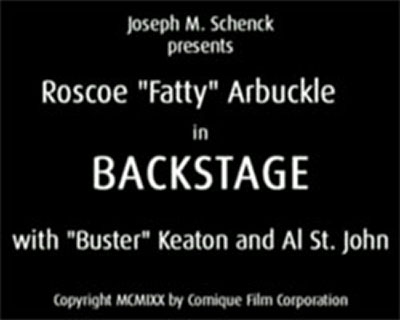
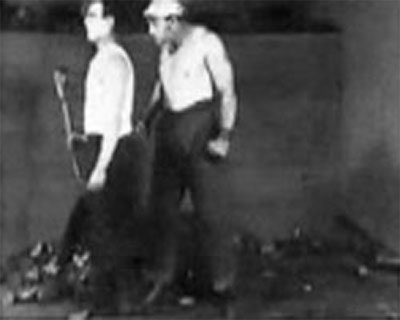
“Back Stage” is a 1919 silent film directed by Roscoe “Fatty” Arbuckle and starring Arbuckle and Buster Keaton. The film is a comedy that takes place in a theater, with Arbuckle playing the role of a stagehand named Merton who dreams of becoming a performer.

Merton is in love with the leading lady of the theater troupe, but she is already engaged to the villainous head of the theater. When the leading lady’s father dies and leaves her his fortune, Merton sees an opportunity to win her over by producing a lavish show that will showcase her talents.

Merton convinces the other stagehands to help him put on the show, but chaos ensues as they struggle with various mishaps and obstacles, including a misbehaving mechanical set and an escaped monkey. Despite the setbacks, the show is a success, and Merton wins the leading lady’s heart.

The film is notable for its slapstick humor and physical comedy, as well as for its use of visual gags and inventive stunts. It also features the comedic talents of Arbuckle and Keaton, two of the most popular comedians of the silent era.

Directors:
Roscoe ‘Fatty’ Arbuckle

Writer:
Jean C. Havez

Stars:
Roscoe ‘Fatty’ Arbuckle, Buster Keaton, Al St. John

Rate this Movie

A Jazzed Honeymoon (1919)

3/5 (1)

“A Jazzed Honeymoon” is a silent comedy film released in 1919, directed by Hal Roach and starring Harold Lloyd and Bebe Daniels as the lead characters.

The movie follows the story of a young couple, Harold and Bebe, who decide to take a honeymoon trip to the mountains. However, their plans are quickly derailed when they get caught up in a series of misadventures and comedic mishaps.

Along the way, they encounter a group of bootleggers, a runaway train, and a gang of robbers, all of which provide ample opportunities for slapstick humor and physical comedy. Despite the chaos, Harold and Bebe manage to stay together and emerge victorious in the end.

The film is notable for its innovative use of special effects and visual gags, which would become trademarks of Harold Lloyd’s later work. It also features a lively jazz soundtrack, which adds to the film’s upbeat and energetic tone.

“A Jazzed Honeymoon” was a popular success upon its release and helped to establish Harold Lloyd as one of the leading comedic actors of the silent era. The film’s humor and charm continue to entertain audiences today, making it a classic of early American cinema.

Directors:
Hal Roach

Writer:
H.M. Walker

Stars:
Harold Lloyd, ‘Snub’ Pollard, Bebe Daniels

Rate this Movie

A Romance of the Redwoods (1917)

3/5 (1)

“A Romance of the Redwoods” is a silent romantic drama film released in 1917, directed by Cecil B. DeMille and starring Mary Pickford as the lead character, Jenny Lawrence.

The movie is set in California during the Gold Rush era and follows the story of Jenny, a young woman who has been raised in a wealthy family in the city. Jenny falls in love with a handsome prospector named David Applegate, who comes to town seeking his fortune. Despite the objections of her family, Jenny decides to run away with David and start a new life in the rugged and untamed Redwood forest.

Once in the forest, Jenny and David face numerous challenges, including the harsh environment, dangerous animals, and hostile Native American tribes. However, they persevere and build a successful homestead together. Along the way, they also encounter a group of criminals who are attempting to smuggle stolen goods through the forest. Jenny and David work together to thwart the criminals and protect their home.

As Jenny and David settle into their new life together, they must also confront the prejudices and social conventions that threaten to tear them apart. Despite the challenges, they remain committed to each other and to their life in the Redwoods.

“A Romance of the Redwoods” was a popular film in its time, and it helped to establish Mary Pickford as a major star in Hollywood. The movie’s themes of adventure, romance, and overcoming obstacles in a rugged wilderness setting continue to resonate with audiences today.

Directors:
Cecil B. DeMille

Writer:

Cecil B. DeMille, Jeanie Macpherson

Stars:
Mary Pickford, Elliott Dexter, Tully Marshall

Rate this Movie

20,000 Leagues Under the Sea (1916)

4/5 (2)

“20,000 Leagues Under the Sea” is a classic science fiction novel written by Jules Verne in 1870. The novel has been adapted into various movies and TV series. The 1916 silent film version of the novel was directed by Stuart Paton and stars Allen Holubar as Captain Nemo.

The film follows the adventures of Professor Pierre Aronnax, his assistant Conseil, and the harpooner Ned Land, as they embark on a journey to search for a sea monster that has been terrorizing ships in the ocean. They soon discover that the creature is actually a submarine, the Nautilus, captained by the mysterious and enigmatic Captain Nemo.

The professor and his companions are taken aboard the Nautilus and shown the wonders of the undersea world. They witness exotic creatures, underwater volcanoes, and explore shipwrecks. However, they also witness the darker side of Nemo’s personality, as he ruthlessly attacks ships and refuses to show mercy to his enemies.

As they spend more time aboard the Nautilus, Aronnax and his companions begin to question Nemo’s motives and seek a way to escape. Eventually, they are able to overpower the crew and sabotage the Nautilus, forcing Nemo to flee.

The film ends with the professor and his companions being rescued, while Nemo is seen going down with his beloved submarine, taking his secrets and mysteries to the depths of the ocean.

Directors:
Stuart Paton

Writer:
Jules Verne, Stuart Paton

Stars:
Allen Holubar, Dan Hanlon, Edna Pendleton

Rate this Movie

West of Hot Dog (1924)

4/5 (1)

“West of Hot Dog” is a silent comedy film released in 1924. The movie follows the misadventures of a cowboy named Cactus Kid (played by Harold Lloyd) who falls in love with a beautiful woman named Bessie (played by Mildred Davis).

Cactus Kid and Bessie meet when he saves her from a runaway horse, and she invites him to her father’s ranch. However, when Cactus Kid arrives, he discovers that Bessie’s father is being held captive by a gang of bandits led by the notorious outlaw, “The Rattler.”

Determined to rescue Bessie’s father and win her heart, Cactus Kid sets out to capture The Rattler and his gang. Along the way, he encounters a series of obstacles and comical mishaps, including a barroom brawl, a horse race, and a run-in with a Native American tribe.

Despite the challenges, Cactus Kid ultimately triumphs and saves the day, winning Bessie’s heart in the process. The film ends with the happy couple riding off into the sunset together.

“West of Hot Dog” is a classic silent comedy that showcases Harold Lloyd’s talent for physical comedy and his ability to create memorable characters. It is a must-see for fans of early cinema and fans of the Western genre.

Directors:
Joe Rock, Scott Pembroke

Writer:
Tay Garnett

Stars:
Stan Laurel, Julie Leonard, Lew Meehan

Rate this Movie