Drama

The Blood Of Jesus (1941)

3/5 (1)

“The Blood of Jesus” is a 1941 American film directed by Spencer Williams, who also wrote and produced the film. The movie is a spiritual drama that explores the concept of redemption through the story of a young couple in rural Texas.

The story revolves around a young woman named Martha (Cathryn Caviness), who is accidentally shot by her husband, Ruffus (Spencer Williams), while they are out hunting. As Martha lays dying, her spirit is transported to a crossroads where she is faced with the decision to either go with the angel of death or return to the land of the living.

Martha chooses to return to the world of the living, and her journey towards redemption begins. The film explores themes of faith, forgiveness, and the power of redemption as Martha tries to find her way back to the path of righteousness.

As Martha struggles with her faith, her husband Ruffus is tempted by the devil and is lured into a life of sin. The film also explores the idea of the battle between good and evil and how our choices can determine our ultimate fate.

“The Blood of Jesus” is a poignant and powerful film that explores complex themes of faith, redemption, and morality. It is considered a classic of African American cinema and has been praised for its authentic portrayal of rural Texas life and its moving exploration of spirituality.

Directors:
Spencer Williams

Writer:
Spencer Williams, Langston Hughes

Stars:
Cathryn Caviness, Spencer Williams, Juanita Riley
Rate this Movie

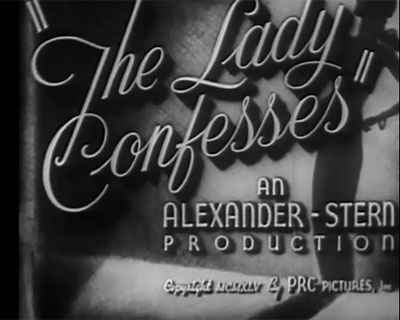
The Lady Confesses (1945)

2.5/5 (2)

“The Lady Confesses” is a 1945 film noir directed by Sam Newfield and produced by Sigmund Neufeld. The film follows the story of the wealthy socialite Vera Stanley (played by Mary Beth Hughes) who is accused of murdering her husband.

Vera’s husband is found dead in their home, and the police quickly focus their investigation on her. Despite her protests of innocence, the evidence seems to be stacked against her, and she is arrested and put on trial. However, as the trial proceeds, a number of people come forward with information that casts doubt on Vera’s guilt.

Among those who come forward is the detective assigned to the case, Lieutenant Joe Morgan (played by Hugh Beaumont), who begins to suspect that Vera may be innocent after all. Together, Vera and Joe work to uncover the truth and identify the real killer.

As they delve deeper into the case, they uncover a web of lies and deceit that leads them to a surprising conclusion. The film features several twists and turns, and the audience is kept in suspense until the very end.

“The Lady Confesses” was well-received by audiences and critics alike for its engaging plot and strong performances, particularly by Mary Beth Hughes in the lead role. It is considered a classic example of film noir and is still enjoyed by fans of the genre today.

Directors:
Sam Newfield

Writer:
Irwin Franklyn, Helen Martin

Stars:
Mary Beth Hughes, Hugh Beaumont, Edmund MacDonald

Rate this Movie

The North Star (1943)

3/5 (1)

“The North Star” is a 1943 war film directed by Lewis Milestone and produced by Samuel Goldwyn. The film is set during World War II and tells the story of a small Ukrainian village called Bryansk, which is invaded by Nazi troops. The villagers, led by the doctor Yuri Pavlov (played by Walter Huston), the schoolteacher Marina Pavlova (played by Anne Baxter), and the farmer Kolya Simonov (played by Farley Granger), resist the German occupation and fight back against their oppressors.

The film follows the lives of the villagers as they struggle to survive under Nazi rule. They endure atrocities committed by the Germans, including the execution of innocent civilians and the burning of their homes. Despite the danger, the villagers organize a resistance movement and launch a series of attacks against the German troops.

As the war progresses, the Germans become increasingly brutal, and the villagers suffer more and more. But they refuse to give up, and they continue to resist the occupation. Eventually, the Red Army arrives and liberates the village from the Germans.

The film was praised for its portrayal of the bravery and resilience of the Ukrainian people during World War II. It was also criticized by some for its portrayal of the Soviet Union, as the film was made during a time when the US and USSR were allies but had ideological differences. Nevertheless, “The North Star” was a box office success and received seven Academy Award nominations, including Best Picture.

Directors:
Lewis Milestone

Writer:
Lillian Hellman, Burt Beck

Stars:
Anne Baxter, Dana Andrews, Walter Huston

Rate this Movie

Three Came Home (1950)

No ratings yet.

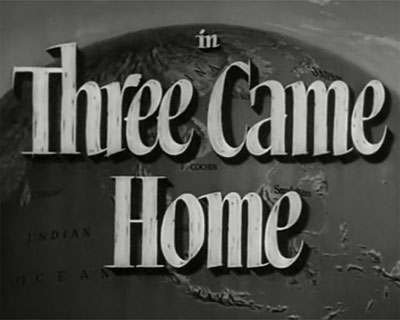
“Three Came Home” is a 1950 American war film directed by Jean Negulesco, based on the book of the same name by Agnes Newton Keith, which tells the true story of her and her family’s experiences during the Japanese occupation of Borneo in World War II.

The film stars Claudette Colbert as Agnes Newton Keith, a writer who lived with her husband and young son in Borneo before the war. When the Japanese invade the island, they are all taken prisoner, and separated into different camps.

Agnes is sent to a women’s camp, where she struggles to survive under brutal conditions. She befriends two other women, the compassionate Dutch missionary Mrs. Van Der Poel (Patricia Medina) and the tough Australian nurse Betty Sommers (Sessue Hayakawa). Together, they try to keep their spirits up and help each other through the hardships of the camp.

Meanwhile, Agnes’ husband Harry (Wendell Corey) is held in a men’s camp, where he is subjected to torture and forced labor. Their son, George (Johnny Sands), is taken away from them and placed in a separate children’s camp.

As the war draws to a close, the prisoners are finally liberated, and the Keith family is reunited. However, they are all deeply scarred by their experiences, and struggle to readjust to civilian life.

Overall, “Three Came Home” is a powerful and moving portrayal of the strength of the human spirit in the face of unimaginable adversity. It explores the themes of survival, resilience, and the impact of war on individuals and families.

Directors:
Jean Negulesco

Writer:
Nunnally Johnso, Agnes Newton Keith

Stars:
Claudette Colber, Patric Knowles, Florence Desmond

Rate this Movie

The Birth of a Nation (1915)

3/5 (1)

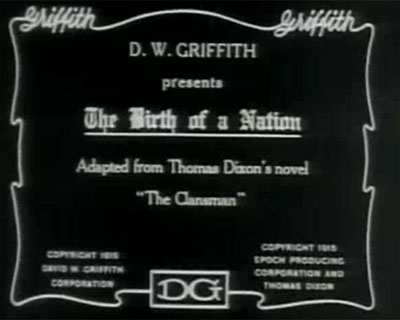
“The Birth of a Nation” is a silent drama film from 1915, directed by D.W. Griffith. The movie is based on the novel “The Clansman” by Thomas Dixon Jr. and is considered a landmark in American cinema, despite its controversial subject matter.

The film follows the story of two families, the Stonemans from the North and the Camerons from the South, during the American Civil War and Reconstruction era. The movie portrays the Southern whites as the heroic defenders of their homes against Northern aggression and the newly freed African Americans as a dangerous and inferior race.

The film is notorious for its portrayal of African Americans as grotesque caricatures and for its glorification of the Ku Klux Klan. The Klan is depicted as a heroic force that helps to restore order and protect white women from the supposedly uncontrollable lust of black men.

“The Birth of a Nation” was met with controversy upon its release, with some groups protesting against its racism and portrayal of African Americans. However, it was also a commercial success and was praised by some for its technical innovations and cinematic techniques, including the use of close-ups, cross-cutting, and camera movement.

Despite its historical significance, “The Birth of a Nation” is now widely criticized for its racist content and has been the subject of much debate about the role of art in perpetuating harmful stereotypes and promoting white supremacy.

Directors:
D.W. Griffith

Writer:
Thomas Dixon Jr., D.W. Griffith, Frank E. Woods

Stars:
Lillian Gish, Mae Marsh, Henry B. Walthall

Rate this Movie

The Man Who Cheated Himself (1951)

3/5 (1)

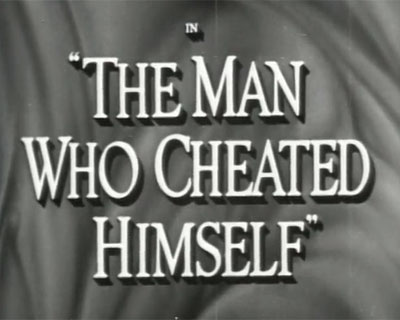
“The Man Who Cheated Himself” is a 1951 film noir directed by Felix E. Feist. The movie stars Lee J. Cobb as Lt. Ed Cullen, a police detective in San Francisco who falls in love with a wealthy socialite named Lois Frazer (Jane Wyatt) while investigating her husband’s murder.

Lois confesses to Ed that she killed her husband in self-defense after he tried to attack her, but Ed decides to cover up the crime and make it look like a robbery gone wrong. He believes that Lois is innocent and wants to protect her from the scandal that would follow if the truth came out.

However, Ed’s younger brother Andy (John Dall), who is also a police detective, becomes suspicious of Ed’s behavior and starts to investigate the case himself. Andy uncovers evidence that implicates Lois in the murder and confronts Ed about it. Ed eventually confesses to his involvement in the cover-up, but it’s too late to save Lois. She’s already fled the city and committed suicide in despair over her husband’s death and the guilt of her actions.

The film ends with Ed and Andy reconciling and Ed accepting the consequences of his actions, which include losing his job and facing criminal charges.

Directors:
Felix E. Feist

Writer:
Seton I. MillerPhilip MacDonald

Stars:
Lee J. Cobb, Jane Wyatt, John Dall

Rate this Movie

The Lodger: A Story of the London Fog (1927)

4/5 (1)

“The Lodger: A Story of the London Fog” is a silent film directed by Alfred Hitchcock and released in 1927. The film is based on the novel of the same name by Marie Belloc Lowndes and tells the story of a mysterious lodger who may be a serial killer.

The film is set in London during a period of time when a serial killer known as “The Avenger” is on the loose, targeting young blonde women. When a new lodger (Ivor Novello) arrives at a boarding house run by Mr. and Mrs. Bunting, he seems to fit the description of the killer, and Mrs. Bunting becomes increasingly suspicious of him.

As the lodger’s behavior becomes increasingly erratic, Mrs. Bunting becomes convinced that he is the Avenger and enlists the help of her policeman fiance to track him down. However, as they close in on the lodger, they begin to uncover evidence that suggests he may not be the killer after all.

The film is notable for its use of innovative camera techniques and its exploration of themes such as guilt, suspicion, and the dangers of mob mentality. It was one of Hitchcock’s earliest successes and helped establish him as a master of suspense. The film also marks the first of many collaborations between Hitchcock and actress Alma Reville, who would later become his wife and a key creative collaborator.

Directors:
Alfred Hitchcock

Writer:
Marie Belloc Lowndes, Eliot Stannard, Alfred Hitchcock

Stars:
June Tripp, Ivor Novello, Marie Ault

Rate this Movie

The Four Horsemen of the Apocalypse (1921)

3/5 (1)

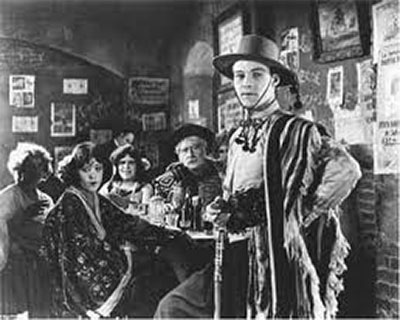
“The Four Horsemen of the Apocalypse” is a silent film directed by Rex Ingram and released in 1921. The film is based on the novel of the same name by Vicente Blasco Ibáñez and is set during World War I.

The story follows the wealthy Argentinian family of Julio Madariaga, who is a staunch supporter of Germany. However, when his grandson Julio Desnoyers falls in love with the Frenchwoman Marguerite Laurier, the family becomes divided by the war.

As the conflict intensifies, Julio Desnoyers and Marguerite are caught up in the chaos of battle, with Julio fighting for the Germans and Marguerite aiding the French resistance. The four horsemen of the apocalypse – Conquest, War, Famine, and Death – serve as a metaphor for the devastation wrought by the war and its impact on the characters.

The film was a major commercial success and helped launch the career of its lead actor, Rudolph Valentino. It also marked a significant milestone in the history of cinema, as one of the first films to portray the war in a realistic and nuanced manner. Despite its age, it remains a powerful and thought-provoking examination of the human cost of war.

Directors:
Rex Ingram

Writer:
Vicente Blasco Ibáñez, June Mathis

Stars:
Rudolph Valentino,Alice Terry, Pomeroy Cannon

Rate this Movie

The Ring (1927)

3/5 (1)

“The Ring” is a silent film directed by Alfred Hitchcock and released in 1927. The film is about a love triangle that develops between two boxers and the woman they both desire.

The main character, Jack “One Round” Sander, is a successful boxer who is in love with a woman named Mabel. Mabel works at a carnival where Jack performs, and she is also courted by a younger boxer named Bob. Despite Jack’s efforts to win Mabel’s heart, she is more interested in Bob.

As the two boxers compete in the ring, their rivalry intensifies. Bob wins a match against Jack and becomes the new champion, but Jack refuses to accept defeat and challenges Bob to a rematch. Meanwhile, Mabel begins to see the darker side of Bob’s personality and becomes afraid of him.

In the climactic fight scene, Jack and Bob face off in the ring once again. As the fight reaches its conclusion, Mabel realizes that she loves Jack and not Bob. Jack ultimately emerges as the victor, and he and Mabel reconcile.

The film is notable for its innovative use of camera angles and techniques, as well as its exploration of themes such as jealousy and competition. It was one of Hitchcock’s earliest successes and helped establish his reputation as a master filmmaker.

Directors:
Alfred Hitchcock

Writer:
Alfred Hitchcock, Alma Reville

Stars:
Carl Brisson, Lillian Hall-Davis, Ian Hunter

Rate this Movie

The Ace of Hearts (1921)

3/5 (1)

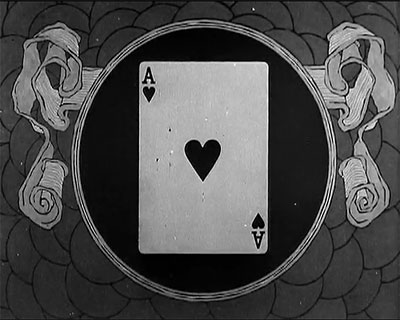
“The Ace of Hearts” is a silent film released in 1921, directed by Wallace Worsley. The movie follows the story of a secret society that seeks to eliminate people they believe are unworthy of life.

The movie is set in San Francisco, and Lilith (played by Leatrice Joy) is the daughter of a wealthy man. She falls in love with one of the members of the secret society, Forrest (played by John Bowers). Lilith is soon initiated into the society, and Forrest reveals to her that their next target is a man named Farallone (played by Lon Chaney).

Lilith discovers that the society uses a deck of cards to determine who their next victim will be. Forrest is the Ace of Hearts, and he chooses the targets. Lilith draws the King of Hearts and is given the task of carrying out the assassination of Farallone.

However, Lilith starts to have doubts about the morality of the society’s actions. She meets Farallone and discovers that he is a kind man who does not deserve to die. She decides to warn him about the society’s plans and risks her own life in the process.

In the end, the society’s plan is foiled, and Forrest is killed in the process. Lilith and Farallone end up together, and Lilith is relieved to have put an end to the society’s ruthless actions.

“The Ace of Hearts” is notable for its striking visual style, use of shadow and dramatic lighting, and exploration of themes such as morality, love, and loyalty. It was well-received upon its release and is considered a classic of the silent era.

Directors:
Wallace Worsley

Writer:
Gouverneur Morris, Ruth Wightman

Stars:
Leatrice Joy, John Bowers, Lon Chaney

Rate this Movie

The Private Life of Henry VIII (1933)

3/5 (1)

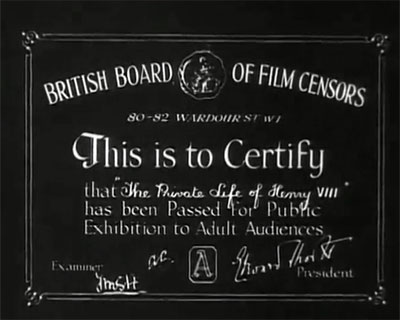
“The Private Life of Henry VIII” is a 1933 British film that explores the life of King Henry VIII. The movie is directed by Alexander Korda and stars Charles Laughton as Henry VIII, along with a talented cast that includes Elsa Lanchester, Merle Oberon, and Binnie Barnes.

The movie is set in the 16th century and follows Henry VIII as he navigates through his six marriages, the birth of his son Edward VI, and his eventual break from the Roman Catholic Church. The film also touches on the political turmoil and religious conflicts that marked Henry’s reign, as well as his personal struggles and passions.

Throughout the movie, we see Henry VIII’s private life, including his relationships with his wives, his courtiers, and his advisers. We witness his volatile temperament, his love of pageantry and excess, and his desire for a male heir. We also see the consequences of his decisions, including his dissolution of the monasteries and his ruthless treatment of those who opposed him.

Despite its historical setting, the movie is not a completely accurate representation of Henry VIII’s life. It takes some liberties with the facts, and many of the characters are portrayed in a highly fictionalized manner. However, the film remains a popular and enduring depiction of Henry VIII, and Laughton’s performance as the monarch is widely regarded as one of his best.

Directors:
Alexander Korda

Writer:
Lajos Biró, Arthur Wimperis

Stars:
Charles Laughton, Robert Donat, Franklin Dyall

Rate this Movie

The Poor Little Rich Girl (1917)

4/5 (1)

“The Poor Little Rich Girl” is a silent film directed by Maurice Tourneur and released in 1917. The film stars Mary Pickford as Gwendolyn, a wealthy and lonely little girl who is ignored by her parents and spends most of her time with her nurse, played by Madlaine Traverse.

Despite her wealth, Gwendolyn is unhappy and yearns for the love and attention of her parents. One night, she falls asleep in her playroom and dreams that she is transported to a fantastical world where she encounters a variety of characters who represent different aspects of her life.

In her dream, Gwendolyn is forced to confront the harsh realities of the world outside of her privileged upbringing. She encounters poverty, illness, and injustice, and realizes that there is more to life than just material wealth.

When she wakes up from her dream, Gwendolyn is a changed person. She reaches out to her parents and finally receives the love and attention she has been craving. The film ends with Gwendolyn happily playing with her parents and realizing that she is not alone in the world.

“The Poor Little Rich Girl” is a classic tale of a child’s search for love and acceptance. Mary Pickford’s performance as Gwendolyn is touching and nuanced, and the film remains a beloved example of early silent cinema.

Directors:
Maurice Tourneur

Writer:
Eleanor Gates, Frances Marion

Stars:
Mary Pickford, Madlaine Traverse, Charles Wellesley

Rate this Movie

The Christmas Carol (1949)

3/5 (1)

“The Christmas Carol” is a film adaptation of the classic Charles Dickens’ novel of the same name, directed by Brian Desmond Hurst and released in 1949. The story follows Ebenezer Scrooge (played by Alastair Sim), a wealthy and miserly businessman who has no love for Christmas or anyone else.

On Christmas Eve, Scrooge is visited by the ghost of his former business partner Jacob Marley (Michael Hordern), who warns him that he will be doomed to a similar fate if he doesn’t change his ways. Marley tells Scrooge that he will be visited by three ghosts: the Ghost of Christmas Past, the Ghost of Christmas Present, and the Ghost of Christmas Yet to Come.

Throughout the night, Scrooge is taken on a journey through time and shown the events of his past, present, and future. He sees how his greed and cold-heartedness have affected those around him, including his former fiancée Belle (Annabelle Lee) and his loyal employee Bob Cratchit (Mervyn Johns), who struggles to provide for his sickly son Tiny Tim (Glyn Dearman).

As Scrooge confronts his past and present, he realizes the error of his ways and vows to change his life. The next morning, he wakes up a changed man and begins to spread kindness and generosity to those around him, including Cratchit and his family.

“The Christmas Carol” is a heartwarming tale of redemption and the power of love and kindness to transform even the most hardened of hearts. The film has become a beloved holiday classic, and Alastair Sim’s performance as Scrooge is considered one of the greatest portrayals of the character in cinema history.

Directors:
Arthur Pierson

Writer:
Charles Dickens, Arthur Pierson

Stars:
Vincent Price, Taylor Holmes, Patrick Whyte

Rate this Movie

The Scarlet Pimpernel (1934) summary

4/5 (1)

“The Scarlet Pimpernel” is a 1934 film based on the novel by Baroness Emmuska Orczy. The movie is set during the Reign of Terror in France in the late 18th century.

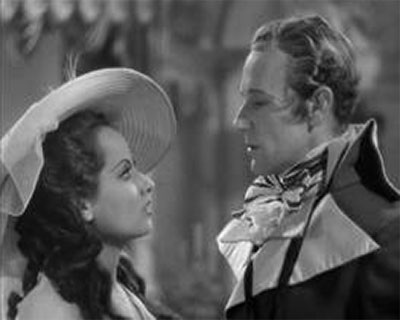
The story revolves around Sir Percy Blakeney, an English aristocrat who leads a secret double life as the Scarlet Pimpernel, a daring and elusive hero who rescues French aristocrats from the guillotine. His wife, Marguerite St. Just, is a French actress who becomes embroiled in political intrigue when she is blackmailed into discovering the identity of the Scarlet Pimpernel.

As Marguerite carries out her mission, she comes to realize that the Scarlet Pimpernel is none other than her own husband. She tries to warn him of danger, but he is already on his way to rescue the latest group of aristocrats. Marguerite follows him to France and helps him to carry out his mission.

The movie culminates in a thrilling escape as the Scarlet Pimpernel and his rescued aristocrats flee from their pursuers. Marguerite reveals her knowledge of her husband’s secret identity, and they are reconciled.

“The Scarlet Pimpernel” is a classic tale of adventure, romance, and heroism, and the 1934 movie version is a beloved adaptation of the novel. The film was directed by Harold Young and starred Leslie Howard as Sir Percy Blakeney and Merle Oberon as Marguerite St. Just.

Directors:
Harold Young

Writer:
Baroness Emmuska Orczy, Alexander Korda, Montagu Barstow

Stars:
Leslie Howard, Merle Oberon, Raymond Massey

Rate this Movie

The Sheik (1921)

3/5 (1)

“The Sheik” is a 1921 silent romantic drama film directed by George Melford and starring Rudolph Valentino, Agnes Ayres, and Adolphe Menjou. It is based on the 1919 novel of the same name by Edith Maude Hull.

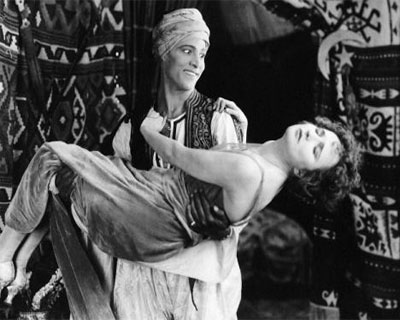
The film is set in the North African desert, where an independent and spirited Englishwoman named Lady Diana Mayo (Agnes Ayres) is vacationing with her brother. One day, while out riding alone, she is kidnapped by a group of Arab men and taken to the tent of Ahmed Ben Hassan (Rudolph Valentino), a wealthy and powerful Sheik. Ahmed initially plans to ransom Diana back to her brother, but soon finds himself drawn to her beauty and spirit.

Diana initially resists Ahmed’s advances and tries to escape, but gradually begins to fall in love with him. However, their relationship is complicated by the fact that Ahmed is already betrothed to another woman, and by the cultural differences between them. Eventually, Diana is rescued by her brother and taken back to England.

Despite its controversial themes and portrayal of Arab culture, “The Sheik” was a massive commercial success, making Rudolph Valentino a major Hollywood star and sparking a craze for desert romance films. The film was followed by a sequel, “The Son of the Sheik,” in 1926, which was Valentino’s final film before his untimely death at the age of 31.

Directors:
George Melford

Writer:
Edith Maude Hull, Monte M. Katterjohn

Stars:
Rudolph Valentino, Agnes Ayres, Ruth Miller

Rate this Movie