Drama

Bird of Paradise (1932)

4/5 (1)

“Bird of Paradise” is a romantic adventure film released in 1932, directed by King Vidor and starring Dolores del Rio and Joel McCrea. The story is set on a remote island in the South Pacific, where a young American named Johnny falls in love with a Polynesian princess named Luana.

Johnny is traveling with his friend, Bill, to get away from his troubles in the United States. They end up on the island where they meet Luana, who is betrothed to a tribal prince. Despite the cultural differences and warnings from the locals, Johnny and Luana fall deeply in love.

However, their love is threatened by the arrival of a volcanic eruption, which the natives believe is a sign of displeasure from the gods. To appease the gods, the tribal prince demands that Luana be sacrificed. Johnny and Luana flee into the jungle, pursued by the prince and his warriors.

As they journey through the dangerous terrain, Johnny and Luana must overcome their differences and work together to survive. They eventually find refuge in a cave, where they profess their love for each other. However, they are soon discovered by the prince, and a final confrontation ensues.

In the end, Johnny and Luana choose to face their fate together rather than be separated. They stand hand in hand as the volcano erupts, symbolizing the power of their love and the forces of nature that brought them together.

The film is notable for its stunning cinematography and use of on-location filming in Hawaii, as well as its portrayal of a romantic relationship between a white man and a non-white woman, which was controversial for its time.

Directors:
King Vidor

Writer:
Richard Walton Tully, Wells Root, Wanda Tuchock

Stars:
Dolores del Rio, Joel McCrea, John Halliday
Rate this Movie

After Mein Kampf (1940)

3/5 (1)

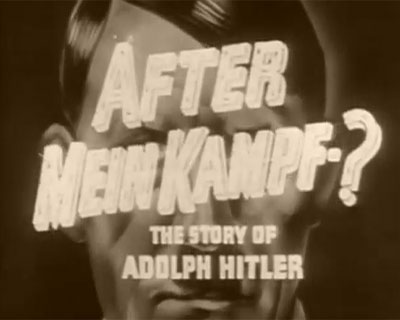
“After Mein Kampf?: The Story of Adolf Hitler” is a biographical documentary film released in 1940, directed by Norman Lee.

The film chronicles the life of Adolf Hitler from his early years as a struggling artist in Vienna, through his rise to power in the Nazi Party and his reign as Germany’s dictator during World War II. The film features rare footage of Hitler and his inner circle, as well as interviews with people who knew him personally.

The documentary explores the complex factors that led to Hitler’s rise to power, including his charismatic personality, his ability to manipulate public opinion, and his use of violence and intimidation to suppress opposition. The film also examines Hitler’s ideology and his ambitions to create a new order in Europe, based on his vision of Aryan supremacy.

Despite being made during World War II, the film was produced by a British studio and is notable for its objective and critical portrayal of Hitler. The film does not shy away from depicting the atrocities committed by the Nazi regime, and it serves as a powerful reminder of the dangers of authoritarianism and propaganda.

“After Mein Kampf?: The Story of Adolf Hitler” remains an important historical document and a cautionary tale about the dangers of fascism and dictatorship.

Directors:
Norman Lee

Writer:
Alec Dyer, Jacques Haïk

Stars:
Adolf Hitler, Robert Beatty, Derek Blomfield

Rate this Movie

Arizona Stage Coach (1942)

3/5 (1)

“Arizona Stage Coach” is a Western movie released in 1942, directed by S. Roy Luby and starring Ray “Crash” Corrigan as the lead character, Ray Corrigan.

The movie follows the story of Corrigan, a cowboy who is hired to protect a stagecoach carrying a valuable cargo across the dangerous Arizona frontier. Along with his fellow cowboys, Corrigan must fend off attacks by bandits and Native American tribes, who are intent on stealing the stagecoach’s valuable contents.

As the journey progresses, Corrigan forms a bond with the other passengers on the stagecoach, including a beautiful singer named Rita and a wealthy businessman named Emerson. However, the group soon discovers that one of the passengers is actually a spy, working for the bandits and plotting to steal the valuable cargo.

In a series of tense showdowns and gunfights, Corrigan and his allies work to protect the stagecoach and thwart the bandits’ plans. In the end, they emerge victorious, and the valuable cargo is safely delivered to its destination.

“Arizona Stage Coach” is a classic Western movie that features many of the genre’s familiar themes and motifs, including gunfights, horse chases, and dusty frontier towns. The movie’s themes of loyalty, bravery, and honor continue to make it a popular film among Western fans today.

Directors:
S. Roy Luby

Writer:
Oliver Drake, Arthur Hoerl

Stars:
Ray Corrigan, John ‘Dusty’ King, Max Terhune

Rate this Movie

A Yank in Libya (1942)

3/5 (1)

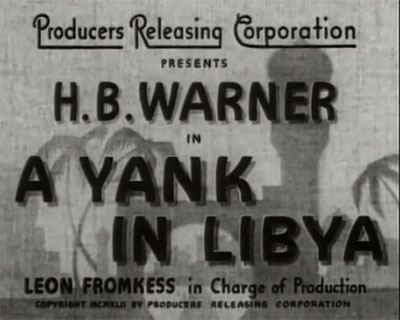
“A Yank in Libya” is a World War II action film released in 1942, directed by Albert Herman and starring H.B. Warner as the lead character, Colonel John Wister.

The movie follows the story of Colonel Wister, an American soldier who is sent to Libya to assist the British forces in their fight against the German army. Wister is initially skeptical of the British and their tactics, but he soon comes to respect and admire his new allies. Together, they engage in a series of battles against the Germans, including a daring raid on a German airfield.

As the war in Libya intensifies, Wister becomes increasingly involved in the conflict and forms a close bond with the British soldiers under his command. However, he also faces personal challenges, including a romantic entanglement with a British nurse and a clash with a rival American officer.

Despite the obstacles, Wister remains committed to his mission and to his comrades in arms. In a dramatic final battle, he leads a successful attack against the German forces and helps to turn the tide of the war in favor of the Allies.

“A Yank in Libya” was a patriotic film made during World War II, designed to boost morale and support for the war effort. The movie’s themes of bravery, camaraderie, and sacrifice continue to resonate with audiences today.

Directors:
Albert Herman

Writer:
Arthur St. Claire, Sherman L. Lowe

Stars:
Stars
Walter Woolf King, Joan Woodbury, H.B. Warner

Rate this Movie

A Romance of the Redwoods (1917)

3/5 (1)

“A Romance of the Redwoods” is a silent romantic drama film released in 1917, directed by Cecil B. DeMille and starring Mary Pickford as the lead character, Jenny Lawrence.

The movie is set in California during the Gold Rush era and follows the story of Jenny, a young woman who has been raised in a wealthy family in the city. Jenny falls in love with a handsome prospector named David Applegate, who comes to town seeking his fortune. Despite the objections of her family, Jenny decides to run away with David and start a new life in the rugged and untamed Redwood forest.

Once in the forest, Jenny and David face numerous challenges, including the harsh environment, dangerous animals, and hostile Native American tribes. However, they persevere and build a successful homestead together. Along the way, they also encounter a group of criminals who are attempting to smuggle stolen goods through the forest. Jenny and David work together to thwart the criminals and protect their home.

As Jenny and David settle into their new life together, they must also confront the prejudices and social conventions that threaten to tear them apart. Despite the challenges, they remain committed to each other and to their life in the Redwoods.

“A Romance of the Redwoods” was a popular film in its time, and it helped to establish Mary Pickford as a major star in Hollywood. The movie’s themes of adventure, romance, and overcoming obstacles in a rugged wilderness setting continue to resonate with audiences today.

Directors:
Cecil B. DeMille

Writer:

Cecil B. DeMille, Jeanie Macpherson

Stars:
Mary Pickford, Elliott Dexter, Tully Marshall

Rate this Movie