admin

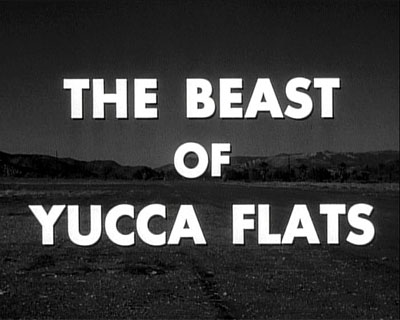
Beast of Yucca Flats (1961)

3/5 (1)

“Beast of Yucca Flats” is a low-budget science fiction horror film from 1961, directed by Coleman Francis. The film stars Tor Johnson as Joseph Javorsky, a Soviet scientist who defects to the United States and is pursued by KGB agents. While being chased, Javorsky is exposed to a nuclear blast and is transformed into a murderous beast with superhuman strength.

The film is infamous for its poor production values, nonsensical plot, and lack of coherent dialogue. Much of the film is narrated rather than spoken by the characters, which only adds to the confusion. The film has been widely panned by critics and is considered one of the worst movies ever made.

Despite its reputation, “Beast of Yucca Flats” has developed a cult following among fans of bad movies and has been parodied in various media. The film’s bizarre and nonsensical nature has made it a prime target for mockery and humor.

Directors:
Coleman Francis

Writer:
Coleman Francis

Stars:
Douglas Mello, Barbara Francis, Bing Stafford
Rate this Movie

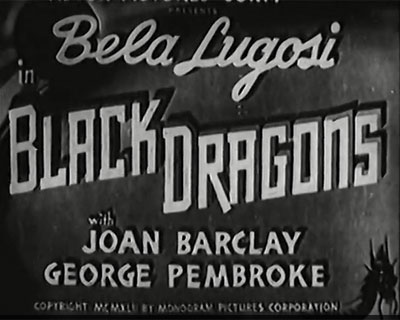
Black Dragons (1942)

2/5 (1)

“Black Dragons” is a 1942 American thriller film directed by William Nigh. The film tells the story of a group of Japanese spies, known as the “Black Dragons,” who arrive in the United States with a mission to disrupt American war efforts during World War II.

The film’s protagonist is a successful businessman named Mr. Moto (played by Peter Lorre), who is actually a Japanese secret agent. Moto becomes involved in the Black Dragons’ plot when he is framed for the murder of an American industrialist who was cooperating with the Japanese.

As Moto investigates the murder and the Black Dragons’ activities, he must navigate a web of intrigue and danger, including assassination attempts and bombings. Moto eventually discovers that the Black Dragons’ ultimate goal is to steal plans for a new American aircraft carrier.

In a tense finale, Moto and the FBI work together to prevent the Black Dragons from carrying out their plan and bring the spies to justice.

“Black Dragons” was produced during a time when there was a great deal of fear and suspicion about the activities of Japanese spies in the United States. The film reflects this anxiety, portraying the Japanese as ruthless and cunning enemies who will stop at nothing to achieve their goals. Despite its dated portrayal of the Japanese, the film remains a thrilling and suspenseful example of wartime propaganda cinema.

Directors:
William Nigh

Writer:
Harvey Gates, Robert Kehoe

Stars:
Bela Lugosi, Joan Barclay, George Pembroke

Rate this Movie

Blue Angel (1930)

4.5/5 (2)

“The Blue Angel” is a 1930 German tragicomedy film directed by Josef von Sternberg. The film tells the story of an older and respected high school professor, Immanuel Rath (played by Emil Jannings), who becomes infatuated with a young cabaret singer, Lola Lola (played by Marlene Dietrich), after visiting her nightclub, “The Blue Angel.”

Rath becomes obsessed with Lola, attending her performances night after night and showering her with gifts. Eventually, he convinces her to leave her life as a performer and run away with him. They marry and settle down in his hometown, but their relationship quickly deteriorates as Rath becomes increasingly jealous and possessive of Lola. She eventually grows tired of his controlling behavior and resumes her career as a performer, leading to a final confrontation between the two.

The film was highly influential and made a star out of Marlene Dietrich, who would go on to become one of the most iconic actresses of the 20th century. The film’s themes of obsession and the dangers of romanticizing those from different social classes resonated with audiences at the time and continue to be relevant today.

Directors:
Josef von Sternberg

Writer:
Heinrich Mann, Carl Zuckmayer, Karl Vollmöller

Stars:
Emil Jannings, Marlene Dietrich, Kurt Gerron

Rate this Movie

Billy the Kid in Texas (1940)

3/5 (1)

“Billy the Kid in Texas” is a 1940 Western film directed by Oliver Drake and starring Bob Steele as Billy the Kid. The film follows Billy as he attempts to clear his name and evade the law in Texas after being falsely accused of murder.

The story begins with Billy and his partner Fuzzy Jones on the run from the law after a bank robbery. They take refuge in a small Texas town, where they meet a young woman named Sally, who works at the local newspaper.

When a prominent citizen of the town is murdered, Billy is falsely accused of the crime and the local law enforcement sets out to capture him. Meanwhile, Sally helps Billy and Fuzzy uncover the real killer and clear Billy’s name.

The film is notable for its fast-paced action and classic Western themes of lawlessness and redemption. It also features the charismatic performance of Bob Steele as Billy the Kid, a character who has become a legendary figure in Western folklore.

Directors:
Sam Newfield

Writer:
Joseph O’Donnell

Stars:
Bob Steele, Terry Walker, Al St. John

Rate this Movie

Back Stage (1919)

3/5 (1)

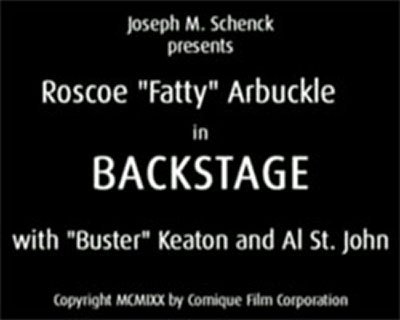
“Back Stage” is a 1919 silent film directed by Roscoe “Fatty” Arbuckle and starring Arbuckle and Buster Keaton. The film is a comedy that takes place in a theater, with Arbuckle playing the role of a stagehand named Merton who dreams of becoming a performer.

Merton is in love with the leading lady of the theater troupe, but she is already engaged to the villainous head of the theater. When the leading lady’s father dies and leaves her his fortune, Merton sees an opportunity to win her over by producing a lavish show that will showcase her talents.

Merton convinces the other stagehands to help him put on the show, but chaos ensues as they struggle with various mishaps and obstacles, including a misbehaving mechanical set and an escaped monkey. Despite the setbacks, the show is a success, and Merton wins the leading lady’s heart.

The film is notable for its slapstick humor and physical comedy, as well as for its use of visual gags and inventive stunts. It also features the comedic talents of Arbuckle and Keaton, two of the most popular comedians of the silent era.

Directors:
Roscoe ‘Fatty’ Arbuckle

Writer:
Jean C. Havez

Stars:
Roscoe ‘Fatty’ Arbuckle, Buster Keaton, Al St. John

Rate this Movie

Beyond Tomorrow (Beyond Christmas) (1940)

3/5 (1)

“Beyond Tomorrow,” also known as “Beyond Christmas,” is a 1940 Christmas fantasy film directed by A. Edward Sutherland. The story revolves around three wealthy and lonely businessmen named George, Allan, and Michael who decide to spend Christmas together.

While vacationing in New York City, the three men meet a young woman named Jean Lawrence and invite her to join them for dinner. They all get along well, and the three men feel a deep connection with Jean.

However, tragedy strikes when the three men are killed in a plane crash on their way home from vacation. After their deaths, they become ghosts and try to help Jean and her struggling career as a singer.

The ghosts arrange for Jean to meet a young and ambitious businessman named James Houston, and the two begin a relationship. However, the ghosts fear that James is not the right man for Jean and try to intervene.

In the end, the ghosts are able to help Jean find true love with Jim, who is revealed to be the long-lost son of one of the businessmen. The film ends with the three ghosts ascending to heaven, content that they were able to help Jean find happiness.

The film is notable for its heartwarming story of love and redemption and its themes of generosity and selflessness. It also features an early use of special effects to depict the three ghosts and their interactions with the living world.

Directors:
A. Edward Sutherland

Writer:
Adele Comandini, Mildred Cram

Stars:
Harry Carey, C. Aubrey Smith, Charles Winninger

Rate this Movie

Betty Boop: Bamboo Isle (1932)

4/5 (1)

“Bamboo Isle” is a 1932 animated short film featuring the popular cartoon character Betty Boop. The film was directed by Dave Fleischer and produced by Fleischer Studios.

The story begins with Betty Boop and her friends taking a leisurely boat trip in the South Pacific. They soon come across a tropical island inhabited by a tribe of native people, who welcome them with a song and dance.

Betty is enchanted by the exotic beauty of the island and its people, especially the handsome prince, who immediately falls in love with her. Betty joins in the island festivities, dancing and singing with the natives.

However, their joyous celebration is soon interrupted by a group of pirates who arrive on the island and capture the prince, along with Betty and her friends. The pirates plan to sell the natives as slaves, but Betty and her friends manage to escape and free the prince.

In the end, Betty and the prince declare their love for each other and share a romantic moment on the boat ride back home.

The film is notable for its catchy musical numbers, colorful animation, and stereotypical portrayal of native people. It reflects the popular culture of the time, which often depicted exotic locations and people as fascinating and mysterious, but also simplistic and one-dimensional.

Directors:
Dave Fleischer, Seymour Kneitel

Stars:
The Royal Samoans, Billy Murray, Satini Pualoa

Rate this Movie

Bluebeard (1944)

3/5 (1)

“Bluebeard” is a 1944 film directed by Edgar G. Ulmer and starring John Carradine as a 19th-century French artist and serial killer named Gaston Morrell, who is based on the infamous French legend of Bluebeard.

Morrell is a successful artist who preys on young women, luring them to his home with the promise of modeling for his paintings. He then kills them and stores their bodies in a secret room in his house.

One day, Morrell meets Lucille, a beautiful young woman who has just moved to Paris. They quickly fall in love, but Lucille is unaware of Morrell’s dark secret. As their relationship develops, Morrell becomes increasingly paranoid and fearful of being caught, particularly after a detective begins investigating the disappearances of the missing women.

Despite his efforts to protect Lucille from his true nature, Morrell eventually reveals his murderous tendencies to her. In the end, Morrell is caught and brought to justice, but not before he has one final showdown with Lucille.

The film is notable for its moody and atmospheric cinematography, as well as Carradine’s portrayal of Morrell as a tortured artist struggling with his own demons. It also explores themes of obsession, betrayal, and the destructive power of unchecked desire.

Directors:
Edgar G. Ulmer

Writer:
Arnold Lipp, Werner H. Furst, Pierre Gendron

Stars:
John Carradine, Jean Parker, Nils Asther

Rate this Movie

Bird of Paradise (1932)

4/5 (1)

“Bird of Paradise” is a romantic adventure film released in 1932, directed by King Vidor and starring Dolores del Rio and Joel McCrea. The story is set on a remote island in the South Pacific, where a young American named Johnny falls in love with a Polynesian princess named Luana.

Johnny is traveling with his friend, Bill, to get away from his troubles in the United States. They end up on the island where they meet Luana, who is betrothed to a tribal prince. Despite the cultural differences and warnings from the locals, Johnny and Luana fall deeply in love.

However, their love is threatened by the arrival of a volcanic eruption, which the natives believe is a sign of displeasure from the gods. To appease the gods, the tribal prince demands that Luana be sacrificed. Johnny and Luana flee into the jungle, pursued by the prince and his warriors.

As they journey through the dangerous terrain, Johnny and Luana must overcome their differences and work together to survive. They eventually find refuge in a cave, where they profess their love for each other. However, they are soon discovered by the prince, and a final confrontation ensues.

In the end, Johnny and Luana choose to face their fate together rather than be separated. They stand hand in hand as the volcano erupts, symbolizing the power of their love and the forces of nature that brought them together.

The film is notable for its stunning cinematography and use of on-location filming in Hawaii, as well as its portrayal of a romantic relationship between a white man and a non-white woman, which was controversial for its time.

Directors:
King Vidor

Writer:
Richard Walton Tully, Wells Root, Wanda Tuchock

Stars:
Dolores del Rio, Joel McCrea, John Halliday

Rate this Movie

A Jazzed Honeymoon (1919)

3/5 (1)

“A Jazzed Honeymoon” is a silent comedy film released in 1919, directed by Hal Roach and starring Harold Lloyd and Bebe Daniels as the lead characters.

The movie follows the story of a young couple, Harold and Bebe, who decide to take a honeymoon trip to the mountains. However, their plans are quickly derailed when they get caught up in a series of misadventures and comedic mishaps.

Along the way, they encounter a group of bootleggers, a runaway train, and a gang of robbers, all of which provide ample opportunities for slapstick humor and physical comedy. Despite the chaos, Harold and Bebe manage to stay together and emerge victorious in the end.

The film is notable for its innovative use of special effects and visual gags, which would become trademarks of Harold Lloyd’s later work. It also features a lively jazz soundtrack, which adds to the film’s upbeat and energetic tone.

“A Jazzed Honeymoon” was a popular success upon its release and helped to establish Harold Lloyd as one of the leading comedic actors of the silent era. The film’s humor and charm continue to entertain audiences today, making it a classic of early American cinema.

Directors:
Hal Roach

Writer:
H.M. Walker

Stars:
Harold Lloyd, ‘Snub’ Pollard, Bebe Daniels

Rate this Movie

After Mein Kampf (1940)

3/5 (1)

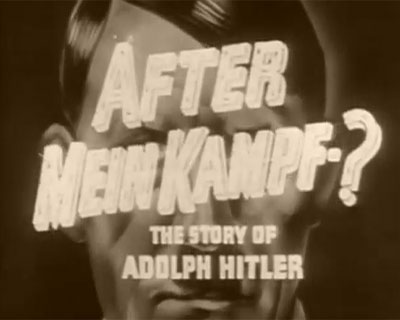
“After Mein Kampf?: The Story of Adolf Hitler” is a biographical documentary film released in 1940, directed by Norman Lee.

The film chronicles the life of Adolf Hitler from his early years as a struggling artist in Vienna, through his rise to power in the Nazi Party and his reign as Germany’s dictator during World War II. The film features rare footage of Hitler and his inner circle, as well as interviews with people who knew him personally.

The documentary explores the complex factors that led to Hitler’s rise to power, including his charismatic personality, his ability to manipulate public opinion, and his use of violence and intimidation to suppress opposition. The film also examines Hitler’s ideology and his ambitions to create a new order in Europe, based on his vision of Aryan supremacy.

Despite being made during World War II, the film was produced by a British studio and is notable for its objective and critical portrayal of Hitler. The film does not shy away from depicting the atrocities committed by the Nazi regime, and it serves as a powerful reminder of the dangers of authoritarianism and propaganda.

“After Mein Kampf?: The Story of Adolf Hitler” remains an important historical document and a cautionary tale about the dangers of fascism and dictatorship.

Directors:
Norman Lee

Writer:
Alec Dyer, Jacques Haïk

Stars:
Adolf Hitler, Robert Beatty, Derek Blomfield

Rate this Movie

Arizona Stage Coach (1942)

3/5 (1)

“Arizona Stage Coach” is a Western movie released in 1942, directed by S. Roy Luby and starring Ray “Crash” Corrigan as the lead character, Ray Corrigan.

The movie follows the story of Corrigan, a cowboy who is hired to protect a stagecoach carrying a valuable cargo across the dangerous Arizona frontier. Along with his fellow cowboys, Corrigan must fend off attacks by bandits and Native American tribes, who are intent on stealing the stagecoach’s valuable contents.

As the journey progresses, Corrigan forms a bond with the other passengers on the stagecoach, including a beautiful singer named Rita and a wealthy businessman named Emerson. However, the group soon discovers that one of the passengers is actually a spy, working for the bandits and plotting to steal the valuable cargo.

In a series of tense showdowns and gunfights, Corrigan and his allies work to protect the stagecoach and thwart the bandits’ plans. In the end, they emerge victorious, and the valuable cargo is safely delivered to its destination.

“Arizona Stage Coach” is a classic Western movie that features many of the genre’s familiar themes and motifs, including gunfights, horse chases, and dusty frontier towns. The movie’s themes of loyalty, bravery, and honor continue to make it a popular film among Western fans today.

Directors:
S. Roy Luby

Writer:
Oliver Drake, Arthur Hoerl

Stars:
Ray Corrigan, John ‘Dusty’ King, Max Terhune

Rate this Movie

Attack! The Battle for New Britain (1944)

4/5 (1)

“Attack! Battle of New Britain” is a World War II film released in 1944, directed by Robert Pirosh and starring Jack Warden as the lead character, Lieutenant Carl Anderson.

The movie follows the story of Lieutenant Anderson and his platoon as they land on the island of New Britain in the South Pacific, in an effort to secure a strategic airfield from Japanese forces. The mission is dangerous and the odds are against them, but Anderson and his men are determined to succeed.

As they make their way through the jungle, Anderson and his platoon face numerous challenges, including intense enemy fire and the difficult terrain of the island. They also encounter a group of stranded American nurses, who they must protect from the advancing Japanese army.

Despite the obstacles, Anderson and his men remain resolute in their mission, and they engage in a series of intense battles with the Japanese forces. In a dramatic final battle, they manage to secure the airfield and drive the Japanese back, paving the way for further Allied victories in the South Pacific.

“Attack! Battle of New Britain” was made during the height of World War II, and it reflects the patriotism and determination of the era. The movie’s themes of bravery, sacrifice, and heroism in the face of danger continue to resonate with audiences today.

Directors:
Robert Presnell Sr.

Stars:
Leo Genn, Burgess Meredith, Anthony Veiller

Rate this Movie

Assignment Outer Space (1960)

3/5 (1)

“Assignment: Outer Space” is a science fiction movie released in 1960, directed by Antonio Margheriti and starring Rik Van Nutter as the lead character, Commander Jack Rankin.

The movie is set in the future, where humans have established a permanent base on the moon and are preparing to send a spaceship to explore Mars. Commander Rankin is assigned to cover the mission as a journalist, but he soon becomes involved in the action when the spaceship encounters a series of obstacles and dangers.

As the spaceship travels through space, the crew faces a variety of challenges, including a solar storm, mechanical malfunctions, and an attack by an alien spacecraft. Despite the obstacles, Rankin and the crew remain committed to their mission and work together to overcome each challenge.

Once they arrive on Mars, the crew faces even more danger, including hostile alien creatures and treacherous terrain. However, they persevere and manage to gather valuable scientific data before returning safely to Earth.

“Assignment: Outer Space” was made during the height of the Space Race between the United States and the Soviet Union, and it reflects the optimism and excitement of the era. The movie’s themes of exploration, adventure, and cooperation in the face of adversity continue to make it a popular science fiction film today.

Directors:
Antonio Margheriti

Writer:
Ennio De Concini, Jack Wallace

Stars:
Rik Van Nutter, Gabriella Farinon, David Montresor

Rate this Movie

A Yank in Libya (1942)

3/5 (1)

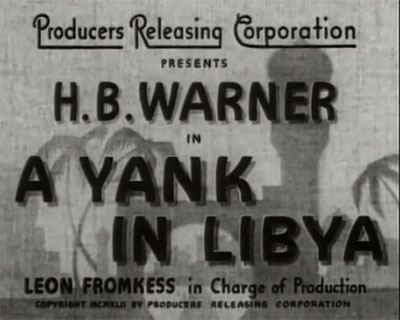
“A Yank in Libya” is a World War II action film released in 1942, directed by Albert Herman and starring H.B. Warner as the lead character, Colonel John Wister.

The movie follows the story of Colonel Wister, an American soldier who is sent to Libya to assist the British forces in their fight against the German army. Wister is initially skeptical of the British and their tactics, but he soon comes to respect and admire his new allies. Together, they engage in a series of battles against the Germans, including a daring raid on a German airfield.

As the war in Libya intensifies, Wister becomes increasingly involved in the conflict and forms a close bond with the British soldiers under his command. However, he also faces personal challenges, including a romantic entanglement with a British nurse and a clash with a rival American officer.

Despite the obstacles, Wister remains committed to his mission and to his comrades in arms. In a dramatic final battle, he leads a successful attack against the German forces and helps to turn the tide of the war in favor of the Allies.

“A Yank in Libya” was a patriotic film made during World War II, designed to boost morale and support for the war effort. The movie’s themes of bravery, camaraderie, and sacrifice continue to resonate with audiences today.

Directors:
Albert Herman

Writer:
Arthur St. Claire, Sherman L. Lowe

Stars:
Stars
Walter Woolf King, Joan Woodbury, H.B. Warner

Rate this Movie