admin

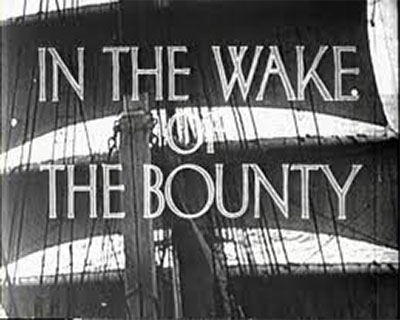
In The Wake of the Bounty (1933)

3/5 (1)

“In the Wake of the Bounty” is a drama film directed by Charles Chauvel and released in 1933. The film is based on the real-life mutiny on the British ship HMS Bounty in 1789 and its aftermath.

The story follows the journey of a group of mutineers who have taken control of the ship and set their captain, William Bligh (played by Arthur Greenaway), adrift in a small boat with his loyal followers. The mutineers, led by Fletcher Christian (played by Mayne Lynton), decide to settle on a remote island in the South Pacific.

The film portrays the struggles of the mutineers as they try to build a new life on the island, while facing various challenges such as conflicts between themselves, the harsh environment, and the threat of British naval justice. Meanwhile, Captain Bligh and his crew embark on a perilous journey to seek help and bring the mutineers to justice.

The film explores themes of power, loyalty, betrayal, and survival in a compelling and realistic way. It features breathtaking cinematography of the South Pacific landscapes and impressive sea-faring action sequences. Overall, “In the Wake of the Bounty” is a captivating and dramatic retelling of one of the most infamous events in maritime history.

Directors:
Charles Chauvel

Writer:
Charles Chauvel

Stars:
Arthur Greenaway, Mayne Lynton, Errol Flynn

Rate this Movie

Hell Fire Austin (1932)

3/5 (1)

“Hell Fire Austin” is a western film directed by Forrest Sheldon and released in 1932. The film features Buck Jones as the lead character, Steve Austin.

The story follows Steve Austin, a rancher who is falsely accused of rustling cattle by a group of powerful men who are trying to take control of the local water rights. When Austin’s partner is murdered, he sets out to clear his name and bring the real culprits to justice.

Along the way, Austin meets and falls in love with Fay Winters, the daughter of a local rancher who is also being targeted by the same group of men. Together, they work to uncover the truth behind the crimes and bring peace to their community.

The film features classic western themes such as justice, love, and the struggle for power in the untamed American West. With thrilling action sequences and impressive stunts, “Hell Fire Austin” is an entertaining example of early Hollywood westerns.

Directors:
Forrest Sheldon

Writer:
Forrest Sheldon

Stars:
Ken Maynard, Ivy Merton, Nat Pendleton

Rate this Movie

Horrors of Spider Island (1960)

2/5 (1)

“Horrors of Spider Island,” also known as “Body in the Web,” is a 1960 German-American horror film directed by Fritz Böttger. The plot follows a group of dancers who crash land on a deserted island inhabited by giant spiders.

The film begins with a group of eight dancers and their manager, Gary, boarding a small airplane to perform in Singapore. However, the plane experiences mechanical issues and crashes into the ocean, leaving the survivors stranded on a remote island.

As they explore the island, they soon realize that they are not alone. Giant spiders, mutated by atomic radiation, roam the island and attack the group. One by one, the dancers are killed off in gruesome ways, while the remaining survivors try to find a way off the island and escape the spider creatures.

As tensions rise, Gary discovers a secret laboratory on the island that was conducting experiments on spiders. He learns that the spiders were injected with a serum that turned them into aggressive predators, and that they were intentionally released on the island to test their behavior in a natural environment.

The survivors eventually discover a way to signal for help and are rescued by a passing ship. However, Gary stays behind on the island, determined to destroy the laboratory and put an end to the spider experiments once and for all.

The film was notable for its use of scantily clad female dancers and its low-budget special effects, including the use of live tarantulas and cheap rubber spider props. It was also one of the first films to depict giant spiders as the main antagonists. Despite its flaws, the film has since gained a cult following and is considered a classic of the B-movie genre.

Directors:
Fritz Böttger

Writer:
Fritz Böttger, Eldon Howard, Albert G. Miller

Stars:
Harald Maresch, Helga Franck, Alexander D’Arcy

Rate this Movie

His Girl Friday (1940)

5/5 (1)

“His Girl Friday” is a classic screwball comedy film directed by Howard Hawks, released in 1940. The movie is based on the play “The Front Page” by Ben Hecht and Charles MacArthur, which was first adapted for the screen in 1931.

The story revolves around Hildy Johnson (played by Rosalind Russell), a talented and ambitious newspaper reporter who is about to leave her job and get married to her fiancé Bruce Baldwin (played by Ralph Bellamy). However, her ex-husband and editor of the newspaper, Walter Burns (played by Cary Grant), is determined to win her back and keep her on the job.

Walter manipulates the situation and convinces Hildy to cover one last story before leaving, which involves the case of a man who is about to be executed for murder. As Hildy investigates the case, she realizes that the man is innocent and becomes determined to prove it.

In the midst of all this, Hildy and Walter’s old romantic feelings resurface, causing chaos and confusion for everyone involved. The fast-paced, witty dialogue and comedic situations keep the audience on their toes as the story unfolds.

In the end, Hildy’s dedication to the truth and Walter’s determination to win her back lead to a satisfying conclusion for all characters involved, both professionally and romantically. “His Girl Friday” is considered a classic of the screwball comedy genre and is still beloved by audiences today.

Directors:
Howard Hawks

Writer:
Charles Lederer, Ben Hecht, Charles MacArthur

Stars:
Cary Grant, Rosalind Russell, Ralph Bellamy

Rate this Movie

Hard Luck (1921)

3/5 (1)

“Hard Luck” is a 1921 comedy film directed by and starring Buster Keaton. The film follows the misadventures of a young man named Buster (played by Keaton), who has just been released from prison.

Buster’s first stroke of “hard luck” occurs when he is kicked out of his boarding house and forced to live on the streets. He soon meets a young woman (played by Virginia Fox), who he falls in love with. However, she is already engaged to a wealthy man, leading to a series of comedic misunderstandings and mishaps.

Buster’s misfortunes continue as he accidentally steals a watch, leading to a chase by the police and a dramatic rescue involving a high-rise building. The film culminates in a chaotic and hilarious chase sequence involving Buster, the police, and a parade.

As with many of Keaton’s films, “Hard Luck” features physical comedy and stunts, including a memorable scene in which Buster climbs a building and hangs from a clock face.

Overall, “Hard Luck” is a classic example of Keaton’s comedic style, combining slapstick humor with clever storytelling and impressive stunts. The film showcases Keaton’s talent as a writer, director, and performer, and remains a beloved classic of silent cinema.

Directors:
Edward F. Cline, Buster Keaton

Writer:
Edward F. Cline, Buster Keaton

Stars:
Buster Keaton, Virginia Fox, Joe Roberts

Rate this Movie

Go Down, Death! (1944)

3/5 (1)

“Go Down, Death” is a 1944 film directed by and starring Spencer Williams. The film is loosely based on James Weldon Johnson’s poem and play of the same name.

The story follows the character of Martha Jane (played by Myra D. Hemmings), a young woman in a rural African American community in the South. Martha Jane is engaged to a man named Joe (played by Samuel H. James), but her mother disapproves of the relationship, believing that Joe is too poor and uneducated.

As Martha Jane struggles with her relationship, the community is also facing other challenges, including poverty, illness, and discrimination. Death (played by Spencer Williams) is depicted as a mystical figure who appears throughout the film, guiding the characters through their struggles and providing comfort in the face of death.

Throughout the film, the characters sing spirituals and engage in discussions about faith, justice, and the afterlife. Death is portrayed as a compassionate figure who understands the struggles of the community and offers hope for a better future.

The film uses a mix of African American music and language, along with elements of magical realism, to create a powerful and emotional portrayal of the African American experience in the South during the 1940s.

Overall, “Go Down, Death” is a unique and significant film in African American cinema, exploring themes of love, faith, and social justice in a powerful and emotional way.

Directors:
Spencer Williams

Writer:
Sam Elljay, Jean Roddy, James Weldon Johnson

Stars:
Myra D. Hemmings, Samuel H. James, Eddye L. Houston

Rate this Movie

Good Night Nurse! (1918)

3/5 (1)

“Good Night Nurse” is a 1918 silent comedy film directed by Roscoe “Fatty” Arbuckle and starring Arbuckle himself alongside Buster Keaton and Al St. John. The film tells the story of a young man named Roscoe who is hired as a private nurse to care for a wealthy man named John Stuyvesant who is pretending to be ill to avoid paying his debts.

Roscoe is initially unaware of the scheme but soon discovers the truth and becomes embroiled in a series of comedic misadventures as he tries to keep Stuyvesant’s creditors at bay while also trying to woo a pretty nurse named Mary. Meanwhile, Stuyvesant’s scheming wife and her lover plot to get their hands on his money.

As the story unfolds, Roscoe and his friends engage in a series of hilarious antics, including mistaken identities, slapstick fights, and madcap chases. The film is notable for its fast-paced physical comedy and for showcasing the comedic talents of both Arbuckle and Keaton, who would later become a major Hollywood star in his own right.

Overall, “Good Night Nurse” is a classic silent comedy that exemplifies the humor and charm of the era. It is a lighthearted romp filled with laughs and hijinks that will entertain audiences of all ages.

Directors:
Roscoe ‘Fatty’ Arbuckle

Writer:
Roscoe ‘Fatty’ Arbuckle

Stars:
Roscoe ‘Fatty’ Arbuckle, Buster Keaton, Al St. John

Rate this Movie

Fighting Caravans (1931)

3/5 (1)

“Fighting Caravans” is a 1931 Western film directed by Otto Brower and David Burton and starring Gary Cooper, Lili Damita, and Ernest Torrence. The film is based on a novel by Zane Grey and tells the story of a young man named Clint Belmet who signs up to work as a scout for a wagon train headed west to California.

As the caravan makes its way through dangerous territory, Clint falls in love with the beautiful Felice, who is traveling with her father, a wealthy businessman. However, their relationship is complicated by the presence of the brutal outlaw, Ladd, who has his sights set on Felice.

As the journey continues, the caravan faces a series of challenges, including attacks from Native American tribes, treacherous terrain, and internal conflicts among the travelers. Clint must use his skills as a scout and his courage to protect the caravan and save Felice from Ladd’s clutches.

The film is notable for its stunning location shooting in the Utah desert, which adds to the authenticity and realism of the Western setting. It also features action-packed sequences of wagon trains crossing rivers and traversing steep mountain passes, as well as intense scenes of gunfights and battles with Native American tribes.

Overall, “Fighting Caravans” is a classic Western adventure that showcases Gary Cooper’s talent as a leading man and established him as a major Hollywood star.

Directors:
Otto Brower, David Burton

Writer:
Zane Grey, Edward E. Paramore Jr., Keene Thompson

Stars:
Gary Cooper, Lili Damita, Ernest Torrence

Rate this Movie

Fog Island (1945)

4.5/5 (4)

“Fog Island” is a 1945 mystery-thriller film directed by Terry O. Morse and starring George Zucco, Lionel Atwill, and Jerome Cowan. The plot centers around a group of people who are invited to a remote island by eccentric millionaire, Geoffrey Bishop, who they believe wants to discuss a business proposition with them. However, they soon realize that Bishop has other, more sinister plans.

As the group arrives on the fog-shrouded island, they discover that they are cut off from the mainland due to a storm. Strange occurrences begin to happen, and tension rises as each guest realizes that they are being targeted by an unknown assailant. The group soon learns that Bishop has invited them to the island to exact revenge on those he believes are responsible for his imprisonment and financial ruin.

As the story unfolds, the guests attempt to figure out who is behind the attacks and what Bishop’s true motives are. In the end, they discover that Bishop is not who he appears to be and that his twisted plan involves framing one of the guests for his crimes.

The film is notable for its moody atmosphere, eerie setting, and use of suspenseful music to heighten tension. It is considered a classic example of the “old dark house” genre of thriller films that were popular in the 1930s and 1940s.

Directors:
Terry O. Morse

Writer:
Pierre Gendron, Bernadine Angus

Stars:
George Zucc, oLionel Atwill, Jerome Cowan

Rate this Movie

Fall of the House of Usher (1928)

3/5 (1)

“The Fall of the House of Usher” is a silent horror film released in 1928, directed by James Sibley Watson and Melville Webber, and based on the 1839 short story of the same name by Edgar Allan Poe.

The film tells the story of a young man named Allan who visits the decaying mansion of his childhood friend Roderick Usher, who is suffering from a mysterious illness. Allan soon discovers that Roderick’s twin sister, Madeline, is also ill and appears to be suffering from a strange malady. As the story unfolds, Allan becomes increasingly disturbed by the strange events and eerie atmosphere surrounding the Usher family and their crumbling home.

As the plot thickens, the siblings’ condition worsens, and Madeline eventually dies. Roderick, who is convinced that she is still alive and buried alive, becomes more and more unhinged. In the climactic scene, as a violent storm rages outside the mansion, Madeline appears, seemingly risen from the dead, and attacks her brother, causing the house to collapse and bury them both alive.

The film is notable for its expressionistic cinematography, stark black-and-white imagery, and surreal dreamlike sequences that emphasize the psychological torment of the characters. It is considered a classic of early horror cinema and an important example of the avant-garde film movement.

Directors:
James Sibley Watson, Melville Webber

Writer:
Edgar Allan Poe

Stars:
Herbert Stern, Hildegarde Watson, Melville Webber

Rate this Movie

Frankenstein (1910) [Edison]

3/5 (1)

“Frankenstein” is a 1910 silent horror film produced by Thomas Edison and directed by J. Searle Dawley. It is based on Mary Shelley’s novel “Frankenstein; or, The Modern Prometheus”.

The film follows the story of Dr. Frankenstein (Augustus Phillips), a scientist who creates a monster (Charles Ogle) from various body parts. However, the creature becomes uncontrollable and wreaks havoc in the town, terrorizing the inhabitants and causing destruction.

The film’s plot follows the basic storyline of Shelley’s novel but condenses it significantly due to the limitations of the silent film medium. Despite its limitations, the film is notable for its pioneering special effects, including the use of makeup to create the monster’s gruesome appearance.

“Frankenstein” is a landmark film in the horror genre and is regarded as one of the earliest examples of a feature-length horror film. While its special effects and production values may seem primitive by modern standards, the film remains a significant piece of cinema history and an important influence on later horror films.

Directors:
J. Searle Dawley

Writer:
Mary Shelley, J. Searle Dawley

Stars:
Mary Fuller, Charles Ogle, Augustus Phillips

Rate this Movie

Extravagance (1930)

3/5 (1)

“Extravagance” is a 1930 pre-code drama film directed by Phil Rosen and starring Alice White, William Powell, and Myrna Loy.

The film follows the story of Nellie Nolan (White), a chorus girl who marries wealthy businessman Bill Wetherby (Powell) in a bid to escape her life of poverty. However, their marriage is fraught with problems as Bill’s socialite friends and family disapprove of Nellie and her working-class background.

As Nellie tries to fit in with high society, she finds herself drawn to Bill’s best friend, Ronnie (Henry Kolker), who shares her passion for the arts. As their relationship develops, Nellie becomes increasingly torn between her love for Ronnie and her loyalty to Bill.

The film explores themes of love, class, and the corrupting influence of wealth and power. The performances of White, Powell, and Loy are standout, with Loy playing the role of Bill’s sophisticated and manipulative sister.

“Extravagance” is a noteworthy pre-code film that depicts the excesses and scandals of the wealthy elite in the 1930s. The film’s melodramatic plot and stylish art deco design make it a must-see for fans of classic Hollywood cinema.

Directors:
Phil Rosen

Writer:
Andrew Percival Younger, Adele Buffington, Phil Rosen

Stars:
Owen Moore, June Collyer, Lloyd Hughes

Rate this Movie

Doll Face (1945)

4/5 (2)

“Doll Face” is a 1945 musical comedy film directed by Lewis Seiler and starring Vivian Blaine, Dennis O’Keefe, and Carmen Miranda.

The film tells the story of Burlesque performer Doll Face Carroll (Blaine), who dreams of becoming a Broadway star. She enlists the help of talent agent Mike Hannegan (O’Keefe), who sees potential in her but also wants her to remain true to her burlesque roots.

As Doll Face rises to stardom, she must navigate the challenges of show business, including a rival performer who seeks to sabotage her career. Along the way, she falls in love with Hannegan but must choose between her career and her heart.

The film features several musical numbers, including performances by Miranda, who plays herself as a guest star in one of Doll Face’s shows.

“Doll Face” is a lighthearted and entertaining musical comedy that captures the glamour and excitement of show business in the 1940s. Blaine delivers a charming performance as the determined and talented Doll Face, and the film’s catchy musical numbers and colorful costumes add to its appeal. The film remains a beloved classic of the genre and a must-see for fans of musical comedies.

Directors:
Lewis Seiler

Writer:
Gypsy Rose Lee, Leonard Praskins, Harold Buchman

Stars:
Vivian Blaine, Dennis O’Keefe, Perry Como

Rate this Movie

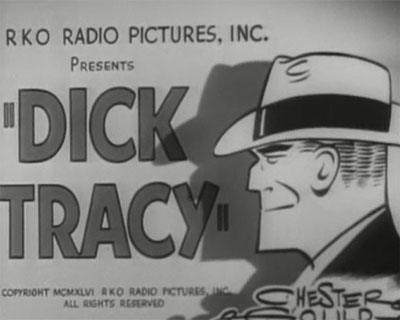
Dick Tracy Detective (1945)

3/5 (1)

“Dick Tracy Detective” is a 1945 crime drama film directed by William A. Berke and starring Morgan Conway as the famous detective Dick Tracy.

The film follows the story of Dick Tracy as he investigates a series of crimes committed by a ruthless gang of criminals led by Steve “The Claw” Michel. The Claw and his gang have been terrorizing the city, committing robberies and murders without being caught.

As Tracy gets closer to unraveling the mystery behind The Claw, he discovers that the criminal mastermind has a personal vendetta against him. With the help of his trusted colleagues, Tracy sets out to bring The Claw to justice and put an end to his reign of terror.

Throughout the film, Tracy faces dangerous and thrilling challenges, including a high-speed car chase and a deadly confrontation with The Claw in a final showdown.

“Dick Tracy Detective” is a classic crime drama that captures the spirit of the iconic comic book character. Conway delivers a solid performance as Tracy, and the film’s action-packed plot and suspenseful twists keep viewers engaged until the end. The film remains a must-see for fans of crime dramas and the Dick Tracy franchise.

Directors:
William Berke

Writer:
Eric Taylor, Chester Gould

Stars:
Morgan Conway, Anne Jeffreys, Mike Mazurki

Rate this Movie

Dementia 13 (1963)

3/5 (1)

“Dementia 13” is a 1963 horror film directed by Francis Ford Coppola and produced by Roger Corman.

The film tells the story of the dysfunctional Haloran family, who gather at their Irish castle to commemorate the anniversary of the death of the youngest daughter Kathleen. However, the family is haunted by the tragedy, and tensions rise as they compete for the inheritance.

When John, the husband of the eldest Haloran daughter, Louise, arrives unexpectedly, he begins to investigate the circumstances surrounding Kathleen’s death. As he delves deeper into the family’s secrets, he discovers a sinister plot involving murder and deception.

As the family members begin to die one by one, John must race against time to uncover the truth and stop the killer before it’s too late.

“Dementia 13” is a classic horror film that showcases Coppola’s early talent as a director. The film’s moody atmosphere, Gothic setting, and suspenseful plot make it a must-see for horror fans. The film also features a haunting musical score by Ronald Stein and a memorable performance by Luana Anders as the troubled and enigmatic daughter-in-law.

Directors:
Francis Ford Coppola

Writer:
Francis Ford Coppola, Jack Hill

Stars:
William Campbell, Luana Anders, Bart Patton

Rate this Movie