Drama

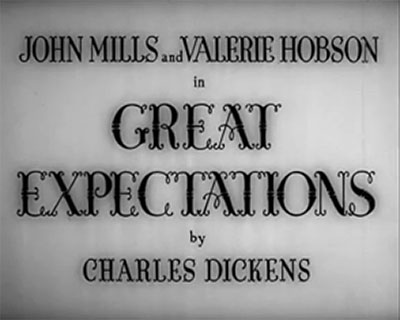
Great Expectations (1946)

5/5 (3)

“Great Expectations” is a film adaptation of Charles Dickens’ classic novel of the same name, directed by David Lean in 1946. The film is a coming-of-age story about Pip, a young orphan boy who is raised by his abusive sister and her blacksmith husband in rural England in the early 1800s.

One day, while visiting the graves of his parents, Pip encounters an escaped convict who demands that Pip bring him food and a file to remove his leg irons. The convict is later caught, but Pip’s kindness towards him has not gone unnoticed. Soon after, Pip is summoned to the decaying mansion of Miss Havisham, a wealthy, eccentric spinster who has been living in seclusion for many years after being jilted at the altar on her wedding day. Miss Havisham hires Pip to play with her adopted daughter, the beautiful but cold-hearted Estella, whom she is raising to break men’s hearts as revenge for her own broken heart.

Pip becomes infatuated with Estella, and his desire to become a gentleman and win her heart becomes his driving ambition. His life changes dramatically when he is unexpectedly given a large sum of money by an unknown benefactor, and he moves to London to become a gentleman. However, as he rises in society, he begins to lose touch with his humble roots and the people who cared for him.

As the years pass, Pip learns the truth about his benefactor, Miss Havisham, and Estella, and he comes to realize the mistakes he has made in his pursuit of wealth and status. He discovers that true happiness comes from love and loyalty, not money and social status, and he must learn to reconcile his past mistakes and make amends.

The film features outstanding performances by John Mills as Pip, Valerie Hobson as Estella, Martita Hunt as Miss Havisham, and Alec Guinness as Pip’s friend, Herbert Pocket. The stunning visuals, haunting score, and compelling storytelling make “Great Expectations” a timeless classic that has captured the hearts of generations of viewers.

Directors:
David Lean

Writer:
Charles Dickens, David Lean, Ronald Neame

Stars:
John Mills, Valerie Hobson, Tony Wager

Rate this Movie

City of Missing Girls (1941)

3/5 (1)

“City of Missing Girls” is a 1941 American crime drama film directed by Elmer Clifton and starring H.B. Warner, Astrid Allwyn, and John Archer. The story follows a police detective named Johnny Mack Brown (played by John Archer) who is tasked with investigating a string of disappearances of young women in a big city. As he delves deeper into the case, he uncovers a complex web of corruption and organized crime involving a powerful gangster named Scarface, who is linked to the abductions. Brown must use all his skills and wits to outsmart Scarface and his henchmen and rescue the missing girls before it’s too late. The film was produced by Producers Releasing Corporation (PRC) and released by United Artists.

Directors:
Elmer Clifton

Writer:
Oliver Drake, George Rosener

Stars:
H.B. Warner, Astrid Allwyn, John Archer

Rate this Movie

Murder in Harlem (1935)

4/5 (2)

After discovering the lifeless body of a white woman at a chemical factory, a night watchman who happens to be black becomes the prime suspect in the murder investigation. Despite reporting the incident, he finds himself at the center of a criminal case where he must prove his innocence in the face of intense racial prejudice and suspicion.

Directors:
Oscar Micheaux, Clarence Williams

Writer:
Oscar Micheaux, Clarence Williams

Stars:
Clarence Brooks, Dorothy Van Engle, Andrew Bishop

Rate this Movie

The Dying Detective – Sherlock Holmes (1921)

4/5 (2)

“The Dying Detective” is a short story written by Sir Arthur Conan Doyle and featuring the famous detective Sherlock Holmes. The story was first published in 1913 as part of the collection “His Last Bow”.

The story begins with Dr. Watson being summoned to the home of Sherlock Holmes, who appears to be seriously ill. Holmes claims to be suffering from a rare and deadly tropical disease, and he refuses to let anyone else examine him. Watson is concerned and tries to help, but Holmes appears to be delirious and barely coherent.

As the story progresses, it becomes clear that Holmes is not actually ill, but is instead putting on an elaborate act as part of a plan to catch a criminal. Holmes reveals that he has been investigating a man named Culverton Smith, who he believes is responsible for the death of a friend. Smith is an expert in tropical diseases, and Holmes is certain that he used his knowledge to commit murder.

In order to prove his theory, Holmes has allowed himself to be infected with the same disease that Smith used to kill his victim. He knows that Smith will come to him, believing that he is safe from suspicion, and he will be able to catch him in the act.

In the end, Holmes’ plan succeeds, and Smith is caught and brought to justice. Holmes’ own health is restored, and he and Watson resume their adventures together.

“The Dying Detective” is a classic Sherlock Holmes story that showcases the detective’s intelligence, cunning, and willingness to put himself in danger to catch a criminal. It is also a testament to the enduring popularity of the character and the enduring appeal of Conan Doyle’s writing.

Directors:
Maurice Elvey

Writer:
Arthur Conan Doyle, William J. Elliott

Stars:
Eille Norwood, Hubert Willis, Cecil Humphreys

Rate this Movie

The Limping Man (1953)

3/5 (1)

“The Limping Man” is a British film noir from 1953, directed by Cy Endfield. The movie follows the story of a man named Frank Prior, who is released from prison after serving time for a crime he didn’t commit. Upon his release, he is determined to clear his name and find the real culprit.

Prior soon discovers that his girlfriend has disappeared and sets out to find her. In his search, he comes across a gang of criminals who are involved in a counterfeit money scheme. The leader of the gang is known as “The Limping Man” due to a physical deformity.

As Prior gets closer to uncovering the truth about the gang and his girlfriend’s disappearance, he finds himself in increasing danger. He is aided by a sympathetic cab driver, who helps him in his investigation.

The film builds to a dramatic conclusion as Prior confronts “The Limping Man” and the truth is revealed about his girlfriend’s disappearance and the counterfeit scheme. In the end, justice is served, and Prior is cleared of any wrongdoing.

“The Limping Man” is a classic film noir that showcases the genre’s trademark elements of suspense, danger, and mystery. It also features strong performances from the cast, particularly from the lead actor, Lloyd Bridges, who plays Frank Prior with intensity and determination.

Directors:
Cy Endfield

Writer:
Ian Stuart Black, Reginald Long, Anthony Verney

Stars:
Lloyd Bridges, Moira Lister, Alan Wheatley

Rate this Movie

The Second Woman (1950)

3/5 (1)

“The Second Woman” is a 1950 American film noir directed by James V. Kern and starring Robert Young, Betsy Drake, and John Sutton.

The film follows the story of a wealthy San Francisco architect named Jeff Cohalan (Robert Young), who is haunted by the tragic death of his first wife in a boating accident. He becomes increasingly obsessed with the idea that his new wife, Ellen (Betsy Drake), is destined to suffer the same fate.

As Jeff’s paranoia grows, he becomes increasingly possessive and controlling, alienating Ellen and causing tension in their marriage. When a former business associate of Jeff’s arrives in town, he begins to suspect that the man is involved in a conspiracy to harm Ellen.

But as Jeff’s mental state deteriorates, it becomes increasingly unclear whether his fears are justified, or simply the product of his own troubled mind. The film builds suspense and tension as it explores the depths of Jeff’s psychological turmoil, and the impact it has on those around him.

With its intricate plot and complex characters, “The Second Woman” is a classic example of film noir. It features strong performances from the lead actors, particularly Robert Young as the troubled protagonist, and Betsy Drake as the loyal but conflicted Ellen. The film is a gripping psychological drama that keeps the audience guessing until the very end.

Directors:
James V. Kern

Writer:
Mort Briskin, Robert Smith

Stars:
Robert Young, Betsy Drake, John Sutton

Rate this Movie

Algiers (1938)

4/5 (1)

“Algiers” is a 1938 American romantic drama film directed by John Cromwell and starring Charles Boyer and Hedy Lamarr.

The film tells the story of Pepe Le Moko (Charles Boyer), a notorious thief and fugitive who is hiding out in the Casbah district of Algiers, a labyrinthine neighborhood that is home to many other criminals and outcasts. Despite his criminal status, Pepe is respected and admired by the locals, who help him evade the police.

Pepe’s life takes a dramatic turn when he meets Gaby (Hedy Lamarr), a beautiful and sophisticated woman visiting Algiers with her wealthy fiancé. Pepe is immediately drawn to Gaby, and she to him, leading to a forbidden romance that threatens to upend both of their lives.

As the police close in on Pepe, he must choose between his love for Gaby and his loyalty to his criminal comrades. Meanwhile, Gaby must confront her own desires and decide what kind of life she wants to lead.

With its exotic setting, sweeping romance, and themes of forbidden love and redemption, “Algiers” was a critical and commercial success, earning Charles Boyer an Oscar nomination for his performance as Pepe Le Moko. The film has since become a classic of Hollywood’s golden age.

Directors:
John Cromwell

Writer:
John Howard Lawson, James M. Cain, Henri La Barthe

Stars:
Charles Boyer, Hedy Lamarr, Sigrid Gurie

Rate this Movie

Case of the Frightened Lady (1940)

3/5 (1)

“Case of the Frightened Lady” is a 1940 British crime thriller film directed by George King and based on a play by Edgar Wallace. The film stars Marius Goring as Lord Lebanon, a wealthy nobleman who is desperate to keep his family line going, but whose unmarried daughter, Lady Lebanon (Penelope Dudley-Ward), is terrified of marriage.

When a series of mysterious deaths occur in the family’s ancestral home, Mark’s Priory, a detective named Inspector Tanner (played by Felix Aylmer) is called in to investigate. He soon discovers that there is a sinister plot afoot involving Lady Lebanon’s inheritance and a conspiracy to keep her unmarried.

With the help of the family’s secretary, Isla Crane (played by Helen Haye), Tanner sets out to uncover the truth behind the murders and protect Lady Lebanon from harm. Along the way, he must navigate a web of deceit and treachery, as well as the strange and unsettling behavior of Lady Lebanon herself.

As the investigation unfolds, Tanner uncovers a shocking secret that has been hidden for years and is ultimately able to bring the perpetrators to justice. The film builds to a thrilling conclusion, with plenty of twists and turns along the way.

Directors:
George King

Writer:
Edgar Wallace, Edward Dryhurst, Robert Stevenson

Stars:
Marius Goring, Penelope Dudley-Ward, Helen Haye

Rate this Movie

Dr. Kildare’s Strange Case (1940)

4/5 (2)

“Dr. Kildare’s Strange Case” is a 1940 American film directed by Harold S. Bucquet and starring Lew Ayres, Lionel Barrymore, and Laraine Day. The movie is part of the “Dr. Kildare” film series, based on the popular radio program and novels by Max Brand.

The film follows young doctor James Kildare as he tries to help a wealthy industrialist who has been paralyzed by a stroke. However, Kildare’s efforts are hindered by the man’s selfish and controlling wife, who is more interested in protecting her husband’s assets than in his well-being.

As Kildare continues his treatments, he begins to suspect that something more sinister is at play, and that the man’s condition may not be the result of a natural stroke. With the help of his mentor, the gruff but wise Dr. Gillespie, Kildare delves deeper into the case and uncovers a shocking conspiracy involving greed, corruption, and murder.

“Dr. Kildare’s Strange Case” is a gripping medical drama that showcases the talent and dedication of young Dr. Kildare and the wisdom and experience of Dr. Gillespie. With its intricate plot and intense emotions, it is a must-see for fans of classic medical dramas and mysteries.

Directors:
Harold S. Bucquet

Writer:
Max Brand, Willis Goldbeck, Harry Ruskin

Stars:
Lew Ayres, Lionel Barrymore, Laraine Day

Rate this Movie

Terror by Night (1946)

4/5 (1)

“Terror by Night” is a 1946 American film directed by Roy William Neill and starring Basil Rathbone, Nigel Bruce, and Alan Mowbray. The movie is part of the Sherlock Holmes film series, based on the detective stories of Sir Arthur Conan Doyle.

The film follows Sherlock Holmes and Dr. Watson as they board a train bound for London, where they are to deliver the famous diamond, the Star of Rhodesia, to its new owner. However, the diamond is stolen and a passenger is murdered, leaving Holmes and Watson to solve the crime and recover the diamond.

As they investigate, they encounter a cast of suspicious characters, including a mysterious woman, a master thief, and a man with a secret agenda. With the help of a clever disguise and some quick thinking, Holmes must uncover the true culprit before they can escape with the valuable diamond.

“Terror by Night” is a thrilling and suspenseful mystery film that showcases the brilliance of Sherlock Holmes and the loyal support of Dr. Watson. With its intricate plot and clever twists, it is a must-see for fans of the detective genre.

Directors:
Roy William Neill

Writer:
Frank Gruber, Arthur Conan Doyle

Stars:
Basil Rathbone, Nigel Bruce, Alan Mowbray

Rate this Movie

Behind Green Lights (1946)

3/5 (1)

“Behind Green Lights” is a film noir from 1946, directed by Otto Brower and starring Carole Landis, William Gargan, and Richard Crane. The movie revolves around the murder of a young socialite named Sheila Lamar, whose body is found in a parked car behind the Green Gate Club.

Captain Johnny Williams (William Gargan), the lead investigator on the case, is determined to find the killer, despite resistance from both his superiors and the wealthy patrons of the club who want the investigation to end quickly and discreetly. As he delves deeper into the case, Williams uncovers a web of corruption and deceit, and he soon realizes that the murder is just the tip of the iceberg.

Meanwhile, Sheila’s sister, Phyllis (Carole Landis), becomes involved in the investigation when she hires private investigator Michael Shayne (Richard Crane) to find her sister’s killer. Shayne and Phyllis work together to unravel the mystery, but their lives are put in danger as they get closer to the truth.

As the investigation continues, Williams, Shayne, and Phyllis discover that the killer is someone close to Sheila, and they race against time to prevent another murder from taking place. The film ends with the killer finally being exposed and brought to justice.

“Behind Green Lights” is a classic film noir with all the hallmarks of the genre, including a dark and moody atmosphere, a complex plot, and flawed but compelling characters. The movie is notable for its strong performances by the lead actors, as well as its suspenseful and engaging storyline.

Directors:
Otto Brower

Writer:
Scott Darling, Charles G. Booth

Stars:
Carole Landis, William Gargan, Richard Crane

Rate this Movie

Quicksand (1950)

4/5 (2)

“Quicksand” is a 1950 American film noir directed by Irving Pichel. The movie stars Mickey Rooney as a young man named Dan Brady who works at a gas station in a small California town. Dan is bored with his life and dreams of making it big.

One day, while browsing a local store, Dan meets a beautiful woman named Vera Novak, played by Jeanne Cagney. Vera is a femme fatale who seduces Dan and lures him into a web of deceit and crime.

Vera convinces Dan to lend her money and take her out on the town. She leads him to a gambling den, where Dan loses all his money and ends up owing a dangerous criminal named Nick Garcos, played by Peter Lorre.

Desperate to pay off his debt, Dan steals from his workplace and gets caught. He ends up in jail, and his life spirals out of control as he becomes more deeply involved with Vera and Nick’s criminal activities.

Throughout the film, Dan’s attempts to escape his predicament are constantly thwarted, and he finds himself sinking deeper into the quicksand of his own making. The movie ends with a tense, dramatic confrontation between Dan and Nick, with Vera caught in the middle.

Overall, “Quicksand” is a classic example of film noir, featuring themes of greed, lust, and betrayal. The film is notable for its strong performances, particularly by Rooney and Lorre, as well as its moody, atmospheric cinematography.

Directors:
Irving Pichel

Writer:
Robert Smith

Stars:
Mickey Rooney, Jeanne Cagney, Barbara Bates

Rate this Movie

Kansas City Confidential (1952)

4/5 (1)

“Kansas City Confidential” is a 1952 film noir directed by Phil Karlson. The film follows an ex-convict named Joe Rolfe (John Payne), who is falsely accused of robbing an armored truck that carried a significant amount of money. Rolfe embarks on a mission to clear his name and find the real culprits behind the heist.

The robbery was orchestrated by a mastermind criminal named “Mr. Big,” who hired three men to carry out the job. The robbers wore masks to conceal their identities, and the stolen money was laundered through a Mexican casino.

As Rolfe begins to investigate, he encounters the three robbers, who are all unaware of each other’s identities, as Mr. Big insisted that they remain anonymous. They are Pete Harris (Jack Elam), Boyd Kane (Neville Brand), and Tony Romano (Lee Van Cleef).

Rolfe also meets the daughter of the armored truck company’s owner, Helen Foster (Coleen Gray), who is trying to find her father’s stolen money. Together, they track down the robbers and eventually discover Mr. Big’s true identity.

The film’s twist ending reveals the surprising truth behind the robbery, and Rolfe and Helen are finally able to bring the criminals to justice.

Overall, “Kansas City Confidential” is a thrilling and suspenseful film that is considered a classic in the film noir genre.

Directors:
Phil Karlson

Writer:
George Bruce, Harry Essex, Harold Greene

Stars:
John Payne, Coleen Gray, Preston Foster

Rate this Movie

Jail Bait (1954)

3/5 (1)

Jail Bait is a film noir crime drama released in 1954 directed by Edward D. Wood Jr. The movie follows the story of a young man named Don Gregor (played by Steve Reeves), who is forced to go on the run with his girlfriend, Myrna (played by Dolores Fuller), after accidentally killing her father in a struggle.

As they try to escape the law, Don and Myrna come across a shady plastic surgeon named Dr. Otto Frank (played by Herbert Rawlinson), who offers to help Don change his appearance in exchange for money. Don takes the deal, but soon finds out that Dr. Frank is a wanted criminal who plans to use him as a pawn in a bank robbery.

Meanwhile, Don’s younger sister, who works for the police department, is desperately trying to clear his name and bring him back home. As the tension and danger escalate, Don must decide whether to go through with the robbery or risk everything to do the right thing and turn himself in to the authorities.

Jail Bait is notable for being one of the early works of Edward D. Wood Jr., who is now considered a cult figure in cinema history for his unconventional directing style and the infamous cult classic film Plan 9 from Outer Space.

Directors:
Edward D. Wood Jr.

Writer:
Alex Gordon, Edward D. Wood Jr.

Stars:
Lyle Talbot, Dolores Fuller, Herbert Rawlinson

Rate this Movie

Five Minutes to Live (1961)

3/5 (1)

“Five Minutes to Live” is a crime drama film from 1961 that follows a ruthless bank robber named Johnny Cabot (played by Johnny Cash) who, along with his accomplice, Fred Dorella (played by Vic Tayback), kidnaps the wife of a bank manager to force him to rob his own bank.

As the story unfolds, the bank manager, Ken Wilson (played by Donald Woods), struggles to come up with a plan to save his wife and thwart Cabot’s plan. Meanwhile, Cabot’s hold over Dorella begins to weaken as Dorella grows more and more uneasy about the situation and Cabot’s violent tendencies.

As the clock ticks down, tensions rise, and the characters are forced to confront the consequences of their actions. The film builds to a tense and violent climax as the characters’ paths intersect in a dramatic showdown. Ultimately, the fate of the characters is left uncertain, leaving the audience to draw their conclusions about what happens next.

Directors:
Bill Karn

Writer:
Cay Forester, Palmer Thompson, Robert L. Joseph

Stars:
Johnny Cash, Donald Woods, Cay Forester

Rate this Movie