Drama

No, No, Nanette (1940)

4/5 (2)

“No, No, Nanette” is a musical film released in 1940, directed by Herbert Wilcox and starring Anna Neagle, Richard Carlson, and Victor Mature.

The story follows a wealthy businessman named Jimmy Smith (Richard Carlson), who is married to his socialite wife, Sue (Helen Broderick). In order to dispel rumors of his infidelity, Jimmy agrees to fund a Broadway show produced by his young ward, Nanette (Anna Neagle).

As the production gets underway, Jimmy finds himself drawn to Nanette, and the two begin a flirtatious romance. Meanwhile, Nanette’s own romantic entanglements with three men – Tom (Victor Mature), Billy (Roland Young), and Larry (Billy Gilbert) – complicate matters even further.

Through a series of misunderstandings and comedic mishaps, the characters eventually find themselves in a series of hilariously improbable situations, including a chase through a hotel lobby and a frantic search for a lost dog.

Overall, “No, No, Nanette” is a lighthearted and entertaining musical that features a number of catchy songs and memorable dance sequences. Its themes of love, romance, and mistaken identity make it a classic example of the screwball comedy genre.

Directors:
Herbert Wilcox

Writer:
Frank Mandel, Otto A. Harbach, Vincent Youmans

Stars:
Anna Neagle, Richard Carlson, Victor Mature

Rate this Movie

The Scarlet Letter (1934)

3/5 (1)

“The Scarlet Letter” is a film adaptation of Nathaniel Hawthorne’s classic novel of the same name, released in 1934 and directed by Robert G. Vignola. The film stars Colleen Moore, Hardie Albright, and Henry B. Walthall.

The story is set in Puritan New England in the mid-17th century and follows the life of Hester Prynne (Colleen Moore), a young woman who is condemned by her community for committing adultery and forced to wear a scarlet “A” on her chest as a symbol of her shame.

As Hester struggles to rebuild her life and raise her daughter, Pearl, she must also contend with the wrath of her vengeful husband, Roger Chillingworth (Henry B. Walthall), who seeks to punish her lover, the Reverend Arthur Dimmesdale (Hardie Albright).

The film explores themes of sin, guilt, and redemption, as well as the destructive power of societal judgment and ostracism. It also highlights the strength and resilience of the human spirit in the face of adversity.

Overall, “The Scarlet Letter” is a powerful and thought-provoking adaptation of Hawthorne’s novel that delves into the complexities of human nature and morality.

Directors:
Robert G. Vignola

Writer:
Nathaniel Hawthorne, Leonard Fields, David Silverstein

Stars:
Colleen Moore, Hardie Albright, Henry B. Walthall

Rate this Movie

Million Dollar Weekend (1948)

3/5 (1)

“Million Dollar Weekend” is a film noir released in 1948, directed by Gene Raymond and starring Gene Raymond, Osa Massen, and Francis L. Sullivan.

The story follows three men – Van Morgan (Gene Raymond), Bill Whiting (Richard Denning), and Nicholas Lawrence (Francis L. Sullivan) – who are bored with their mundane lives and decide to stage a fake kidnapping to get their hands on a million-dollar ransom.

Their plan quickly unravels as they encounter a series of unexpected obstacles and betrayals, including a suspicious police inspector (George Coulouris) and a femme fatale (Osa Massen) who may be playing her own game.

As tensions mount and the situation becomes increasingly dangerous, the men must rely on their wits and each other to survive the weekend and make it out with the money.

Ultimately, “Million Dollar Weekend” is a tense and suspenseful thriller that explores themes of greed, deception, and the lengths people will go to for a taste of excitement and adventure.

Directors:
Gene Raymond

Writer:
Charles Belden, Matty Kemp, Gene Raymond

Stars:
Gene Raymond, Osa Massen, Francis Lederer

Rate this Movie

Blonde Ice (1948)

3.67/5 (3)

“Blonde Ice” is a film noir directed by Jack Bernhard and released in 1948. The movie follows the story of Claire Cummings (played by Leslie Brooks), a beautiful and ambitious society columnist who will stop at nothing to get what she wants.

Claire’s ruthless ambition leads her to marry a wealthy businessman, but when he finds out about her many affairs, he threatens to divorce her and cut her off financially. In response, Claire decides to murder him and frame it as a suicide.

As the investigation into her husband’s death begins, Claire’s true nature is gradually exposed, and she is forced to commit more and more heinous acts to protect her secrets. Along the way, she manipulates and seduces several men, including her former lover, a police detective, and a wealthy businessman.

The film is a gripping and suspenseful thriller that explores the dark side of human nature and the lengths that some people will go to achieve their goals. Leslie Brooks gives a standout performance as Claire, a chilling and manipulative femme fatale who will do whatever it takes to get what she wants.

Directors:
Jack Bernhard

Writer:
Kenneth Gamet, Whitman Chambers, Dick Irving Hyland

Stars:
Robert Paige, Leslie Brooks, Russ Vincent

Rate this Movie

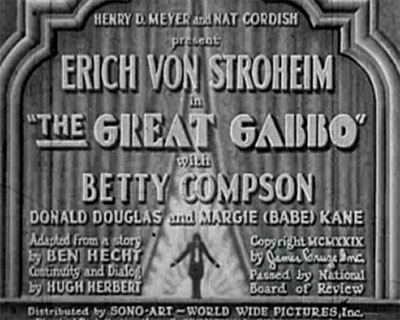
The Great Gabbo (1929)

3/5 (1)

“The Great Gabbo” is a pre-Code musical drama film directed by James Cruze and released in 1929. The movie tells the story of Gabbo, a talented ventriloquist who is obsessed with his dummy, Otto.

As Gabbo’s fame and fortune grow, his mental state begins to deteriorate, and he becomes increasingly abusive towards his colleagues and loved ones. His relationship with Mary, his assistant and love interest, becomes strained as Gabbo’s behavior becomes more erratic and unpredictable.

Despite his talent, Gabbo’s ego and insecurities ultimately lead to his downfall, as he alienates everyone around him and loses his grip on reality. The movie features several musical performances, including a memorable rendition of “I’m Laughing” by the ventriloquist and his dummy.

“The Great Gabbo” is a haunting and atmospheric film that explores themes of obsession, delusion, and the destructive power of fame. It is a rare example of a pre-Code film that deals with mature and controversial themes, and it remains a cult classic among fans of early Hollywood cinema.

Directors:
James Cruze, Erich von Stroheim

Writer:
Ben Hecht, Hugh Herbert

Stars:
Erich von Stroheim, Donald Douglas, Betty Compson

Rate this Movie

The Long Shot (1939)

3/5 (1)

In the film “The Long Shot” (1939), Henry Sharon is a struggling stable owner who is about to lose everything to his rival Lew Ralston. With no other options, Sharon decides to fake his own death and leave his prized horse, Certified Check, to his niece Martha.

Martha, played by Virginia Grey, and her friend Jeff Clayton, played by Johnnie Davis, start entering Certified Check in races, but the horse always loses. After receiving a tip that the horse dislikes running near the rail, Martha and Jeff begin to train Certified Check differently.

Their efforts pay off when they are given an outside post for the big stakes race at Santa Anita, giving the horse a legitimate shot at winning. However, they must keep Certified Check out of sight to prevent Ralston from sabotaging their chances.

The film is a thrilling underdog story about the perseverance of Martha and Jeff as they try to save their family’s stable and keep their beloved horse safe.

Directors:
Charles Lamont

Writer:
Ewart Adamson, Harry Beresford, George Callahan

Stars:
Gordon Jones, Marsha Hunt, C. Henry Gordon

Rate this Movie

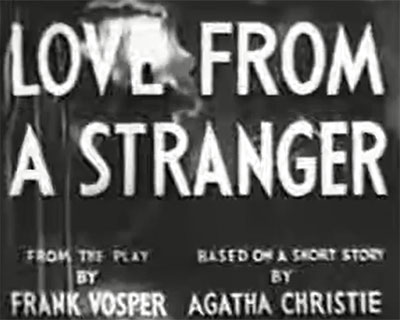
Love from a Stranger (1937)

4/5 (1)

“Love from a Stranger” (or “A Night of Terror”) is a British film directed by Rowland V. Lee, released in 1937. The movie is based on the play “Enter Sir John” by Frank Vosper.

The story revolves around a woman named Cecily Harrington (played by Ann Harding), who wins a large sum of money in a sweepstakes. She decides to quit her job and take a long overdue vacation in Europe. While in Monte Carlo, she meets a charming and mysterious man named Bruce Lovell (played by Basil Rathbone) and falls deeply in love with him. After a whirlwind romance, the couple gets married and returns to London to start their new life together.

Once in London, Cecily begins to notice that her husband’s behavior is strange and his personality is different from what she had thought. Bruce becomes controlling and abusive towards Cecily, and she begins to fear for her life. Her suspicions about her husband’s true identity and intentions grow stronger when she discovers that several women who had been engaged to him before Cecily have died under suspicious circumstances.

With the help of her friends, Cecily investigates her husband’s past and uncovers a sinister plot. Bruce is not who he says he is, and he plans to kill Cecily and take her money. In a dramatic showdown, Cecily confronts her husband and narrowly escapes with her life.

The movie ends with Cecily leaving Bruce and starting anew, grateful for her friends’ support and the lesson she learned about trusting the wrong people.

Directors:
Rowland V. Lee

Writer:
Frank Vosper, Agatha Christie, Frances Marion

Stars:
Ann Harding, Basil Rathbone, Binnie Hale

Rate this Movie

Of Human Bondage (1934)

4/5 (1)

“Of Human Bondage” is a 1934 drama film directed by John Cromwell and based on the novel of the same name by W. Somerset Maugham. The film stars Leslie Howard as Philip Carey, a young medical student who becomes obsessed with a manipulative and unpredictable waitress named Mildred Rogers (Bette Davis).

The film follows Philip as he struggles to find his place in the world and to come to terms with his unrequited love for Mildred. Mildred, who is in love with another man, uses and abuses Philip for her own purposes, leading him down a destructive path of heartbreak and despair.

As the story unfolds, Philip experiences a series of setbacks, including a failed medical career and a disastrous affair with another woman. Throughout it all, Mildred continues to toy with his emotions and leads him further into a downward spiral.

“Of Human Bondage” is a powerful and emotional film that explores themes of love, obsession, and the destructive power of human relationships. Howard and Davis both deliver strong performances, and the film’s direction and cinematography are also notable. It was a critical and commercial success upon its release, and remains a classic example of early Hollywood melodrama.

Directors:
John Cromwell

Writer:
Lester Cohen, W. Somerset Maugham, Ann Coleman

Stars:
Bette Davis, Leslie Howard, Frances Dee

Rate this Movie

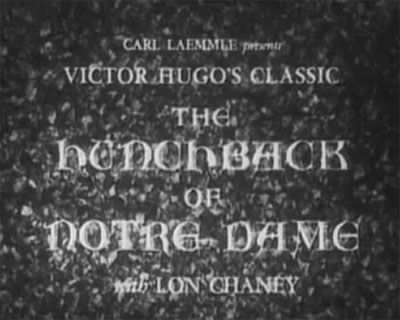
The Hunchback of Notre Dame (1923)

4/5 (1)

“The Hunchback of Notre Dame” is a 1923 silent film directed by Wallace Worsley, based on the classic novel by Victor Hugo. The film stars Lon Chaney in the lead role of Quasimodo, a deformed bell-ringer who lives in the bell tower of the Notre Dame cathedral in Paris.

The film follows the story of Quasimodo, who is shunned by society due to his physical appearance, and Esmeralda (Patsy Ruth Miller), a beautiful gypsy dancer who captures his heart. Esmeralda is the target of the evil Archdeacon Frollo (Brandon Hurst), who becomes obsessed with her and orders Quasimodo to kidnap her.

As the story unfolds, Quasimodo becomes a hero, saving Esmeralda from Frollo and his henchmen. The film climaxes with a dramatic scene in which Quasimodo, fighting for his love and honor, leads a revolt against Frollo and his soldiers.

“The Hunchback of Notre Dame” is notable for its stunning visuals and Chaney’s powerful performance as Quasimodo. The film’s themes of love, prejudice, and social injustice still resonate today, and it remains a classic example of early silent cinema. It was a commercial and critical success upon its release and has since been recognized as a landmark film in the history of cinema.

Directors:
Wallace Worsley

Writer:
Victor Hugo, Perley Poore Sheehan, Edward T. Lowe Jr.

Stars:
Lon Chaney, Patsy Ruth Miller, Norman Kerry

Rate this Movie

Penny Serenade (1941)

4/5 (1)

“Penny Serenade” is a 1941 romantic drama film directed by George Stevens and starring Irene Dunne and Cary Grant. The film tells the story of a young couple, Julie (Dunne) and Roger (Grant), who fall in love and get married, but struggle with infertility and the challenges of parenthood.

The film is structured as a series of flashbacks, with Julie listening to old records that trigger memories of her past. Through these flashbacks, we see Julie and Roger meet, fall in love, and get married. When they are unable to have children of their own, they decide to adopt a baby girl named Trina. However, their happiness is short-lived when Trina falls seriously ill and dies.

The film then follows Julie and Roger as they try to come to terms with their loss and their relationship is tested by a series of further tragedies. Through it all, their love for each other remains strong, and they are eventually reunited with a young boy they had considered adopting earlier.

“Penny Serenade” is a touching and poignant film that deals with themes of love, loss, and resilience. It features strong performances by Dunne and Grant, and its use of music as a storytelling device adds to the emotional impact of the film. The film was a critical and commercial success and was nominated for several Academy Awards, including Best Actress for Dunne.

Directors:
George Stevens

Writer:
Morrie Ryskind, Martha Cheavens

Stars:
Cary Grant, Irene Dunne, Beulah Bondi

Rate this Movie

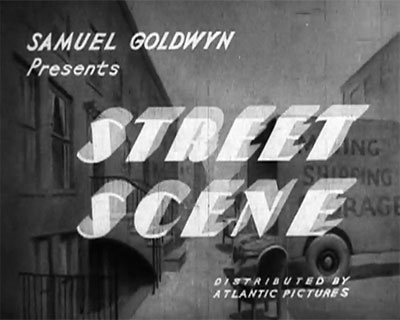
Street Scene (1931)

4/5 (1)

“Street Scene” is a 1931 film directed by King Vidor, based on the Pulitzer Prize-winning play of the same name by Elmer Rice. The film takes place in a New York City tenement building and follows the lives of several families and individuals living there.

The central plot revolves around the Maurrant family, consisting of Anna (Estelle Taylor), her husband Frank (David Landau), and their teenage daughter Rose (Sylvia Sidney). Anna is unhappily married to Frank, who is abusive and frequently absent. Rose is in love with their neighbor, Sam Kaplan (William Collier Jr.), but her parents disapprove of the relationship due to Sam being Jewish.

As the film progresses, tensions rise between the characters and several subplots emerge. A group of gossiping women spread rumors about their neighbors, a young couple deals with infidelity, and a single mother struggles to provide for her child.

The film’s climax comes when Frank returns home and discovers Anna’s affair with the milkman. In a fit of rage, he kills Anna and is subsequently arrested. The film ends with the community coming together to mourn Anna’s death and reflect on their own lives.

“Street Scene” is notable for its realistic portrayal of urban life in early 20th-century America, as well as its use of naturalistic acting and cinematography. It received critical acclaim and was nominated for several Academy Awards, including Best Picture.

Directors:
King Vidor

Writer:
Elmer Rice

Stars:
Sylvia Sidney, William Collier Jr., Estelle Taylor

Rate this Movie

Cyrano de Bergerac (1950)

4/5 (1)

“Cyrano de Bergerac” is a classic play by Edmond Rostand, which has been adapted into various forms including a 1950 film directed by Michael Gordon. The movie stars Jose Ferrer as Cyrano, a brilliant poet and swordsman with a famously large nose who is in love with his beautiful cousin Roxane (Mala Powers).

Despite his talents and wit, Cyrano believes that his appearance makes him unworthy of Roxane’s love. When Roxane falls in love with a handsome but dull soldier named Christian (William Prince), Cyrano agrees to help him win her heart by writing romantic letters and poetry in Christian’s name.

Cyrano’s writing skills succeed in winning Roxane’s heart, but Christian is killed in battle before he can reveal the truth about who wrote the letters. Years later, Cyrano visits Roxane and confesses his love for her, but she only realizes the truth about his feelings for her after his death.

The film adaptation stays true to the play’s original themes of love, courage, and honor, while also showcasing Ferrer’s stunning performance as Cyrano. It received critical acclaim and was nominated for several Academy Awards, including Best Picture.

Directors:
Michael Gordon

Writer:
Edmond Rostand, Brian Hooker, Carl Foreman

Stars:
José Ferrer, Mala Powers, William Prince

Rate this Movie

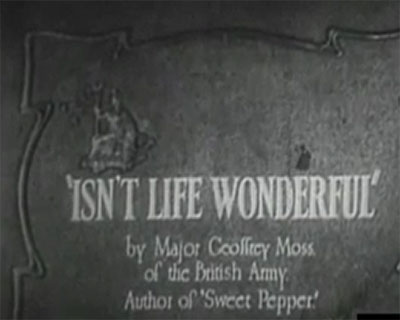
Isn’t Life Wonderful (1924)

4/5 (1)

“Isn’t Life Wonderful” is a silent drama film directed by D.W. Griffith and released in 1924. The film is set in Germany after World War I and focuses on the struggles of a family trying to survive in the aftermath of the war.

The story centers around the family of a man named Stefan, who returns home after serving in the war to find that his wife and children have been forced to live in poverty. The family struggles to make ends meet, with Stefan working long hours in a factory and his wife selling flowers on the street.

Despite their difficult circumstances, the family remains optimistic and finds joy in small moments of happiness. They befriend a homeless boy, and their kindness to him is repaid when he helps them in a time of need. The family also finds solace in their faith, with scenes showing them attending church and praying together.

The film ultimately delivers a message of hope and resilience in the face of adversity. While it portrays the struggles of the family and the harsh realities of post-war Germany, it also emphasizes the importance of family, community, and faith in finding happiness and meaning in life.

In summary, “Isn’t Life Wonderful” is a silent drama film that portrays the struggles of a family in post-World War I Germany and emphasizes the power of hope, kindness, and faith in overcoming adversity.

Directors:
D.W. Griffith

Writer:
D.W. Griffith, Geoffrey Moss

Stars:
Carol Dempster, Neil Hamilton, Erville Alderson

Rate this Movie

Romance of the Limberlost (1938)

4/5 (1)

“Romance of the Limberlost” released in 1938 and directed by William Nigh. The movie is based on the same book, “A Girl of the Limberlost,” by Gene Stratton-Porter, that I mentioned in my previous response.

The movie tells the story of Elnora Comstock, a young girl living near the Limberlost swamp who is determined to attend high school despite her impoverished background and unsupportive father. Along the way, she discovers a talent for singing and falls in love with a young man named Phillip Ammon.

The movie, like the book, explores themes of perseverance, the power of nature, and the importance of education. However, it also includes elements of romance and melodrama, which were common in movies of that era.

In summary, “Romance of the Limberlost” is a movie adaptation of the classic novel “A Girl of the Limberlost,” which tells the story of a young girl’s struggles to overcome poverty and achieve her dreams, while also including elements of romance and drama.

Directors:
William Nigh

Writer:
Gene Stratton-Porter, Marion Orth

Stars:
Jean Parker, Eric Linden, Marjorie Main

Rate this Movie

Tess of the Storm Country (1922)

4/5 (1)

“Tess of the Storm Country” is a silent film adaptation of the novel of the same name by Grace Miller White. The film was directed by John S. Robertson and released in 1922. The story is set in the coastal town of Stormfield, where the wealthy Travers family lives in a grand mansion overlooking the sea.

Tessibel “Tess” Skinner is a poor, uneducated girl who lives with her grandfather, who makes a living by salvaging goods from shipwrecks. When the Travers family’s yacht runs aground in a storm, Tess and her grandfather rescue them from the wreckage. This leads to a chance meeting between Tess and the handsome young Travers son, Frederick, and they fall in love.

However, the Travers family disapproves of their relationship due to Tess’s low social status. Despite this, Frederick and Tess continue to see each other in secret. Meanwhile, a local villain named Black Donald is causing trouble for Tess and her grandfather, and when he tries to rape Tess, she fights him off and leaves him injured.

Black Donald blames Tess for his injuries and seeks revenge. He frames her for theft and she is arrested, but Frederick is able to clear her name and prove her innocence. In the end, Frederick’s father agrees to their marriage and they are able to live happily ever after.

The film was a critical and commercial success, and is notable for its strong female lead character and its portrayal of the struggles of the working class in early 20th century America. The film was remade twice, once in 1932 and again in 1960, both times with sound.

Directors:
John S. Robertson

Writer:
Grace Miller White, E. Lloyd Sheldon, Josephine Lovett

Stars:
Mary Pickford, Lloyd Hughes, Gloria Hope

Rate this Movie