Drama

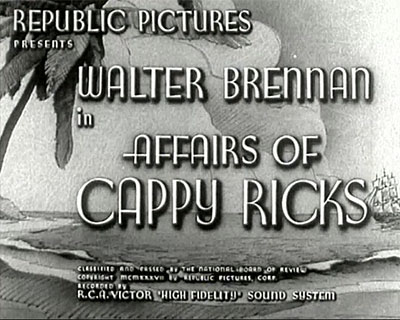
Affairs of Cappy Ricks (1937)

3/5 (1)

“The Affairs of Cappy Ricks” is a comedy film released in 1937, directed by Ralph Staub and based on a series of stories by Peter B. Kyne. The film tells the story of Cappy Ricks, a wealthy shipbuilder who is forced to take a vacation due to his failing health.

While on vacation, Cappy’s granddaughter, Alice, convinces him to invest in a struggling shipping company run by her boyfriend, Matt Peasley. Cappy reluctantly agrees, but soon finds himself embroiled in a series of misadventures as he tries to help Peasley save his company from bankruptcy.

The film features a talented cast, including Walter Brennan as Cappy Ricks, Mary Brian as Alice, and Lyle Talbot as Matt Peasley. It also includes several comedic set pieces, such as a wild boat race and a hilarious scene in which Cappy accidentally starts a fire in a hotel.

Overall, “The Affairs of Cappy Ricks” is a lighthearted and entertaining comedy that explores themes of family, loyalty, and the importance of hard work. Its blend of humor, drama, and romance make it a classic of the genre.

Directors:
Ralph Staub

Writer:
Peter B. Kyne, Lester Cole

Stars:
Walter Brennan, Mary Brian, Lyle Talbot
Rate this Movie

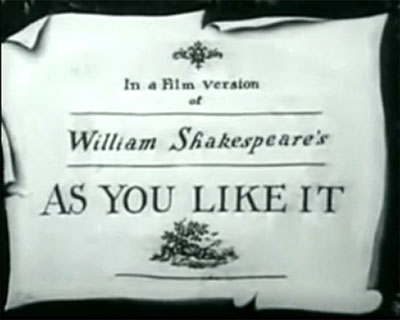
As You Like It (1936)

3/5 (1)

“As You Like It” is a film adaptation of William Shakespeare’s play of the same name, directed by Paul Czinner and released in 1936. The film stars Laurence Olivier as Orlando and Elisabeth Bergner as Rosalind.

The story follows Rosalind, the daughter of the banished Duke Senior, who falls in love with Orlando at a wrestling match. However, after Orlando is forced to flee the court of Duke Frederick, Rosalind is banished as well, and disguises herself as a man named Ganymede in order to travel with her cousin Celia to the Forest of Arden, where her father and other exiles live.

In the forest, Rosalind/Ganymede meets Orlando again and decides to test his love by pretending to be a woman and counseling him on how to win Rosalind’s heart. Meanwhile, a shepherd named Silvius is hopelessly in love with a shepherdess named Phebe, who in turn falls for Ganymede (Rosalind in disguise). And Touchstone, a court jester, falls in love with a simple country girl named Audrey.

As the various love stories unfold, Duke Frederick arrives in the forest in search of Rosalind and Orlando, but is converted to a more peaceful way of life by Duke Senior. Eventually, all of the characters gather for a happy ending, with Orlando and Rosalind marrying, Silvius and Phebe pairing off, Touchstone and Audrey tying the knot, and Duke Senior and Duke Frederick reconciling.

The film is notable for its faithful adaptation of Shakespeare’s original play, with much of the dialogue taken directly from the text. It was also praised for its performances, particularly Bergner’s portrayal of Rosalind/Ganymede.

Directors:
Paul Czinner

Writer:
J.M. Barrie, Robert Cullen, Carl Mayer

Stars:
Elisabeth Bergner, Laurence Olivier, Sophie Stewart

Rate this Movie

That Gang Of Mine (1940)

4/5 (2)

“That Gang of Mine” is a 1940 American film directed by Joseph Santley and starring Leo Gorcey, Bobby Jordan, and Huntz Hall. The film is part of the popular “Dead End Kids” series of films that were popular in the late 1930s and early 1940s.

The story follows a group of young boys who live in a poor neighborhood in New York City. They are part of a gang called “The Little Tough Guys” and are constantly getting into trouble with the law. The gang’s leader, Danny (played by Leo Gorcey), is a tough streetwise kid who is fiercely loyal to his friends.

When the gang gets involved in a fight with a rival gang, Danny is arrested and sent to a reform school. While there, he meets a kind-hearted social worker named Mary (played by Marjorie Reynolds) who tries to help him turn his life around.

With Mary’s help, Danny begins to see that there is more to life than just being a tough guy on the streets. He starts to take his education seriously and even joins the school’s football team. But when his old gang comes to visit him at the reform school, Danny is torn between his loyalty to his friends and his desire to make a better life for himself.

In the end, Danny decides to leave the gang behind and start a new life with Mary’s help. The film ends with Danny graduating from the reform school and looking forward to a brighter future.

“That Gang of Mine” is a classic example of the “juvenile delinquent” films of the era and explores themes of loyalty, friendship, and redemption. The film was a box office success and helped launch the careers of many of its young actors.

Directors:
Joseph H. Lewis

Writer:
Alan Whitman, William Lively

Stars:
Bobby Jordan, Leo Gorcey, Clarence Muse

Rate this Movie

Made for Each Other (1939)

4/5 (1)

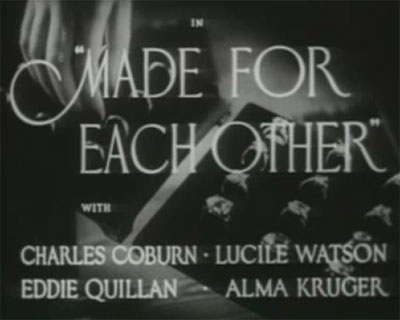
“Made for Each Other” is a romantic drama film directed by John Cromwell and released in 1939. The movie follows the story of newlyweds John and Jane Mason (James Stewart and Carole Lombard), who must navigate the challenges of their first year of marriage.

As the couple settles into their new life together, they face a series of obstacles that test their love and commitment to one another. John struggles with his demanding job and a difficult boss, while Jane must contend with her overbearing mother-in-law (Lucile Watson) and the challenges of being a new mother.

Throughout the film, John and Jane must learn to communicate and work together as a team in order to overcome their problems. With the support of their friends and family, they are able to weather the storms of their first year of marriage and emerge stronger and more committed than ever.

In the end, “Made for Each Other” is a touching and heartfelt film that celebrates the power of love and the importance of perseverance in the face of adversity. The chemistry between James Stewart and Carole Lombard is electric, and their performances bring the characters to life in a way that is both relatable and inspiring.

Directors:
John Cromwell

Writer:
Jo Swerling, Rose Franken, Frank Ryan

Stars:
Carole Lombard, James Stewart, Charles Coburn

Rate this Movie

The Time of Your Life (1948)

3/5 (1)

“The Time of Your Life” is a drama film directed by H.C. Potter and released in 1948. The movie is based on a Pulitzer Prize-winning play by William Saroyan and follows the lives of a group of people who frequent a waterfront saloon in San Francisco.

The central character is Joe (James Cagney), a kind-hearted and generous man who has come into a significant inheritance and decides to spend his time in the saloon, observing and interacting with the diverse cast of characters who frequent the establishment.

As Joe gets to know the people who come into the saloon, he becomes involved in their lives and tries to help them overcome their struggles and hardships. He befriends Tom (William Bendix), a naive and simple-minded man who is desperately in love with a dancer named Kitty (Jeanne Cagney), and Kit Carson (Wayne Morris), a young man with a troubled past who is trying to start over.

Throughout the film, the characters come to realize that they all have something in common – a desire for connection and a sense of purpose in their lives. With Joe’s guidance, they begin to find hope and meaning in their struggles, and the saloon becomes a place of community and acceptance.

Overall, “The Time of Your Life” is a poignant and heartfelt film that explores the themes of connection, community, and the human desire for purpose and meaning. The talented cast brings the diverse characters to life, and the film’s message of hope and resilience resonates with audiences to this day.

Directors:
H.C. Potter

Writer:
William Saroyan, Nathaniel Curtis

Stars:
James Cagney, William Bendix, Wayne Morris

Rate this Movie

Charade (1953)

5/5 (1)

“Charade” is a 1953 American crime drama film directed by Roy Kellino and starring James Mason, Pamela Mason, and Robert Flemyng.

The film tells the story of a wealthy businessman named Charles Calvin (James Mason), who is found dead in his office under suspicious circumstances. Calvin’s wife, Lucy (Pamela Mason), becomes the prime suspect in the murder, and is forced to go on the run from the police and the real killer.

As Lucy tries to clear her name and solve the mystery of her husband’s death, she becomes entangled with a suave and mysterious stranger named Peter Joshua (Robert Flemyng). Joshua offers to help Lucy uncover the truth behind her husband’s murder, but as the two become closer, Lucy begins to suspect that Joshua may not be who he appears to be.

As Lucy navigates the dangerous world of espionage and deception, she must also confront her own past and the secrets that she has been keeping from those closest to her. In the end, Lucy is able to uncover the truth behind her husband’s murder and find a measure of closure, but not without paying a heavy price.

“Charade” is a gripping and suspenseful thriller that explores the themes of trust, betrayal, and the consequences of past actions. It features strong performances from its lead actors, and is notable for its stylish and sophisticated visuals, as well as its memorable score by composer Dimitri Tiomkin. The film has since become a classic of the film noir genre and a beloved example of mid-century Hollywood cinema.

Directors:
Stanley Donen

Writer:
Peter StoneMarc Behm

Stars:
Cary Grant, Audrey Hepburn, Walter Matthau

Rate this Movie

Hollywood and Vine (1945)

3/5 (1)

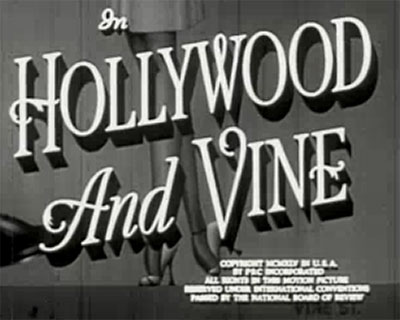
“Hollywood and Vine” is a 1945 American comedy film directed by Alexis Thurn-Taxis and starring James Ellison, Wanda McKay, and Granville Bates.

The film follows the story of a young man named Jimmy, who moves to Hollywood with dreams of becoming a successful movie star. Jimmy finds himself struggling to make ends meet, and takes a job as a soda jerk at a local diner on Hollywood Boulevard.

While working at the diner, Jimmy meets and falls in love with a beautiful actress named Peggy. Peggy is trying to make a name for herself in Hollywood, but like Jimmy, is finding it difficult to get a break. The two begin a romantic relationship, but their dreams of success in Hollywood are continually thwarted by a series of misadventures and mishaps.

As the story progresses, Jimmy and Peggy find themselves embroiled in a series of comical situations, including a mistaken identity mix-up, a wacky film audition, and a run-in with a gangster who mistakes Jimmy for a hitman.

Despite the setbacks, Jimmy and Peggy’s determination and perseverance ultimately pay off, as they both land roles in a major movie production. The film ends with the couple finally achieving their dreams and walking down Hollywood Boulevard, with their names on the marquee.

Overall, “Hollywood and Vine” is a fun and light-hearted comedy that captures the spirit of Hollywood in the 1940s. It is a charming portrayal of the struggles and triumphs of young aspiring actors and actresses in the Golden Age of Hollywood.

Directors:
Alexis Thurn-Taxis

Writer:
Edith Watkins, Charles Williams, Robert Wohlmuth

Stars:
James Ellison, Wanda McKay, Franklin Pangborn

Rate this Movie

Three Broadway Girls (1932)

3/5 (2)

“Three Broadway Girls” is a pre-Code drama film released in 1932 and directed by Lowell Sherman. The film stars Joan Blondell, Madge Evans, and Ina Claire.

The story follows three women from different backgrounds who all work as chorus girls on Broadway. Faith (Ina Claire) is a former actress who has fallen on hard times and now works as a chorus girl to make ends meet. Connie (Madge Evans) is a young girl who dreams of stardom but struggles to make it in the competitive world of Broadway. and Fay (Joan Blondell) is a streetwise dancer who is determined to make a name for herself on the stage.

The three women become friends and navigate the challenges of show business together, including demanding producers, jealous rivals, and personal setbacks. Along the way, they encounter various men, including a wealthy socialite (Alan Dinehart) who takes an interest in Faith and a charming songwriter (Lowell Sherman) who falls for Connie.

As the women work towards their dreams of success, they each face their own personal struggles, including failed relationships and financial hardship. However, they remain determined to overcome these obstacles and achieve their goals.

In the end, the women find success in their respective careers, with Fay becoming a star dancer, Connie getting her big break on Broadway, and Faith rekindling her acting career. The film ends with the three friends walking off into the future, each with a newfound sense of confidence and optimism.

Overall, “Three Broadway Girls” is a compelling drama that explores the lives of women in show business during the Great Depression. The film features strong performances by its three leading ladies and provides a glimpse into the glamorous yet challenging world of Broadway in the 1930s.

Directors:
Lowell Sherman

Writer:
Zoe Akins, Sidney Howard

Stars:
Joan Blondell, Madge Evans, Ina Claire

Rate this Movie

Pride of the Bowery (1940)

3/5 (1)

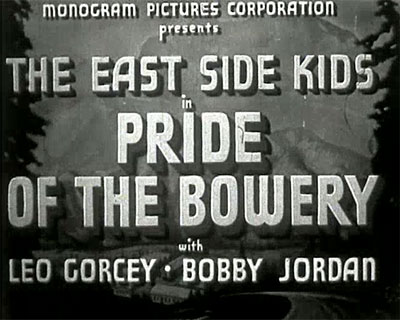
“Pride of the Bowery” is a drama film released in 1940 and directed by Joseph H. Lewis. The film stars Leo Gorcey, Bobby Jordan, and Huntz Hall.

The story follows a group of young boys known as the “Dead End Kids” who live in the Bowery neighborhood of New York City. The group is led by Muggs Maloney (Leo Gorcey), a tough and street-smart teenager who looks out for his friends.

When the boys stumble upon a lost wallet containing a large sum of money, they are initially tempted to keep it. However, they ultimately decide to turn it in to the police, and the grateful owner rewards them with a trip to a summer camp.

At the camp, the boys face new challenges and must learn to work together as a team. They compete in various athletic events, including a boxing tournament, where Muggs discovers his talent for the sport.

However, the boys’ happy summer is cut short when they learn that their neighborhood is in danger of being demolished to make way for a new development. The boys must band together to fight for their community and prevent the destruction of their homes.

In the end, the boys successfully fight off the developers and save their neighborhood. The film ends with the boys celebrating their victory and looking forward to a bright future together.

Overall, “Pride of the Bowery” is a heartwarming story of friendship, loyalty, and standing up for what you believe in. The film showcases the talent of the “Dead End Kids” and features exciting action sequences and a strong message of hope and resilience.

Directors:
Joseph H. Lewis

Writer:
Steven Clensos, William Lively, George H. Plympton

Stars:
Leo Gorcey, Bobby Jordan, Kenneth Howell

Rate this Movie

Pollyanna (1920)

4/5 (1)

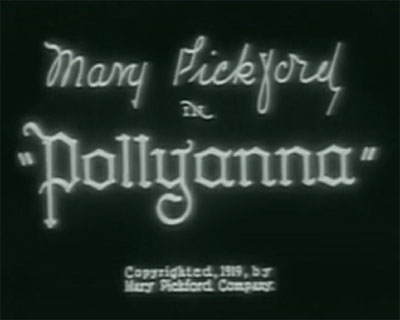
“Pollyanna” is a novel by Eleanor H. Porter that was first published in 1913 and has been adapted into various films and adaptations. The 1920 silent film adaptation of the same name was directed by Paul Powell and starred Mary Pickford as the titular character.

The story follows Pollyanna Whittier, a young girl who is orphaned after her parents die. She is sent to live with her wealthy and strict Aunt Polly (Katherine Griffith) in the small town of Harrington. Despite the difficult circumstances, Pollyanna maintains a positive outlook on life and is determined to spread her optimistic attitude to everyone around her.

Pollyanna’s cheerful personality is initially met with resistance by her Aunt Polly and the townspeople, who see her as naive and foolish. However, her sunny disposition eventually begins to win over the hearts of the community, including her reclusive neighbor, Mr. Pendleton (Wharton James), and the town’s minister, Rev. Ford (Howard Ralston).

Pollyanna’s most significant contribution to the town is the “Glad Game,” a game she learned from her father, which involves finding something to be glad about in every situation. Through the Glad Game, Pollyanna inspires the townspeople to be more positive and compassionate towards one another.

However, the story takes a tragic turn when Pollyanna is injured in a car accident and is left unable to walk. The town rallies around her, and Pollyanna’s positive attitude is put to the ultimate test as she struggles to find a reason to be glad despite her disability.

In the end, Pollyanna’s influence on the town is profound, and her optimistic outlook continues to inspire those around her even after she is gone.

Overall, “Pollyanna” is a heartwarming tale of hope and positivity in the face of adversity. The character of Pollyanna has become a symbol of optimism and resilience, inspiring readers and audiences for over a century.

Directors:
Paul Powell

Writer:
Eleanor H. Porter, Catherine Chisholm Cushing, Frances Marion

Stars:
Mary Pickford, Wharton James, Katherine Griffith

Rate this Movie

His Double Life (1933)

4/5 (1)

“His Double Life” is a 1933 drama film directed by Arthur Hopkins and starring Roland Young, Lillian Gish, and Montagu Love. The film tells the story of a wealthy businessman named Jack Holt (Roland Young), who has a reputation for being honest and upright in his business dealings. However, he leads a secret life as a notorious jewel thief known as “The Cat.”

One day, Jack is visited by his former lover, Helen (Lillian Gish), who is now married to a wealthy and powerful man named Hubert (Montagu Love). Helen knows Jack’s secret and threatens to reveal it to the world unless he steals a valuable necklace from her husband’s safe. Jack agrees to the plan, but things go awry when Hubert catches him in the act.

To save himself, Jack tells Hubert that he is actually an undercover detective investigating a jewel theft ring, and that he has been using his double life as The Cat to gain access to their inner circle. Hubert buys the story and agrees to help Jack catch the real thieves. In the end, Jack manages to clear his name and win back Helen’s love, but not before a thrilling climax involving a daring heist and a narrow escape.

Overall, “His Double Life” is a suspenseful and entertaining drama that explores themes of deception, loyalty, and the consequences of one’s actions.

Directors:
Arthur Hopkins

Writer:
Arnold Bennett, Clara Beranger, Arthur Hopkins

Stars:
Roland Young, Lillian Gish, Montagu Love

Rate this Movie

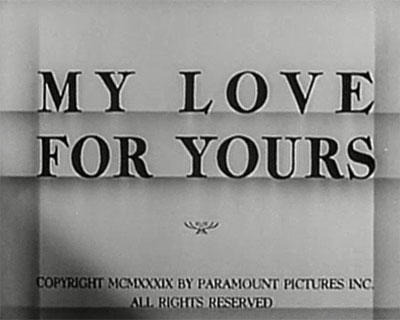
My Love for Yours (1939)

3/5 (1)

“My Love for Yours” is a 1939 American romantic drama film directed by W.S. Van Dyke and starring Madeleine Carroll and James Stewart. The film is a remake of the 1931 French film “Le Chemin du paradis.”

The story follows the romantic relationship between wealthy New York socialite Carol Fisher (Carroll) and struggling artist Steve Leyton (Stewart). Despite their vastly different backgrounds, the two fall in love and get married.

However, their happiness is short-lived as Steve’s artistic career begins to take off, and he becomes increasingly absorbed in his work. Carol, feeling neglected and frustrated, turns to her old flame, Phil Mayberry (Ralph Morgan), for comfort.

Meanwhile, Steve becomes involved with his beautiful model, Helene Gault (Vera Lewis), causing further strain on his relationship with Carol. Eventually, Carol realizes the depth of her love for Steve and is willing to forgive him, but Steve’s relationship with Helene leads to tragedy.

The film explores themes of love, jealousy, and sacrifice, and features strong performances from Carroll and Stewart. Despite its melodramatic plot, “My Love for Yours” is regarded as a well-crafted and emotionally powerful film.

Directors:
W.S. Van Dyke

Stars:
Madeleine Carroll, James Stewart

Rate this Movie

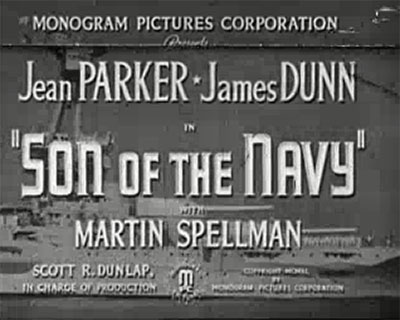
Son of the Navy (1940)

3/5 (1)

“Son of the Navy” is a 1940 comedy-drama film directed by William Nigh and starring James Dunn, Rochelle Hudson, and Selmer Jackson.

The film follows the story of a sailor named Russ Raymond (James Dunn), who meets and falls in love with a woman named Elaine Carter (Rochelle Hudson). Russ soon discovers that Elaine is the daughter of his stern Navy commander, Admiral Carter (Selmer Jackson). Despite the Admiral’s objections, Russ and Elaine continue their relationship.

Meanwhile, Russ’s best friend, Pomeroy Watson (Gordon Jones), falls in love with a woman named Hilda Johnson (Janet Shaw), who works at a local diner. Pomeroy is shy and lacks confidence, so Russ tries to help him win Hilda’s heart.

As Russ and Elaine’s relationship becomes more serious, the Admiral becomes increasingly upset and orders Russ to be transferred to a remote naval base. However, Russ manages to return to town and rescue Elaine from a dangerous situation, proving his bravery and earning the Admiral’s respect.

In the end, Russ and Elaine are reunited, and Pomeroy finally finds the courage to ask Hilda to marry him.

“Son of the Navy” is a heartwarming film about love and bravery, and it highlights the importance of loyalty and friendship.

Directors:
William Nigh

Writer:
True Boardman, Grover Jones, Marion Orth

Stars:
Jean Parker, James Dunn, Martin Spellman

Rate this Movie

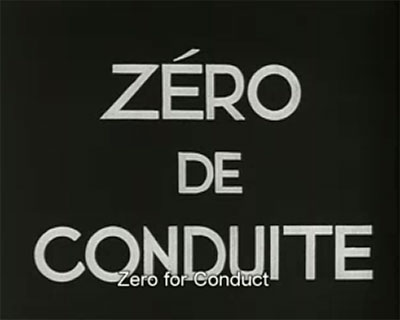
Zero for Conduct (1933)

4/5 (1)

“Zero for Conduct” (French: “Zéro de conduite”) is a 1933 French short film directed by Jean Vigo. The film is a satirical portrayal of the oppressive boarding school system in France during the 1930s.

The story follows a group of young boys who are fed up with the strict and authoritarian nature of their school. They rebel against their teachers and the school’s administration by staging a series of pranks and acts of defiance. Their rebellion culminates in a chaotic and surreal uprising, in which the boys take control of the school and transform it into a playground.

The film is notable for its innovative visual style, which includes experimental camera work and editing techniques. It also features a memorable score by Maurice Jaubert, which adds to the film’s dreamlike and surreal quality.

“Zero for Conduct” was initially banned in France due to its controversial subject matter and perceived anti-authoritarian message. However, it has since become a cult classic and is considered to be one of the most important films of the French avant-garde movement. The film’s themes of rebellion and anti-authoritarianism continue to resonate with audiences today.

Directors:
Jean Vigo

Writer:
Jean Vigo

Stars:
Jean Dasté, Robert le Flon, Louis Lefebvre

Rate this Movie

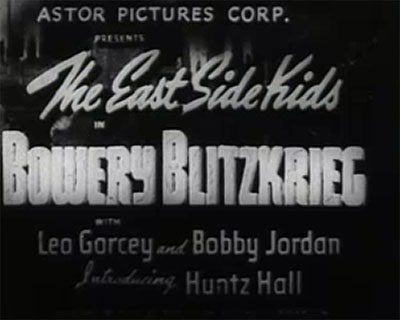
Bowery Blitzkrieg (1941)

3/5 (1)

“Bowery Blitzkrieg” is a 1941 American film directed by Wallace Fox and starring the comedy team of the Bowery Boys. The film is a part of the popular “Bowery Boys” film series that was popular during the 1940s and 1950s.

The plot revolves around the Bowery Boys, led by their leader Muggs (Leo Gorcey), who get caught up in a scheme involving a crooked boxing promoter named “Longy” (Huntz Hall). Longy is involved in a plot to fix a boxing match and has hired a group of thugs to help him. The Bowery Boys are initially recruited to work for Longy, but they eventually realize that they are being used and decide to take matters into their own hands.

The film features a lot of physical comedy, slapstick humor, and some boxing action scenes. It also has some musical numbers and romantic subplots. The Bowery Boys’ chemistry and comedic timing are on full display in this film, and it is considered to be one of the better entries in the “Bowery Boys” series.

Directors:
Wallace Fox

Writer:
Brendan Wood, Donn Mullahy, Sam Robins

Stars:
Leo Gorcey, Bobby Jordan, Huntz Hall

Rate this Movie