Western

The Great Train Robbery (1903)

3/5 (1)

“The Great Train Robbery” is a short silent film released in 1903, directed by Edwin S. Porter. It is widely considered to be one of the first narrative films ever made and is credited with popularizing the Western genre.

The film tells the story of a group of bandits who plan and execute a train robbery. The first scene shows the bandits gathering together and plotting their heist. They then board the train and hold up the passengers and the train employees at gunpoint.

The bandits then proceed to rob the passengers and the train’s mail car, taking all of the valuables they can find. After the robbery is complete, the bandits escape on horseback with the loot.

The remainder of the film follows the pursuit of the bandits by a group of lawmen. The lawmen eventually catch up to the bandits and engage in a shootout, resulting in the death of several of the bandits.

The film ends with the remaining bandits being captured and brought to justice, and the stolen loot being returned to its rightful owners.

“The Great Train Robbery” is notable for its innovative use of editing and camera techniques, including cross-cutting between different scenes and the use of close-ups. It is considered a landmark film in the history of cinema and has had a significant influence on the development of the Western genre.

Directors:
Edwin S. Porter

Writer:
Scott Marble, Edwin S. Porter

Stars:
Gilbert M. ‘Broncho Billy’ Anderson, A.C. Abadie, George Barnes

Rate this Movie

The Three Mesquiteers – Ghost-Town Gold (1936)

3/5 (1)

“Ghost-Town Gold” is a Western film from 1936, starring the Three Mesquiteers: Stony Brooke (played by Bob Livingston), Tucson Smith (played by Ray “Crash” Corrigan), and Lullaby Joslin (played by Max Terhune).

The film begins with the Mesquiteers discovering a young boy named Billy who has been left alone after his parents were killed by a gang of outlaws. The Mesquiteers take Billy under their wing and set out to find the outlaws responsible for his parents’ deaths.

Their search leads them to a ghost town called Mesa City, where they encounter a group of people who are being terrorized by the same gang of outlaws. The Mesquiteers decide to help the townspeople by posing as a traveling medicine show and using their skills to outsmart the outlaws.

As they work to uncover the outlaws’ plans, the Mesquiteers find themselves in a series of dangerous situations, including a shoot-out with the outlaws and a daring escape from a burning building.

In the end, the Mesquiteers are able to bring the outlaws to justice and restore peace to Mesa City. They also decide to adopt Billy and give him a new home with them on their ranch.

Directors:
Joseph Kane

Writer:
John Rathmell, Oliver Drake, Bernard McConville

Stars:
Robert Livingston, Ray Corrigan, Max Terhune

Rate this Movie

The Trail Beyond (1934)

3/5 (1)

“The Trail Beyond” is a Western novel by American author Max Brand, first published in 1934. The story follows the adventures of a young man named Rod Drew, who travels to the wilds of Canada in search of his missing brother.

Rod Drew arrives in the town of Twin Mills, where he meets a beautiful young woman named Felicity, who is also searching for her missing brother. The two team up to find their siblings and embark on a perilous journey through the rugged Canadian wilderness.

Along the way, they encounter a band of ruthless outlaws, led by a man named Blackie. Rod and Felicity are forced to fight for their lives against the vicious gang, using their wits and skills to outsmart their enemies and evade capture.

As they journey deeper into the wilderness, Rod and Felicity uncover a sinister plot involving a mysterious mine and a valuable gold vein. With the help of a wise old trapper named Frenchy, they must navigate treacherous terrain and overcome seemingly insurmountable obstacles to unravel the truth and bring the outlaws to justice.

“The Trail Beyond” is a classic Western adventure tale, filled with action, suspense, and memorable characters. It captures the rugged spirit of the American frontier, and offers a thrilling glimpse into the lives of those who dared to explore the unknown reaches of the wild west.

Directors:
Robert N. Bradbury

Writer:
James Oliver Curwood, Lindsley Parsons

Stars:
John Wayne, Noah Beery, Verna Hillie

Rate this Movie

Cavalcade of the West (1936)

3/5 (1)

Cavalcade of the West is a 1936 Western film directed by Harry S. Webb and starring Hoot Gibson, Sally Eilers, and William Farnum. The film tells the story of a cowboy who becomes embroiled in a conflict between cattle ranchers and sheepherders in the Old West.

The film opens with cowboy Dan Clark (Gibson) returning to his hometown to find that tensions are high between the local cattle ranchers and sheepherders. The ranchers believe that the sheepherders are destroying the grazing land and cutting into their profits, and they begin to take violent action against them.

Dan becomes involved in the conflict when he falls in love with Mary Baxter (Eilers), the daughter of a sheepherder. He tries to help the sheepherders find a solution to the problem, but the ranchers are unwilling to compromise. The situation comes to a head when a group of ranchers attack a group of sheepherders, and Dan is forced to take action to defend his love and her family.

The film features exciting shootouts and horse chases, as well as a touching love story between Dan and Mary. The cast delivers strong performances, particularly Gibson as the brave and determined cowboy.

In the end, Dan manages to broker a peace between the ranchers and sheepherders, bringing an end to the violence and allowing for a peaceful coexistence. The film ends with Dan and Mary riding off into the sunset, symbolizing the triumph of love and unity over hatred and division.

Cavalcade of the West is a classic Western film that explores themes of conflict and unity in the Old West. Its strong performances and thrilling action sequences make it a must-see for fans of the genre.

Directors:
Harry L. Fraser

Writer:
Norman Houston

Stars:
Hoot Gibson, Rex Lease, Marion Shilling

Rate this Movie

Caryl of the Mountains (1936)

3/5 (1)

“Caryl of the Mountains” is a novel written by American author, John Fox Jr., and was published in 1936. The story takes place in the Appalachian Mountains of eastern Kentucky during the late 1800s and early 1900s. The novel tells the story of Caryl, a young girl who is orphaned at a young age and taken in by her grandparents.

Caryl grows up in a small mountain community where life is hard and resources are scarce. Despite the difficulties, she becomes a strong and resilient young woman who is determined to overcome the challenges of her environment. She is fiercely independent and develops a strong sense of self-reliance.

The novel explores themes of family, community, and the struggle for survival in a harsh environment. Caryl’s relationships with her grandparents and other members of her community are central to the story. She learns valuable lessons about the importance of family, hard work, and perseverance.

As she grows older, Caryl falls in love with a young man named Jack, who is also from the mountains. Their love is tested by the hardships of life in the mountains, as well as by outside forces that threaten their way of life.

Throughout the novel, Caryl must navigate the challenges of life in the mountains while staying true to her own values and beliefs. She learns that success is not always measured in material wealth or social status, but in the strength of one’s character and the love of family and community.

In the end, “Caryl of the Mountains” is a story of resilience, determination, and the power of the human spirit to overcome adversity.

Directors:
Bernard B. Ray

Writer:
James Oliver Curwood

Stars:
Rin Tin Tin Jr., Francis X. Bushman Jr., Lois Wilde

Rate this Movie

Sagebrush Trail (1933)

3/5 (1)

“Sagebrush Trail” is a 1933 Western film directed by Armand Schaefer and starring John Wayne. The movie follows the story of John Brant, a man wrongfully accused of robbery and murder. He escapes from prison and goes on the run, trying to clear his name and find the real culprits.

Brant is pursued by the law, as well as by the real criminals, who want to silence him for good. Along the way, he meets a young woman named Sally Blake, who is also on the run from the law, and they team up to try to find the evidence that will prove Brant’s innocence.

The two encounter many obstacles, including gunfights and horseback chases, as they try to outsmart the bad guys and evade the law. In the end, Brant is able to clear his name and bring the real criminals to justice, while also finding love with Sally.

The film is notable for being one of John Wayne’s earliest starring roles, and it helped establish him as a leading man in Hollywood. It also features many of the classic Western tropes, including shootouts, horseback riding, and rugged, lawless landscapes.

Directors:
Armand Schaefer

Writer:
Lindsley Parsons, Will Beale

Stars:
John Wayne, Nancy Shubert, Lane Chandler

Rate this Movie

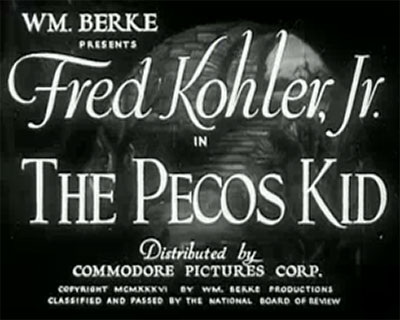
Pecos Kid (1936)

3/5 (1)

“Pecos Kid” is a 1936 Western film directed by Joseph Kane and starring Robert Livingston, Ray “Crash” Corrigan, and Max Terhune.

The story follows the Pecos Kid, a notorious outlaw who is forced to go into hiding after being wrongly accused of a crime he did not commit. He joins a traveling medicine show as a sharpshooter and befriends a group of performers, including a ventriloquist and his dummy, Elmer.

Meanwhile, a gang of bandits led by Blackie and his henchman, Lopez, is terrorizing the area. The Pecos Kid soon discovers that Blackie and Lopez were the real culprits behind the crime he was accused of, and he sets out to clear his name and bring them to justice.

With the help of his new friends, the Pecos Kid engages in a series of thrilling shootouts and horse chases as he tries to take down the gang and clear his name. Along the way, he also discovers a romantic connection with one of the performers, a beautiful dancer named Joan.

In the end, the Pecos Kid triumphs over the bandits, clears his name, and rides off into the sunset with Joan, leaving the audience with a satisfying conclusion to a classic Western tale.

Directors:
Harry L. Fraser

Writer:
Ted Tuttle, Henry Hess

Stars:
Fred Kohler Jr., Ruth Findlay, Roger Williams

Rate this Movie

The Bronze Buckaroo (1939)

4/5 (1)

“The Bronze Buckaroo” is a 1939 Western film directed by Richard C. Kahn. It features an all-black cast and tells the story of Bob Blake, a cowboy singer who arrives in a small town to perform at the local saloon. Bob soon finds himself caught up in a conflict between the town’s corrupt mayor and a group of ranchers who are being cheated out of their land.

Bob, who is also known as the “Bronze Buckaroo,” uses his singing and riding skills to help the ranchers fight back against the mayor and his henchmen. Along the way, he falls in love with a local schoolteacher named Mary, who is also a talented musician.

The film features several musical performances, including Bob’s rendition of the title song, “The Bronze Buckaroo.” It also includes scenes of rodeo riding and cattle driving, as well as a dramatic shootout between Bob and the mayor’s men.

“The Bronze Buckaroo” is notable for its all-black cast and for being one of the few Westerns made during the era that featured black actors in prominent roles. It has since become a cult classic and an important piece of African American cinema history.

Directors:
Richard C. Kahn

Writer:
Richard C. Kahn

Stars:
Herb Jeffries, Lucius Brooks, Artie Young

Rate this Movie

Phantom Patrol (1936)

3/5 (1)

“Phantom Patrol” is a 1936 American Western film directed by Charles Hutchison. The movie features Rex Lease, Dorothy Gulliver, and William Farnum in the lead roles.

The story follows the Texas Rangers, who are on the hunt for a band of cattle rustlers who have been stealing livestock from local ranchers. The group of Rangers is led by Captain John Cummings (played by William Farnum), who is determined to bring the rustlers to justice. However, the rustlers are led by a cunning and mysterious figure known only as “The Phantom,” who always manages to elude the Rangers and leave no trace of his activities.

As the Rangers investigate the rustlers’ latest theft, they discover that The Phantom has a spy in their midst. They begin to suspect that one of their own is working with the rustlers, and tensions rise as they try to identify the traitor and bring The Phantom to justice.

The movie features several thrilling action sequences, including a dramatic chase scene and a final showdown between the Rangers and the rustlers. Along the way, Captain Cummings also finds himself drawn to a local rancher’s daughter, Sally (played by Dorothy Gulliver), adding a romantic subplot to the story.

In the end, the Rangers are able to uncover the identity of The Phantom and bring him to justice, with Captain Cummings and Sally’s relationship also reaching a satisfying conclusion.

Directors:
Charles Hutchison

Writer:
James Oliver Curwood, Joseph O’Donnell

Stars:
Kermit Maynard, Joan Barclay, Harry Worth

Rate this Movie

Dude Bandit (1933)

3/5 (1)

“Dude Bandit” is a Western movie released in 1933 directed by Fred Allen and produced by Willis Kent. The movie stars Tim McCoy as Jim Thornton, a rancher who becomes a bandit to clear his name and bring justice to the town.

The story takes place in the town of Red Bluff, where Jim Thornton is falsely accused of a murder he didn’t commit. The real killer is a local businessman named Carter, who is trying to frame Thornton and take over his ranch. Thornton is forced to flee the town and become a bandit to clear his name and bring Carter to justice.

Thornton takes on the guise of the “Dude Bandit,” a masked outlaw who robs from the rich and gives to the poor. He soon becomes a hero to the people of Red Bluff, who are being oppressed by Carter and his gang of thugs.

With the help of his loyal sidekick, Shorty, Thornton sets out to expose Carter’s crimes and clear his name. Along the way, he falls in love with a beautiful young woman named Betty, who is also fighting against Carter’s tyranny.

In a thrilling climax, Thornton and his allies confront Carter and his gang in a gunfight, with the fate of Red Bluff hanging in the balance. With his quick draw and expert marksmanship, Thornton emerges victorious and is finally able to clear his name and restore justice to the town.

The movie is a classic Western tale of good versus evil, with plenty of action, suspense, and romance to keep audiences entertained. Tim McCoy delivers a strong performance as the heroic bandit, while the supporting cast adds depth and humor to the story.

Directors:
George Melford

Writer:
Jack Natteford

Stars:
Hoot Gibson, Gloria Shea, Hooper Atchley

Rate this Movie

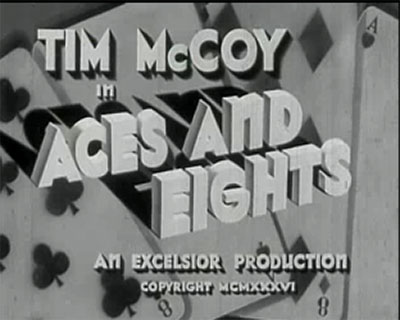
Aces and Eights (1936)

3/5 (1)

“Aces and Eights” is a Western movie released in 1936 directed by Sam Newfield and produced by Sigmund Neufeld. The movie stars Tim McCoy as Marshal Lightning Bill Carson, who tries to clear his name after being accused of a crime he didn’t commit.

The story takes place in the small town of Rawhide, where Carson has been appointed as the new marshal. Carson is a skilled gunman and a man of honor, who is respected by the townsfolk. However, things take a turn for the worse when a group of outlaws rob the local bank and frame Carson for the crime. The robbers are led by a mysterious figure known only as “The Doctor,” who is determined to keep Carson from clearing his name.

Carson is forced to go on the run, with a posse of lawmen hot on his trail. Along the way, he meets a young woman named Alice, who offers to help him clear his name. Together, they uncover a conspiracy involving the town’s leading citizens and “The Doctor,” who is revealed to be the mastermind behind the bank robbery.

In a thrilling climax, Carson confronts “The Doctor” and his gang in a gunfight, with the fate of Rawhide hanging in the balance. With the help of Alice and the town’s other brave citizens, Carson emerges victorious and is finally able to clear his name.

The movie is a classic Western tale of justice, honor, and bravery, with plenty of action and excitement to keep audiences on the edge of their seats.

Directors:
Sam Newfield

Writer:
George Arthur Durlam, Joseph O’Donnell

Stars:
Tim McCoy, Luana Walters, Rex Lease

Rate this Movie

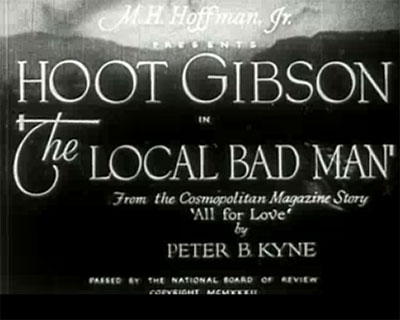
The Local Bad Man (1932)

3/5 (1)

“The Local Bad Man” is a western film from 1932, directed by Otto Brower and starring Wallace Beery, Dorothy Jordan, and Andy Devine.

The film follows the story of a notorious outlaw named “Trigger” Bill, played by Wallace Beery. Trigger Bill is a ruthless and violent criminal who has a reputation for being the most feared man in the region. He has a gang of bandits who help him in his criminal activities, and he is constantly on the run from the law.

One day, Trigger Bill meets a beautiful young woman named Myrtle, played by Dorothy Jordan. Myrtle is a schoolteacher who has come to the town to teach the local children. Trigger Bill is immediately taken by Myrtle’s beauty and charm, and he begins to court her.

As the two spend more time together, Trigger Bill begins to change. He starts to become more civilized and begins to question his life of crime. Myrtle encourages Trigger Bill to turn his life around and leave his criminal past behind.

However, Trigger Bill’s old gang members are not happy with his new lifestyle, and they begin to plot against him. They eventually turn on him, and Trigger Bill is forced to confront his old life in a violent showdown.

In the end, Trigger Bill is able to defeat his former gang members and start a new life with Myrtle. The film ends with the two of them riding off into the sunset together, leaving Trigger Bill’s past behind him.

Directors:
Otto Brower

Writer:
Peter B. Kyne, Philip Graham White

Stars:
Hoot Gibson, Sally Blane, Hooper Atchley

Rate this Movie

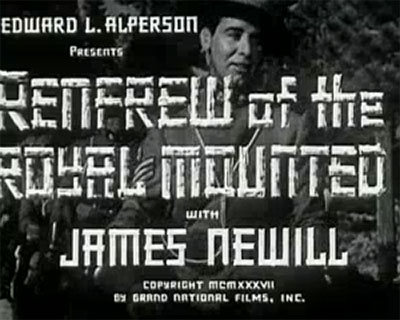
Renfrew of the Royal Mounted (1937)

3/5 (1)

“Renfrew of the Royal Mounted” is a 1937 American film directed by Albert Herman and starring James Newill, Carol Hughes, and William Royle. The movie follows Constable Renfrew (Newill), a member of the Royal Canadian Mounted Police, as he attempts to solve a string of robberies in a small Canadian town.

The plot of the film revolves around a group of criminals who are stealing valuable furs from local trappers. Renfrew is tasked with investigating the robberies and bringing the culprits to justice. Along the way, he falls in love with Laura (Hughes), the daughter of one of the trappers who has been targeted by the thieves.

As Renfrew gets closer to uncovering the truth, the criminals become increasingly desperate and violent. They try to frame Renfrew for the robberies and even attempt to kill him. However, with the help of Laura and his fellow Mounties, Renfrew is able to capture the criminals and bring them to justice.

“Renfrew of the Royal Mounted” was one of several films made in the 1930s that were inspired by the popularity of the Royal Canadian Mounted Police in North America. The movie features several action-packed sequences, including a thrilling chase scene through the snowy Canadian wilderness. The film also includes several musical performances by James Newill, who was a popular singer at the time. Overall, “Renfrew of the Royal Mounted” is an entertaining and engaging crime drama that showcases the bravery and tenacity of the Royal Canadian Mounted Police.

Directors:
Albert Herman

Writer:
Laurie York Erskine, Charles Logue

Stars:
James Newill, Carol Hughes, William Royle

Rate this Movie

Outlaws of Boulder Pass (1942)

3/5 (1)

“Outlaws of Boulder Pass” is a Western movie released in 1942. The film is directed by Sam Newfield and stars George Houston, Al St. John, and Dennis Moore.

The movie follows the story of Tom Cameron (George Houston), a government agent who is sent to investigate a series of robberies in a small town near Boulder Pass. The robberies are being committed by a gang of outlaws who are led by a mysterious figure known as “The Shadow.”

Tom arrives in town and teams up with his old friend, Fuzzy Jones (Al St. John), who is the local sheriff. They quickly discover that the outlaws have been using an abandoned mine shaft as their hideout. Tom and Fuzzy set out to capture the outlaws and put a stop to their criminal activities.

As they investigate, Tom and Fuzzy come across a group of innocent settlers who have been caught up in the outlaws’ schemes. The settlers are being forced to sell their land to the outlaws at a fraction of its value, and the outlaws are using violence to intimidate them.

Tom and Fuzzy realize that they must act fast to protect the settlers and bring the outlaws to justice. With the help of the settlers and a group of cowboys, Tom and Fuzzy engage in a thrilling shootout with the outlaws at Boulder Pass.

In the end, Tom and Fuzzy emerge victorious, and “The Shadow” is revealed to be the town’s respected judge, who had been using his position of power to commit crimes. The judge is arrested, and the town is safe once again.

Directors:
Sam Newfield

Writer:
Sam Robins

Stars:
George Houston, Al St. John, Dennis Moore

Rate this Movie

Devil Riders (1943)

3/5 (1)

“Devil Riders” is a Western movie released in 1943, directed by Sam Newfield and produced by Sigmund Neufeld. The film stars Buster Crabbe as Billy Carson, a cowboy who is mistaken for a notorious outlaw and is forced to clear his name.

The story begins with Billy and his friend Fuzzy Q. Jones (Al St. John) arriving in the town of Red Rock. They are immediately mistaken for the notorious outlaw, The Raven, and are forced to flee from the law. The Raven is a notorious bandit who has been terrorizing the town and its inhabitants.

Billy and Fuzzy eventually meet up with the real Raven and his gang, and together they plan to steal a shipment of gold. However, Billy has a change of heart and decides to turn against The Raven and his gang, hoping to clear his own name in the process.

The film features several action-packed scenes, including a thrilling shootout and a dramatic horse chase. The climax of the film takes place in a dusty ghost town, where Billy and The Raven face off in a final showdown.

In the end, Billy proves his innocence and The Raven is brought to justice. The film ends with Billy and Fuzzy riding off into the sunset, ready for their next adventure.

Directors:
Sam Newfield

Writer:
Joseph O’Donnell

Stars:
Buster Crabbe, Falcon, Al St. John

Rate this Movie