Film-Noir

The Stranger (1946)

4/5 (1)

“The Stranger” is a 1946 film directed by Orson Welles. The movie follows the story of Franz Kindler, a notorious Nazi war criminal who has been in hiding in a small town in Connecticut under a false identity.

The film begins with the arrival of an investigator named Wilson who is looking for Kindler, although he does not know what he looks like. Wilson is aided in his search by Mary Longstreet, the daughter of a Supreme Court justice who is living in the town. Mary and Wilson fall in love while they try to uncover Kindler’s true identity.

As the investigation progresses, it becomes clear that Kindler is aware of Wilson’s presence and is trying to eliminate him. Wilson eventually discovers Kindler’s true identity and confronts him in a clock tower, where the two engage in a dramatic struggle that results in Kindler’s death.

The film’s themes revolve around guilt, justice, and the consequences of war. It portrays Kindler as a monstrous figure who is haunted by his past and unable to escape the consequences of his actions. The film is notable for its visual style and complex characters, and has been praised as one of Welles’ most underrated films.

Directors:

Writer:

Stars:
Rate this Movie

Rebecca (1940)

4.75/5 (4)

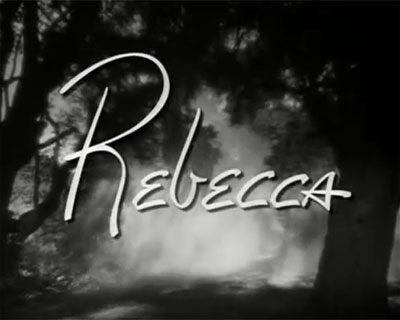
“Rebecca” is a 1940 psychological thriller directed by Alfred Hitchcock, based on the novel of the same name by Daphne du Maurier. The film tells the story of a young woman who marries a wealthy widower, only to find herself living in the shadow of his first wife, Rebecca, who died under mysterious circumstances.

The film begins with the unnamed narrator, a shy and inexperienced young woman, traveling to Monte Carlo with her employer, Mrs. Van Hopper. While there, she meets Maxim de Winter, a wealthy widower who is still haunted by the death of his first wife, Rebecca. The two quickly fall in love and get married, and the narrator becomes the new mistress of Maxim’s grand estate, Manderley.

However, the narrator soon finds herself struggling to fit in at Manderley, where she is constantly reminded of Rebecca’s presence. The housekeeper, Mrs. Danvers, is particularly hostile towards the new Mrs. de Winter, and seems to go out of her way to make her feel unwelcome. The narrator becomes obsessed with Rebecca and begins to investigate her death, hoping to uncover the truth behind the mystery.

As the story unfolds, the narrator discovers that Maxim’s marriage to Rebecca was not as perfect as it seemed, and that Rebecca had many secrets and affairs. The narrator also begins to suspect that Maxim may have had a hand in Rebecca’s death.

In the climactic scene, the narrator confronts Maxim, who reveals that he did, in fact, kill Rebecca. He explains that Rebecca was cruel and manipulative, and that she was planning to ruin his life. Maxim says that he shot her in a fit of rage and desperation, and that he has been haunted by her memory ever since.

In the end, the truth about Rebecca’s death is revealed, and the narrator and Maxim are able to move on with their lives. “Rebecca” is a masterful psychological thriller, with outstanding performances by Joan Fontaine and Laurence Olivier, and is considered one of Alfred Hitchcock’s greatest films.

Directors:
Alfred Hitchcock

Writer:
Daphne Du Maurier, Robert E. Sherwood, Joan Harrison

Stars:
Laurence Olivier, Joan Fontaine, George Sanders

Rate this Movie

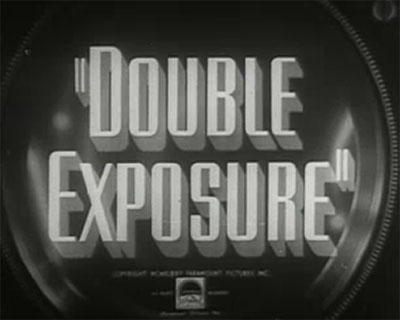
Double Exposure (1944)

3/5 (1)

“Double Exposure” is a 1944 film noir directed by William Berke. The film follows the story of a photographer named Chris Cross (played by Chester Morris), who is obsessed with a woman named Kitty March (played by Nancy Kelly). Chris’s obsession reaches dangerous levels when he accidentally takes a picture of a murder and Kitty becomes the prime suspect.

Chris, who has been using his camera to take pictures of Kitty without her knowledge, finds himself in a difficult situation when he realizes that the photo he took of the murder scene has also captured Kitty in the background. Chris decides to protect Kitty by manipulating the evidence, but his actions only make matters worse.

As the police investigation intensifies, Chris’s dark secrets are slowly revealed, and his mental instability is brought to light. Chris’s former lover, a woman named Adele (played by Constance Dowling), also resurfaces and becomes involved in the unfolding events.

Ultimately, the truth is revealed, and Chris is forced to confront the consequences of his actions. The film ends on a somber note, with Chris being led away by the police, his obsession with Kitty ultimately leading to his downfall.

Directors:
William Berke

Writer:
Winston Miller, Maxwell Shane, Ralph Graves

Stars:
Chester Morris, Nancy Kelly, Jane Farrar

Rate this Movie

Mr. Reckless (1948)

3/5 (1)

“Mr. Reckless” is a 1948 film noir directed by Frank McDonald and starring William Eythe, Barbara Britton, and Walter Catlett.

The story follows a young man named Johnny McEvoy (Eythe), who works as a salesman for a jewelry company. One day, he meets a beautiful woman named Linda Vickers (Britton) on a train, and they fall in love. However, Linda is married to a wealthy businessman named Phil Vickers (Richard Gaines), who is abusive and controlling.

Johnny and Linda begin an affair, but their happiness is short-lived when Phil discovers their relationship. Phil sets out to destroy Johnny’s life, first by getting him fired from his job, then by framing him for embezzlement. Johnny is sent to prison, and Linda is forced to testify against him.

However, Johnny’s cellmate, a wise old con named Pop Reilly (Catlett), teaches him some important lessons about life and survival. With Pop’s help, Johnny manages to escape from prison and sets out to clear his name and prove his innocence.

The film builds to a tense and dramatic climax as Johnny confronts Phil and exposes his schemes. In the end, justice is served, and Johnny and Linda are free to be together.

“Mr. Reckless” is a gripping film noir that explores themes of love, betrayal, and redemption. It features strong performances from the lead actors and a well-crafted script that keeps the audience on the edge of their seats.

Directors:
Frank McDonald

Writer:
Maxwell Shane, Milton Raison

Stars:
William Eythe, Barbara Britton, Walter Catlett

Rate this Movie

The Pay Off (1942)

2.5/5 (2)

“The Pay Off” is a 1942 crime drama film directed by Arthur Dreifuss and starring Lee Tracy, Tom Brown, and Tina Thayer.

The movie follows the story of Jim Hanvey (Lee Tracy), a tough private investigator who is hired by a wealthy businessman to recover some stolen jewels. Jim’s investigation leads him to a nightclub owned by a ruthless gangster named Nick Ferraro (Jack La Rue).

As Jim tries to gather evidence against Ferraro, he becomes entangled in a web of corruption, deceit, and violence. He also finds himself drawn to Ferraro’s attractive girlfriend, Kay Curtis (Tina Thayer), who may hold the key to solving the case.

The film features suspenseful chase scenes, shootouts, and a gripping finale as Jim races to expose Ferraro’s criminal activities and bring him to justice.

Overall, “The Pay Off” is a thrilling crime drama that showcases Lee Tracy’s talents as a tough-talking, no-nonsense private eye. The film is notable for its fast-paced action, sharp dialogue, and gritty portrayal of the criminal underworld.

Directors:
Arthur Dreifuss

Writer:
Edward Dein, Arthur Hoerl

Stars:
Lee Tracy, Tom Brown, Tina Thayer

Rate this Movie

Crime, Inc. (1945)

3/5 (1)

“Crime, Inc.” is a 1945 crime film directed by Lew Landers and starring Leo Carrillo, Tom Neal, and Martha Tilton. The film tells the story of a journalist who goes undercover to expose a powerful organized crime syndicate.

The film follows the story of Tom Dean (Tom Neal), a newspaper reporter who is assigned to investigate a string of brutal murders that are believed to be the work of a powerful criminal organization. To get to the bottom of the case, Tom goes undercover and poses as a small-time crook looking to join the syndicate.

Tom soon discovers that the syndicate is run by a ruthless boss named “Mr. Big” (Leo Carrillo), who will stop at nothing to protect his interests. Tom’s investigation takes him deep into the criminal underworld, where he meets a cast of colorful characters, including a nightclub singer named Lila (Martha Tilton) who becomes his ally.

As Tom gets closer to uncovering the truth, he becomes the target of the syndicate’s deadly enforcers. He must use all of his wits and resourcefulness to stay alive and bring the criminals to justice.

“Crime, Inc.” is a gripping crime thriller with a noirish atmosphere and a strong cast. It explores themes of corruption, power, and the struggle between good and evil. The film remains a classic example of the crime film genre of the 1940s and a must-see for fans of the genre.

Directors:
Lew Landers

Writer:
Raymond L. Schrock, Martin Mooney

Stars:
Leo Carrillo, Tom Neal, Martha Tilton

Rate this Movie

Woman on the Run (1950)

4.33/5 (3)

“Woman on the Run” is a film noir directed by Norman Foster and released in 1950. The film tells the story of a manhunt for a witness in a murder case, who goes on the run after she learns that she is the killer’s next target.

The film begins with a murder in San Francisco, where a man is gunned down in the street. The killer, who is a member of a notorious gang, is caught by the police, but the only witness to the crime, the victim’s estranged wife, Eleanor Johnson (played by Ann Sheridan), goes missing.

The police enlist the help of Eleanor’s husband, Frank (played by Ross Elliott), to help track her down. Frank, who has been living apart from his wife, hires a private detective, Dan Leggett (played by Dennis O’Keefe), to find her. But as Leggett begins to unravel the mystery, he realizes that there is more to the case than meets the eye.

As Leggett gets closer to the truth, he becomes the target of the killer, and he and Eleanor must work together to survive and clear her name.

“Woman on the Run” is a taut and suspenseful film noir that explores themes of betrayal, loyalty, and the search for truth. It features a standout performance by Ann Sheridan as the strong-willed and determined Eleanor, and Dennis O’Keefe as the tough and savvy detective, Dan Leggett. The film is notable for its stunning location shots of San Francisco and its use of real-life locations to create a gritty and realistic atmosphere. It is widely regarded as one of the most underrated films of the film noir genre.

Directors:
Norman Foster

Writer:
Alan Campbell, Norman Foster, Sylvia Tate

Stars:
Stars
Ann Sheridan, Dennis O’Keefe, Robert Keith

Rate this Movie

The Red House (1947)

3/5 (1)

“The Red House” is a psychological thriller novel written by American author, Mark Haddon, and published in 1947. The novel is set in a rural English village, where two teenage siblings, Angela and Richard, decide to explore the woods behind their family farm, which is rumored to be haunted by a malevolent presence.

Their curiosity leads them to discover an abandoned house in the woods, which is painted entirely in red. The house is owned by their reclusive neighbor, Mr. Bryson, who has always warned the siblings to stay away from the woods and the house.

As Angela and Richard continue to explore the woods and the house, they uncover dark family secrets that have been buried for years. Their uncle, Philip, who has been living with their family, seems to know more than he’s letting on, and as tensions rise, the siblings start to fear for their safety.

As the story unfolds, it becomes clear that the red house is not just a haunted house, but a symbol of the psychological and emotional turmoil that plagues the characters. The novel deals with themes of family secrets, mental illness, and the destructive power of the past.

The novel is a suspenseful and atmospheric read that keeps the reader engaged until the very end.

Directors:
Delmer Daves

Writer:
George Agnew Chamberlain, Delmer Daves, Albert Maltz

Stars:
Edward G. Robinson, Lon McCallister, Judith Anderson

Rate this Movie

The File On Thelma Jordan (1950)

4/5 (2)

“The File on Thelma Jordan” is a 1950 film noir directed by Robert Siodmak and starring Barbara Stanwyck and Wendell Corey. The film follows the story of Thelma Jordan, a seductive and mysterious woman who becomes entangled in a web of deceit and murder.

Thelma Jordan (played by Stanwyck) is a wealthy woman who seeks the help of Assistant District Attorney Cleve Marshall (played by Corey) when she discovers that her aunt’s estate is being embezzled. However, Cleve is more interested in Thelma than the case, and the two begin an illicit affair.

As the story unfolds, it becomes clear that Thelma is not the innocent victim she first appeared to be. She is actually involved in a criminal scheme and is using Cleve to cover her tracks. When her ex-lover, Tony Laredo, shows up and threatens to expose her, Thelma is forced to take drastic action, leading to a tragic outcome.

Throughout the film, the audience is kept in suspense as the true nature of Thelma’s character is slowly revealed. The film is a classic example of film noir, with its use of shadows, moody lighting, and morally ambiguous characters.

“The File on Thelma Jordan” is a gripping thriller that showcases the talents of its lead actors and director. The film’s complex storyline and unexpected twists and turns keep audiences on the edge of their seats until the very end.

Directors:
Robert Siodmak

Writer:
Marty Holland, Ketti Frings

Stars:
Barbara Stanwyck, Wendell Corey, Paul Kelly

Rate this Movie

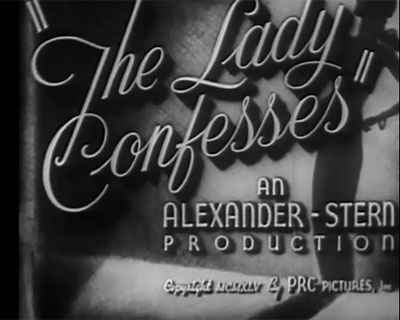
The Lady Confesses (1945)

2.5/5 (2)

“The Lady Confesses” is a 1945 film noir directed by Sam Newfield and produced by Sigmund Neufeld. The film follows the story of the wealthy socialite Vera Stanley (played by Mary Beth Hughes) who is accused of murdering her husband.

Vera’s husband is found dead in their home, and the police quickly focus their investigation on her. Despite her protests of innocence, the evidence seems to be stacked against her, and she is arrested and put on trial. However, as the trial proceeds, a number of people come forward with information that casts doubt on Vera’s guilt.

Among those who come forward is the detective assigned to the case, Lieutenant Joe Morgan (played by Hugh Beaumont), who begins to suspect that Vera may be innocent after all. Together, Vera and Joe work to uncover the truth and identify the real killer.

As they delve deeper into the case, they uncover a web of lies and deceit that leads them to a surprising conclusion. The film features several twists and turns, and the audience is kept in suspense until the very end.

“The Lady Confesses” was well-received by audiences and critics alike for its engaging plot and strong performances, particularly by Mary Beth Hughes in the lead role. It is considered a classic example of film noir and is still enjoyed by fans of the genre today.

Directors:
Sam Newfield

Writer:
Irwin Franklyn, Helen Martin

Stars:
Mary Beth Hughes, Hugh Beaumont, Edmund MacDonald

Rate this Movie

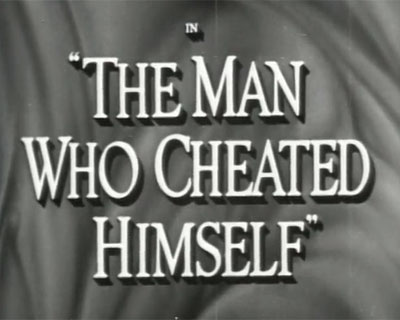
The Man Who Cheated Himself (1951)

3/5 (1)

“The Man Who Cheated Himself” is a 1951 film noir directed by Felix E. Feist. The movie stars Lee J. Cobb as Lt. Ed Cullen, a police detective in San Francisco who falls in love with a wealthy socialite named Lois Frazer (Jane Wyatt) while investigating her husband’s murder.

Lois confesses to Ed that she killed her husband in self-defense after he tried to attack her, but Ed decides to cover up the crime and make it look like a robbery gone wrong. He believes that Lois is innocent and wants to protect her from the scandal that would follow if the truth came out.

However, Ed’s younger brother Andy (John Dall), who is also a police detective, becomes suspicious of Ed’s behavior and starts to investigate the case himself. Andy uncovers evidence that implicates Lois in the murder and confronts Ed about it. Ed eventually confesses to his involvement in the cover-up, but it’s too late to save Lois. She’s already fled the city and committed suicide in despair over her husband’s death and the guilt of her actions.

The film ends with Ed and Andy reconciling and Ed accepting the consequences of his actions, which include losing his job and facing criminal charges.

Directors:
Felix E. Feist

Writer:
Seton I. MillerPhilip MacDonald

Stars:
Lee J. Cobb, Jane Wyatt, John Dall

Rate this Movie

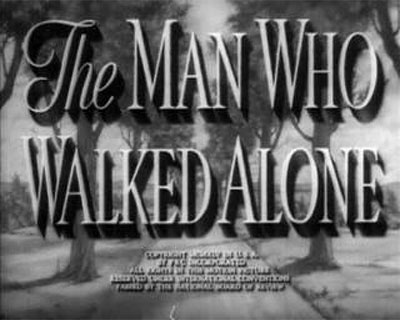
The Man Who Walked Alone (1945)

3/5 (1)

“The Man Who Walked Alone” is a 1945 American film noir directed by Christy Cabanne and starring Dave O’Brien, Kay Aldridge, and Walter Catlett.

O’Brien plays Eddie Taylor, a down-on-his-luck war veteran who arrives in a small town in search of a job. He soon finds work at a local gas station, but his past catches up with him when a former army buddy shows up and tries to involve him in a robbery.

Meanwhile, Eddie becomes romantically involved with Joan Wright (played by Aldridge), a young woman whose father is the wealthy owner of the local oil refinery. But when Joan’s father is murdered, Eddie becomes the prime suspect.

As he tries to clear his name, Eddie uncovers a web of deceit and corruption in the town and must risk his own life to expose the true killer and bring justice to the community.

“The Man Who Walked Alone” is a classic example of film noir, with its dark themes of crime, betrayal, and corruption. It also features strong performances from its cast, particularly O’Brien in the lead role. The film is noted for its atmospheric cinematography and moody score, and is considered a cult classic among fans of the genre.

Directors:
Christy Cabanne

Writer:
Christy Cabanne, Robert Lee Johnson

Stars:
Dave O’Brien, Kay Aldridge, Walter Catlett

Rate this Movie

Panic In The Streets (1950)

3/5 (1)

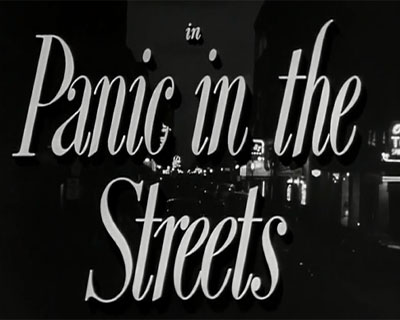
“Panic in the Streets” is a 1950 film noir directed by Elia Kazan. The film is a thriller about a manhunt for a murderer infected with pneumonic plague. The story is set in New Orleans, where a seaman named Ortega is found dead with symptoms of the plague. Dr. Clinton Reed (played by Richard Widmark), a public health official, realizes the danger of an outbreak and tries to convince the authorities to take immediate action to prevent the spread of the disease.

Reed teams up with police captain Tom Warren (played by Paul Douglas) to track down the killer, who is also infected with the plague and could potentially infect others. The manhunt takes them through the dark alleys and seedy underworld of New Orleans, as they search for clues and try to find the killer before he can infect more people.

As they close in on the killer, tensions rise, and the situation becomes more desperate. The clock is ticking as Reed and Warren race against time to find the killer and prevent a deadly epidemic from breaking out.

The film was praised for its realism and suspenseful atmosphere, and it won an Academy Award for Best Original Screenplay. It is considered a classic of the film noir genre and a must-see for fans of suspenseful thrillers.

Directors:
Elia Kazan

Writer:
Richard Murphy, Daniel Fuchs, Edna Anhalt

Stars:
Richard Widmark, Paul Douglas, Barbara Bel Geddes

Rate this Movie

Money Madness (1948)

3/5 (1)

“Money Madness” is a crime drama film released in 1948, directed by Sam Newfield and produced by Sigmund Neufeld. The film stars Hugh Beaumont, Frances Rafferty, Harlan Warde, and Robert Clarke.

The story follows a successful businessman named David Carroll (played by Hugh Beaumont) who becomes obsessed with making more money. His obsession drives him to neglect his wife, Julie (played by Frances Rafferty), and his young son, Tommy (played by Tommy Ivo). David begins to engage in risky investments, putting his family’s future at risk.

Things take a turn for the worse when David’s business partner, Phil Vernon (played by Harlan Warde), embezzles a large sum of money and frames David for the crime. David is arrested and faces a lengthy prison sentence.

With her husband behind bars, Julie struggles to support herself and their son. She eventually learns the truth about Phil’s deception and works to clear David’s name. In the end, David is exonerated and reunited with his family.

The film highlights the dangers of greed and the importance of family and honesty.

Directors:
Sam Newfield

Writer:
Al Martin

Stars:
Hugh Beaumont, Frances Rafferty, Harlan Warde

Rate this Movie

D.O.A. (1950)

4/5 (1)

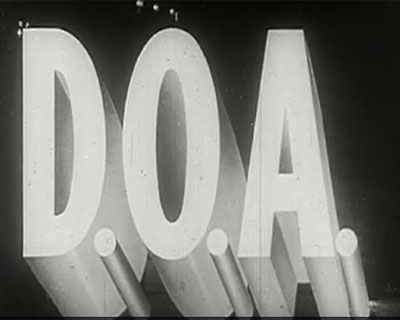
“D.O.A.” is a 1950 film noir directed by Rudolph Maté and starring Edmond O’Brien and Pamela Britton.

The film follows the story of Frank Bigelow, a small-town accountant who arrives in San Francisco for a weekend of fun. However, after a night of heavy drinking, Frank wakes up to discover that he has been poisoned and has only a few days to live.

Desperate to find out who poisoned him and why, Frank embarks on a dangerous and thrilling investigation, leading him to a seedy underworld of crime and corruption. He encounters a cast of characters, including a shady nightclub owner and a mysterious blonde, all of whom may hold the key to his death.

As Frank’s health rapidly deteriorates, he races against time to uncover the truth and bring his killer to justice before it’s too late.

“D.O.A.” is a classic film noir that showcases the genre’s characteristic themes of corruption, crime, and moral ambiguity. O’Brien delivers a compelling performance as the doomed protagonist, and the film’s fast-paced and suspenseful plot keeps viewers on the edge of their seats. The film remains a classic of the genre and a must-see for fans of film noir.

Directors:
Rudolph Maté

Writer:
Russell Rouse, Clarence Greene

Stars:
Edmond O’Brien, Pamela Britton, Luther Adler

Rate this Movie