Film-Noir

Behind Green Lights (1946)

3/5 (1)

“Behind Green Lights” is a film noir from 1946, directed by Otto Brower and starring Carole Landis, William Gargan, and Richard Crane. The movie revolves around the murder of a young socialite named Sheila Lamar, whose body is found in a parked car behind the Green Gate Club.

Captain Johnny Williams (William Gargan), the lead investigator on the case, is determined to find the killer, despite resistance from both his superiors and the wealthy patrons of the club who want the investigation to end quickly and discreetly. As he delves deeper into the case, Williams uncovers a web of corruption and deceit, and he soon realizes that the murder is just the tip of the iceberg.

Meanwhile, Sheila’s sister, Phyllis (Carole Landis), becomes involved in the investigation when she hires private investigator Michael Shayne (Richard Crane) to find her sister’s killer. Shayne and Phyllis work together to unravel the mystery, but their lives are put in danger as they get closer to the truth.

As the investigation continues, Williams, Shayne, and Phyllis discover that the killer is someone close to Sheila, and they race against time to prevent another murder from taking place. The film ends with the killer finally being exposed and brought to justice.

“Behind Green Lights” is a classic film noir with all the hallmarks of the genre, including a dark and moody atmosphere, a complex plot, and flawed but compelling characters. The movie is notable for its strong performances by the lead actors, as well as its suspenseful and engaging storyline.

Directors:
Otto Brower

Writer:
Scott Darling, Charles G. Booth

Stars:
Carole Landis, William Gargan, Richard Crane
Rate this Movie

Quicksand (1950)

4/5 (2)

“Quicksand” is a 1950 American film noir directed by Irving Pichel. The movie stars Mickey Rooney as a young man named Dan Brady who works at a gas station in a small California town. Dan is bored with his life and dreams of making it big.

One day, while browsing a local store, Dan meets a beautiful woman named Vera Novak, played by Jeanne Cagney. Vera is a femme fatale who seduces Dan and lures him into a web of deceit and crime.

Vera convinces Dan to lend her money and take her out on the town. She leads him to a gambling den, where Dan loses all his money and ends up owing a dangerous criminal named Nick Garcos, played by Peter Lorre.

Desperate to pay off his debt, Dan steals from his workplace and gets caught. He ends up in jail, and his life spirals out of control as he becomes more deeply involved with Vera and Nick’s criminal activities.

Throughout the film, Dan’s attempts to escape his predicament are constantly thwarted, and he finds himself sinking deeper into the quicksand of his own making. The movie ends with a tense, dramatic confrontation between Dan and Nick, with Vera caught in the middle.

Overall, “Quicksand” is a classic example of film noir, featuring themes of greed, lust, and betrayal. The film is notable for its strong performances, particularly by Rooney and Lorre, as well as its moody, atmospheric cinematography.

Directors:
Irving Pichel

Writer:
Robert Smith

Stars:
Mickey Rooney, Jeanne Cagney, Barbara Bates

Rate this Movie

Kansas City Confidential (1952)

4/5 (1)

“Kansas City Confidential” is a 1952 film noir directed by Phil Karlson. The film follows an ex-convict named Joe Rolfe (John Payne), who is falsely accused of robbing an armored truck that carried a significant amount of money. Rolfe embarks on a mission to clear his name and find the real culprits behind the heist.

The robbery was orchestrated by a mastermind criminal named “Mr. Big,” who hired three men to carry out the job. The robbers wore masks to conceal their identities, and the stolen money was laundered through a Mexican casino.

As Rolfe begins to investigate, he encounters the three robbers, who are all unaware of each other’s identities, as Mr. Big insisted that they remain anonymous. They are Pete Harris (Jack Elam), Boyd Kane (Neville Brand), and Tony Romano (Lee Van Cleef).

Rolfe also meets the daughter of the armored truck company’s owner, Helen Foster (Coleen Gray), who is trying to find her father’s stolen money. Together, they track down the robbers and eventually discover Mr. Big’s true identity.

The film’s twist ending reveals the surprising truth behind the robbery, and Rolfe and Helen are finally able to bring the criminals to justice.

Overall, “Kansas City Confidential” is a thrilling and suspenseful film that is considered a classic in the film noir genre.

Directors:
Phil Karlson

Writer:
George Bruce, Harry Essex, Harold Greene

Stars:
John Payne, Coleen Gray, Preston Foster

Rate this Movie

Jail Bait (1954)

3/5 (1)

Jail Bait is a film noir crime drama released in 1954 directed by Edward D. Wood Jr. The movie follows the story of a young man named Don Gregor (played by Steve Reeves), who is forced to go on the run with his girlfriend, Myrna (played by Dolores Fuller), after accidentally killing her father in a struggle.

As they try to escape the law, Don and Myrna come across a shady plastic surgeon named Dr. Otto Frank (played by Herbert Rawlinson), who offers to help Don change his appearance in exchange for money. Don takes the deal, but soon finds out that Dr. Frank is a wanted criminal who plans to use him as a pawn in a bank robbery.

Meanwhile, Don’s younger sister, who works for the police department, is desperately trying to clear his name and bring him back home. As the tension and danger escalate, Don must decide whether to go through with the robbery or risk everything to do the right thing and turn himself in to the authorities.

Jail Bait is notable for being one of the early works of Edward D. Wood Jr., who is now considered a cult figure in cinema history for his unconventional directing style and the infamous cult classic film Plan 9 from Outer Space.

Directors:
Edward D. Wood Jr.

Writer:
Alex Gordon, Edward D. Wood Jr.

Stars:
Lyle Talbot, Dolores Fuller, Herbert Rawlinson

Rate this Movie

Trapped (1949)

4/5 (1)

“Trapped” is a 1949 film noir directed by Richard Fleischer and starring Lloyd Bridges, Barbara Payton, and John Hoyt. The movie tells the story of a U.S. Treasury agent, Tris Stewart (played by Lloyd Bridges), who is assigned to track down a counterfeiting ring operating in Los Angeles.

Stewart is a dedicated and determined agent who will stop at nothing to bring the criminals to justice. He uses a variety of tactics to get closer to the gang, including posing as a criminal himself and befriending one of the members, a nightclub singer named Meg Dixon (played by Barbara Payton).

As Stewart gets closer to the truth, he realizes that the gang’s leader, a man named Emile (played by John Hoyt), is a ruthless and dangerous criminal who will do whatever it takes to protect his operation. Emile orders his men to eliminate Stewart, and the agent finds himself in a desperate fight for survival.

Stewart’s investigation leads him to a climactic showdown with Emile and his men, and the final scenes of the movie are filled with suspense and action. In the end, Stewart triumphs over the criminals and brings them to justice, but not without facing numerous obstacles and dangers along the way.

“Trapped” is a classic film noir that showcases the genre’s trademark elements, including gritty crime scenes, flawed characters, and a sense of moral ambiguity. The movie is notable for its fast-paced action and suspenseful plot, as well as the strong performances by its cast. It remains a favorite among fans of film noir and crime dramas.

Directors:
Richard Fleischer

Writer:
Earl Felton, George Zuckerman

Stars:
Lloyd Bridges, Barbara Payton, John Hoyt

Rate this Movie

The Amazing Mr. X (1948)

4/5 (1)

“The Amazing Mr. X” is a 1948 American film noir directed by Bernard Vorhaus. The film stars Turhan Bey, Lynn Bari, Cathy O’Donnell, and Richard Carlson. The story follows Christine Faber (played by Lynn Bari), a young widow who visits a psychic named Alexis (played by Turhan Bey) to contact her deceased husband. Alexis claims to be able to communicate with the dead, and he tells Christine that her husband is trying to reach her. However, Alexis is not what he seems, and he has a sinister plan for Christine.

Alexis has a reputation as a medium, and many wealthy clients come to him seeking his services. However, Alexis is not a psychic at all. He uses his skills in hypnosis and psychology to read people’s minds and manipulate them. He is also a con artist and a thief, and he uses his abilities to steal from his clients. When Christine comes to him, he sees an opportunity to exploit her vulnerability and take her money.

Alexis begins to visit Christine at her home, and he starts to influence her thoughts and emotions. He convinces her that her deceased husband is still with her and that he wants her to be happy. He also suggests that she invest in the stock market, using his predictions to make a fortune. Christine becomes infatuated with Alexis and trusts him completely.

However, Christine’s sister Janet (played by Cathy O’Donnell) becomes suspicious of Alexis and starts to investigate him. She discovers that he is a fraud and warns Christine, but Christine refuses to believe her. Meanwhile, Alexis continues to manipulate Christine, convincing her to withdraw all her money from the bank and give it to him. He plans to flee the country with the money and leave Christine behind.

In the end, Janet and a police detective confront Alexis at his apartment. Alexis tries to escape, but he falls to his death from the balcony. Christine is left alone, but she realizes the truth about Alexis and decides to move on with her life.

“The Amazing Mr. X” is a classic film noir that explores themes of deception, manipulation, and the dangers of trusting strangers. The film is known for its suspenseful atmosphere, clever plot twists, and strong performances by the cast.

Directors:
Bernard Vorhaus

Writer:
Crane Wilbur, Muriel Roy Bolton, Ian McLellan Hunter

Stars:
Turhan Bey, Lynn Bari, Cathy O’Donnell

Rate this Movie

Shock (1946)

4/5 (1)

“Shock” is a film noir thriller directed by Alfred L. Werker and released in 1946. The film follows Dr. Richard Cross, a psychiatrist who is called to the scene of a murder to evaluate the mental state of the suspect, Mrs. Janet Stewart. As Cross tries to get to the bottom of the case, he discovers that Mrs. Stewart is not who she appears to be and that her husband’s death is not as straightforward as it seems.

The film stars Vincent Price as Dr. Cross and Lynn Bari as Mrs. Stewart. The supporting cast includes Frank Latimore as Lt. Paul Stewart, Anabel Shaw as Nurse Charlotte Grant, and Stephen Dunne as Dr. Stevens.

The movie begins with the murder of Mrs. Stewart’s husband, a wealthy businessman. When the police arrive, they find Mrs. Stewart standing over her dead husband with a gun in her hand. She claims to have no memory of what happened and is taken to the hospital for evaluation.

Dr. Cross is called in to examine Mrs. Stewart and determine if she is mentally fit to stand trial. As he begins to interview her, he becomes convinced that she is not the killer. He also learns that Mrs. Stewart is suffering from shock and amnesia, and has no memory of what happened before or after the murder.

Dr. Cross becomes increasingly intrigued by the case and decides to investigate further. He visits the Stewart home and talks to their neighbors, but is unable to find any solid evidence to prove Mrs. Stewart’s innocence.

As the investigation continues, Dr. Cross begins to suspect that there is more to the case than meets the eye. He discovers that Mrs. Stewart is not who she claims to be and that her husband’s death may have been part of a larger conspiracy.

In the end, Dr. Cross is able to uncover the truth behind the murder and clear Mrs. Stewart’s name. The film ends with the revelation of the real killer and a dramatic confrontation between the killer and Dr. Cross.

“Shock” is a suspenseful and well-crafted film noir with strong performances from the lead actors. It is an excellent example of the genre and a must-see for fans of classic thrillers.

Directors:
Alfred L. Werker

Writer:
Eugene Ling, Albert DeMond, Martin Berkeley

Stars:
Vincent Price, Lynn Bari, Frank Latimore

Rate this Movie

Please Murder Me (1956)

4/5 (1)

“Please Murder Me” is a crime drama film released in 1956. The movie revolves around a criminal defense lawyer named Craig Carlson, played by Raymond Burr, who takes on the case of a man named Joe Keats, who has been accused of murdering his wife. Keats claims to be innocent and hires Carlson to defend him.

As Carlson investigates the case, he begins to suspect that Keats is lying and is actually guilty of the crime. However, Keats has an alibi that seems to check out, and Carlson can’t find any solid evidence to prove that he did it. The only other suspect is Keats’ ex-girlfriend, who had motive and opportunity to commit the crime.

As the trial progresses, Carlson becomes more and more convinced that Keats is guilty, but he can’t prove it. In a shocking turn of events, Keats takes the stand and confesses to the murder, revealing that he had been lying all along to protect his ex-girlfriend.

The movie ends with Keats being found guilty and sentenced to death. Carlson is left to reflect on the case and the moral ambiguity of his profession as a criminal defense lawyer.

Directors:
Peter Godfrey

Writer:
Writers
Al C. Ward, Donald Hyde, Ewald André Dupont

Stars:
Angela Lansbury, Raymond Burr, Dick Foran

Rate this Movie

The Great Flamarion (1945)

4/5 (1)

“The Great Flamarion” is a film noir released in 1945, directed by Anthony Mann and starring Erich von Stroheim, Mary Beth Hughes, and Dan Duryea.

The story follows a sharpshooter named Tony (Erich von Stroheim) who performs in a traveling carnival with his assistant, the beautiful Connie (Mary Beth Hughes). Tony is a cold and calculating man who is dissatisfied with his life and his work. He sees himself as a superior marksman who deserves better than performing in a traveling show.

One day, while performing in a new city, Tony meets a wealthy woman named Alicia (Lester Allen), who is interested in his act and invites him to perform at her home. Alicia’s husband, Charles (Dan Duryea), is a gambler who is cheating on her with Connie. When Tony learns of their affair, he decides to use it to his advantage and devises a plan to get rid of both of them and take their money.

Tony convinces Alicia to invest in a phony gold mine and to have Charles go on a trip to the mine to verify its existence. While Charles is away, Tony plans to kill him and make it look like an accident. However, things don’t go as planned and Tony ends up getting caught in his own web of deception.

“The Great Flamarion” is a classic film noir with a twisted plot and a tragic ending. The film’s themes include greed, jealousy, and the corrupting influence of money. The performances of the cast, particularly Erich von Stroheim, are outstanding and add to the film’s dark and foreboding atmosphere.

Directors:
Anthony Mann

Writer:
Anne Wigton, Heinz Herald, Richard Weil

Stars:
Erich von Stroheim, Mary Beth Hughes, Dan Duryea

Rate this Movie

The Hitch-Hiker (1953)

4/5 (1)

“The Hitch-Hiker” is a classic film noir directed by Ida Lupino and released in 1953. The movie tells the story of two friends, Roy Collins (Edmond O’Brien) and Gilbert Bowen (Frank Lovejoy), who are on a fishing trip in Mexico. Along the way, they pick up a hitchhiker named Emmett Myers (William Talman), who turns out to be a dangerous criminal on the run from the police.

As they travel further into Mexico, Roy and Gilbert begin to realize that Emmett is not just a harmless hitchhiker, but a cold-blooded killer who has murdered several people. Emmett forces the two friends to drive him across the country, holding them hostage and threatening to kill them if they don’t do as he says.

Roy and Gilbert’s attempts to escape are repeatedly thwarted by Emmett’s cunning and ruthlessness, and they are forced to rely on their wits and resourcefulness to survive. The tension mounts as they drive deeper into the isolated and unforgiving desert landscape, with Emmett’s threats growing more and more ominous.

“The Hitch-Hiker” is a gripping and suspenseful film that explores themes of trust, survival, and the nature of evil. Ida Lupino’s direction and William Talman’s chilling performance as the remorseless Emmett Myers have made the movie a classic of the film noir genre.

Directors:
Ida Lupino

Writer:
Collier Young, Ida Lupino, Robert L. Joseph

Stars:
Edmond O’Brien, Frank Lovejoy, William Talman

Rate this Movie

Fear in the Night (1947)

3/5 (1)

“Fear in the Night” is a 1947 film noir directed by Maxwell Shane. The movie follows the story of Vince Grayson (played by DeForest Kelley), a young man who begins to have terrifying nightmares after starting a new job as a bank clerk. In his dreams, Vince is haunted by a mysterious figure in a wheelchair who he believes is trying to kill him.

As the nightmares continue, Vince’s grip on reality begins to slip, causing him to act erratically and behave suspiciously. His wife, Betty (played by Ann Doran), becomes concerned for his mental health and urges him to seek help. However, Vince is convinced that his nightmares are real and that the figure in the wheelchair is a danger to his life.

As the plot unfolds, it is revealed that Vince’s fears are rooted in a traumatic event from his past. The film builds to a suspenseful climax as Vince confronts the truth about his nightmares and the identity of the figure in the wheelchair.

“Fear in the Night” is notable for its use of dream sequences and psychological horror elements, which were uncommon in films of the era. The movie was well-received upon its release and has since become a cult classic of the film noir genre.

Directors:
Maxwell Shane

Writer:
Cornell Woolrich, Maxwell Shane

Stars:
Paul KellyDe, Forest Kelley, Kay Scott

Rate this Movie

Too Late for Tears (1949)

5/5 (1)

“Too Late for Tears” is a film noir thriller released in 1949, directed by Byron Haskin and starring Lizabeth Scott and Dan Duryea. The film follows the story of Jane Palmer (Lizabeth Scott), a bored housewife who finds herself in possession of a suitcase full of money. Her husband Alan (Arthur Kennedy) wants to turn the money over to the authorities, but Jane has other plans. She convinces him to keep the money and use it to start a new life.

Their plans are soon complicated when Danny Fuller (Dan Duryea), the man who originally had the money, comes looking for it. Jane and Alan find themselves in a dangerous game of cat and mouse with Danny and his associates. As the tension escalates, Jane becomes increasingly ruthless and manipulative in her efforts to keep the money and avoid detection by the authorities.

As the story unfolds, it becomes clear that Jane’s desire for the money is driven not only by her desire for a more exciting life but also by her ambition and need for control. Her actions ultimately lead to a violent confrontation with Danny, and the film ends with a satisfying twist.

Overall, “Too Late for Tears” is a gripping and well-crafted film noir that showcases the talents of its cast and crew. The film’s dark themes and suspenseful plot make it a classic of the genre, and it remains a must-see for fans of noir cinema.

Directors:
Byron Haskin

Writer:
Roy Huggins

Stars:
Lizabeth Scott, Don DeFore, Dan Duryea

Rate this Movie

Inner Sanctum (1948)

3/5 (1)

“Inner Sanctum” is a 1948 film noir directed by Lew Landers and starring Charles Russell and Mary Beth Hughes. The movie follows the story of a woman named Mary who is found murdered, and her husband, a successful physician named Richard, is the prime suspect in her death. Richard becomes increasingly paranoid as the investigation unfolds, and he begins to see visions of Mary’s ghost, which seem to be trying to lead him to the real killer.

As Richard’s mental state deteriorates, he becomes more and more convinced that his neighbor, a wealthy and eccentric old man named Melton, is the murderer. Meanwhile, Richard’s secretary, Evelyn, has developed romantic feelings for him and is determined to help clear his name.

As the investigation continues, the true identity of the killer is revealed, and Richard is finally exonerated. However, the experience has taken a toll on his mental health, and the film ends with him being taken away to a sanitarium for treatment.

Directors:
Lew Landers

Writer:
Jerome T. Gollard

Stars:
Charles Russell, Mary Beth Hughes, Billy House

Rate this Movie

Suddenly (1954)

4/5 (1)

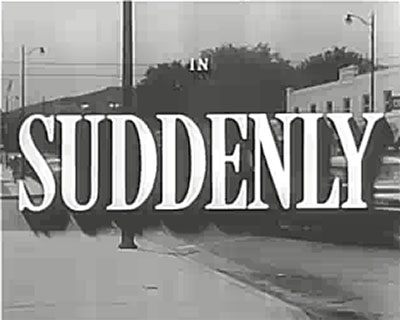
“Suddenly” is a 1954 American film noir directed by Lewis Allen and starring Frank Sinatra, Sterling Hayden, and Nancy Gates. The movie follows the story of a small town sheriff (Hayden) who must protect the President of the United States during a brief stopover in his town, where an assassin (Sinatra) and his accomplices plan to ambush the President.

The movie explores themes of patriotism, duty, and the psychology of a killer. Sinatra’s character, John Baron, is a war veteran suffering from PTSD who is motivated by his hatred of the government and a desire for revenge. He takes a family hostage in a house overlooking the train station where the President is scheduled to arrive, and threatens to kill them unless the Sheriff cooperates with him.

The tension builds as the Sheriff tries to outsmart Baron and protect the President, leading to a thrilling climax where the two face off in a showdown. The movie was well received by audiences and critics for its suspenseful plot, strong performances, and intense atmosphere. It is now considered a classic of the film noir genre.

Directors:
Lewis Allen

Writer:
Richard Sale

Stars:
Frank Sinatra, Sterling Hayden, James Gleason

Rate this Movie

Big Combo (1955)

4/5 (1)

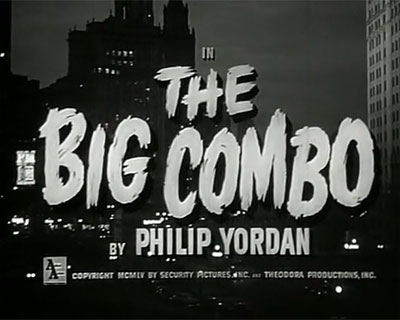
“The Big Combo” is a classic film noir released in 1955. The film is directed by Joseph H. Lewis and stars Cornel Wilde, Richard Conte, and Jean Wallace.

The story follows Police Lieutenant Leonard Diamond (Wilde), who is determined to bring down the ruthless and powerful crime boss Mr. Brown (Conte). Diamond is aided in his investigation by Susan Lowell (Wallace), a former lover of Brown’s who wants to help bring him to justice.

As Diamond delves deeper into Brown’s criminal empire, he becomes more and more obsessed with bringing him down, even if it means breaking the law himself. Brown, meanwhile, is equally determined to keep his criminal empire intact and will stop at nothing to protect his interests.

As the tension between Diamond and Brown grows, the film builds to a tense and violent climax, as Diamond finally confronts Brown in a dramatic showdown.

Overall, “The Big Combo” is a classic film noir that features strong performances from its cast and a gripping story that keeps the audience on the edge of their seats. The film is notable for its stylish visuals, dark tone, and exploration of themes such as obsession, corruption, and power.

Directors:
Joseph H. Lewis

Writer:
Philip Yordan

Stars:
Cornel Wilde, Richard Conte, Jean Wallace

Rate this Movie