Romance

Misbehaving Husbands (1940)

3/5 (1)

“Misbehaving Husbands” is a classic comedy film released in 1940, directed by William Beaudine and produced by Producers Releasing Corporation (PRC). The film tells the story of two friends, George and Bill, who are both tired of their nagging wives and decide to take a vacation in Reno, Nevada to get a quick divorce.

However, their plan is complicated by a number of mishaps and misunderstandings, as they both end up falling for a beautiful singer named Rosita. In the end, they realize that their wives are not so bad after all and decide to reconcile with them.

The film features a talented cast, including Harry Langdon as George, Joe Sawyer as Bill, and Betty Blythe as George’s wife. It also includes several comedic set pieces, such as the two men disguising themselves as women to avoid being recognized by their wives, and a hilarious scene in which they accidentally set fire to their hotel room.

Overall, “Misbehaving Husbands” is a lighthearted and entertaining comedy that explores the timeless themes of love, marriage, and the importance of communication and understanding in relationships.

Directors:
William Beaudine

Writer:
Cea Sabin, Vernon Smith, Claire Parrish

Stars:
Harry Langdon, Betty Blythe, Esther Muir
Rate this Movie

As You Like It (1936)

3/5 (1)

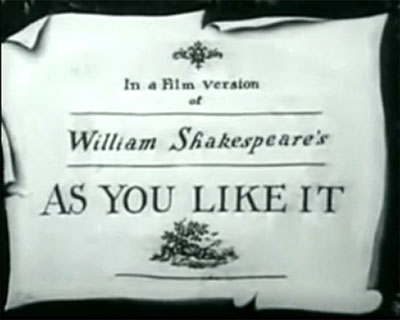
“As You Like It” is a film adaptation of William Shakespeare’s play of the same name, directed by Paul Czinner and released in 1936. The film stars Laurence Olivier as Orlando and Elisabeth Bergner as Rosalind.

The story follows Rosalind, the daughter of the banished Duke Senior, who falls in love with Orlando at a wrestling match. However, after Orlando is forced to flee the court of Duke Frederick, Rosalind is banished as well, and disguises herself as a man named Ganymede in order to travel with her cousin Celia to the Forest of Arden, where her father and other exiles live.

In the forest, Rosalind/Ganymede meets Orlando again and decides to test his love by pretending to be a woman and counseling him on how to win Rosalind’s heart. Meanwhile, a shepherd named Silvius is hopelessly in love with a shepherdess named Phebe, who in turn falls for Ganymede (Rosalind in disguise). And Touchstone, a court jester, falls in love with a simple country girl named Audrey.

As the various love stories unfold, Duke Frederick arrives in the forest in search of Rosalind and Orlando, but is converted to a more peaceful way of life by Duke Senior. Eventually, all of the characters gather for a happy ending, with Orlando and Rosalind marrying, Silvius and Phebe pairing off, Touchstone and Audrey tying the knot, and Duke Senior and Duke Frederick reconciling.

The film is notable for its faithful adaptation of Shakespeare’s original play, with much of the dialogue taken directly from the text. It was also praised for its performances, particularly Bergner’s portrayal of Rosalind/Ganymede.

Directors:
Paul Czinner

Writer:
J.M. Barrie, Robert Cullen, Carl Mayer

Stars:
Elisabeth Bergner, Laurence Olivier, Sophie Stewart

Rate this Movie

Made for Each Other (1939)

4/5 (1)

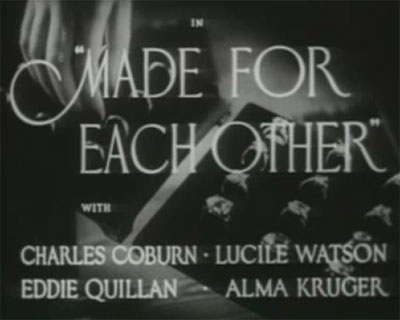
“Made for Each Other” is a romantic drama film directed by John Cromwell and released in 1939. The movie follows the story of newlyweds John and Jane Mason (James Stewart and Carole Lombard), who must navigate the challenges of their first year of marriage.

As the couple settles into their new life together, they face a series of obstacles that test their love and commitment to one another. John struggles with his demanding job and a difficult boss, while Jane must contend with her overbearing mother-in-law (Lucile Watson) and the challenges of being a new mother.

Throughout the film, John and Jane must learn to communicate and work together as a team in order to overcome their problems. With the support of their friends and family, they are able to weather the storms of their first year of marriage and emerge stronger and more committed than ever.

In the end, “Made for Each Other” is a touching and heartfelt film that celebrates the power of love and the importance of perseverance in the face of adversity. The chemistry between James Stewart and Carole Lombard is electric, and their performances bring the characters to life in a way that is both relatable and inspiring.

Directors:
John Cromwell

Writer:
Jo Swerling, Rose Franken, Frank Ryan

Stars:
Carole Lombard, James Stewart, Charles Coburn

Rate this Movie

Sin Takes a Holiday (1930)

3/5 (1)

“Sin Takes a Holiday” is a 1930 romantic comedy film directed by Paul L. Stein and starring Constance Bennett, Kenneth MacKenna, and Basil Rathbone. The movie is based on the play of the same name by Vincent Lawrence.

The film follows the story of Sylvia Brenner (Constance Bennett), a young and beautiful secretary who works for a wealthy businessman named Gaylord Stanton (Kenneth MacKenna). Sylvia is hopelessly in love with her boss, but he is too preoccupied with his work to notice her. In an attempt to get his attention, Sylvia quits her job and goes on a vacation to the French Riviera, where she poses as a wealthy socialite.

There, she meets the dashing and charming Philip Chester (Basil Rathbone), and the two quickly fall in love. Sylvia is torn between her feelings for Philip and her loyalty to Gaylord, who has followed her to France to try and win her back.

As Sylvia tries to navigate her complicated love life, she finds herself in increasingly awkward and humorous situations. Eventually, she must choose between the two men and decide where her heart truly lies.

The film was a critical and commercial success, and helped to cement Constance Bennett’s reputation as a leading lady of the silver screen. It is notable for its witty dialogue, stylish costumes, and charming performances, and remains a classic of the romantic comedy genre.

Directors:
Paul L. Stein

Writer:
Horace Jackson, Robert Milton, Dorothy Cairns

Stars:
Constance Bennett, Kenneth MacKenna, Basil Rathbone

Rate this Movie

Charade (1953)

5/5 (1)

“Charade” is a 1953 American crime drama film directed by Roy Kellino and starring James Mason, Pamela Mason, and Robert Flemyng.

The film tells the story of a wealthy businessman named Charles Calvin (James Mason), who is found dead in his office under suspicious circumstances. Calvin’s wife, Lucy (Pamela Mason), becomes the prime suspect in the murder, and is forced to go on the run from the police and the real killer.

As Lucy tries to clear her name and solve the mystery of her husband’s death, she becomes entangled with a suave and mysterious stranger named Peter Joshua (Robert Flemyng). Joshua offers to help Lucy uncover the truth behind her husband’s murder, but as the two become closer, Lucy begins to suspect that Joshua may not be who he appears to be.

As Lucy navigates the dangerous world of espionage and deception, she must also confront her own past and the secrets that she has been keeping from those closest to her. In the end, Lucy is able to uncover the truth behind her husband’s murder and find a measure of closure, but not without paying a heavy price.

“Charade” is a gripping and suspenseful thriller that explores the themes of trust, betrayal, and the consequences of past actions. It features strong performances from its lead actors, and is notable for its stylish and sophisticated visuals, as well as its memorable score by composer Dimitri Tiomkin. The film has since become a classic of the film noir genre and a beloved example of mid-century Hollywood cinema.

Directors:
Stanley Donen

Writer:
Peter StoneMarc Behm

Stars:
Cary Grant, Audrey Hepburn, Walter Matthau

Rate this Movie

Mr. Boggs Steps Out (1938)

3/5 (1)

“Mr. Boggs Steps Out” is a comedy film released in 1938 and directed by Gordon Wiles. The film stars Stuart Erwin, Una Merkel, and Shirley Deane.

The story follows Henry “Hank” Boggs (Stuart Erwin), a timid and unassuming accountant who has never taken a risk in his life. However, when he meets the vivacious young woman Kathleen Connors (Shirley Deane), he is inspired to step out of his comfort zone and embrace new experiences.

With Kathleen’s encouragement, Hank begins to take risks and try new things, including taking up boxing and even competing in a dance contest. Along the way, he also discovers his talent as a songwriter and collaborates with Kathleen on a successful musical production.

However, Hank’s newfound confidence is put to the test when he is falsely accused of embezzlement by his boss. With Kathleen’s help, Hank clears his name and proves his innocence, ultimately winning the respect of his colleagues and the heart of Kathleen.

In the end, Hank and Kathleen celebrate their success and look forward to a bright future together, with Hank no longer afraid to take risks and pursue his dreams.

Overall, “Mr. Boggs Steps Out” is a charming and uplifting comedy that encourages viewers to embrace new experiences and take risks in life. The film features strong performances by its leading actors and a heartwarming message of love and perseverance.

Directors:
Gordon Wiles

Writer:
Clarence Budington Kelland, Richard English

Stars:
Stuart Erwin, Helen Chandler, Toby Wing

Rate this Movie

Fit for a King (1937)

3/5 (1)

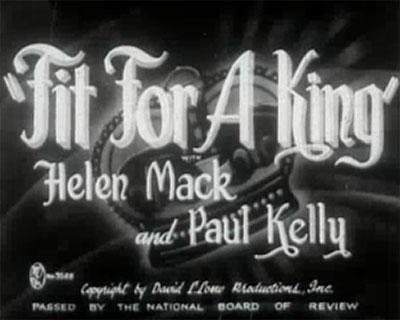
“Fit for a King” is a comedy film released in 1937 and directed by Edward Sedgwick. The film stars Joe E. Brown, Helen Mack, and Paul Kelly.

The story follows Eddie Williams (Joe E. Brown), a hapless and unemployed man who dreams of becoming a professional wrestler. Eddie’s luck changes when he meets Marjorie (Helen Mack), a wealthy heiress who takes a liking to him and offers to sponsor his wrestling career.

Eddie eagerly accepts the offer and begins training for his first match. However, he soon discovers that Marjorie’s father, a prominent businessman named J.P. Trayner (Paul Kelly), disapproves of their relationship and will do anything to break them apart.

Despite the obstacles in their way, Eddie and Marjorie continue to pursue their love for each other and Eddie’s wrestling career. Along the way, Eddie uses his wit and charm to outsmart Trayner and his associates, and ultimately wins their respect.

In the end, Eddie triumphs in his first wrestling match and wins the heart of Marjorie. The film ends with Eddie and Marjorie happily united and looking forward to a bright future together.

Overall, “Fit for a King” is a lighthearted comedy that showcases the comedic talent of Joe E. Brown. The film features witty dialogue, charming performances, and an entertaining story of love and perseverance.

Directors:
Edward Sedgwick

Writer:
Richard Flournoy

Stars:
Joe E. Brown, Helen Mack, Paul Kelly

Rate this Movie

My Dear Secretary (1949)

3/5 (1)

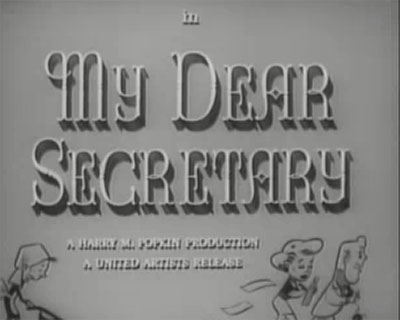
“My Dear Secretary” is a romantic comedy film released in 1949 and directed by Charles Martin. The film stars Laraine Day, Kirk Douglas, and Keenan Wynn.

The story follows successful novelist Owen Waterbury (Kirk Douglas), who hires aspiring writer Stephanie ‘Steve’ Gaylord (Laraine Day) as his secretary. Owen is a notorious ladies’ man and uses his charm to win over women, including his own secretary. Despite her initial reluctance, Steve soon falls for Owen’s charm and the two begin a romantic relationship.

However, their relationship becomes complicated when Owen’s ex-girlfriend (Irene Ryan) re-enters his life, and he struggles to choose between the two women. Meanwhile, Steve’s friend and fellow writer, Dick (Keenan Wynn), tries to convince her that Owen is only using her for his own personal gain.

As tensions rise, Owen must confront his true feelings for both women and decide who he wants to be with. In the end, he chooses Steve, and the two confess their love for each other.

Overall, “My Dear Secretary” is a lighthearted romantic comedy that explores the complexities of love and relationships. The film showcases the comedic talent of Kirk Douglas and Laraine Day and features witty dialogue and charming performances.

Directors:
Charles Martin

Writer:
Charles Martin

Stars:
Laraine Day, Kirk Douglas, Keenan Wynn

Rate this Movie

Father’s Little Dividend (1951)

4/5 (1)

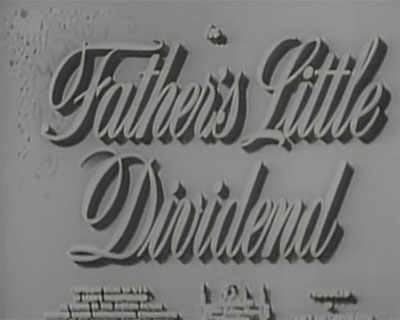
“Father’s Little Dividend” is a comedy film released in 1951 and directed by Vincente Minnelli. It is a sequel to the popular film “Father of the Bride” (1950) and stars Spencer Tracy, Joan Bennett, and Elizabeth Taylor.

The story follows Stanley Banks (Spencer Tracy), a father who is now a grandfather. His daughter Kay (Elizabeth Taylor) is pregnant and engaged to Buckley Dunstan (Don Taylor). Stanley is not thrilled about the prospect of becoming a grandfather and worries about the cost of raising a child. He is also concerned about losing his daughter to Buckley and the Dunstan family.

When Kay and Buckley return from their honeymoon, they bring a surprise announcement – they have bought a house and want to move in with the Banks family until they can afford to move into their own place. Stanley is hesitant at first, but ultimately agrees to let them stay.

As the days go by, Stanley becomes more and more frustrated with the constant noise and chaos of having a new baby in the house. He also clashes with Buckley’s father (Moroni Olsen) over their differing parenting styles. Eventually, Stanley has had enough and decides to move out of the house to escape the chaos.

However, after a heart-to-heart with his wife Ellie (Joan Bennett), Stanley realizes how much he loves his family and decides to return home. The film ends with Stanley and Ellie watching their granddaughter take her first steps, surrounded by their family.

Overall, “Father’s Little Dividend” is a heartwarming comedy that explores the challenges of family life and the joys of parenthood and grandparenthood.

Directors:
Vincente Minnelli

Writer:
Albert Hackett, Frances Goodrich, Edward Streeter

Stars:
Spencer Tracy, Joan Bennett, Elizabeth Taylor

Rate this Movie

My Love for Yours (1939)

3/5 (1)

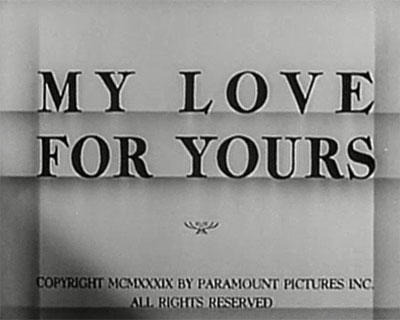
“My Love for Yours” is a 1939 American romantic drama film directed by W.S. Van Dyke and starring Madeleine Carroll and James Stewart. The film is a remake of the 1931 French film “Le Chemin du paradis.”

The story follows the romantic relationship between wealthy New York socialite Carol Fisher (Carroll) and struggling artist Steve Leyton (Stewart). Despite their vastly different backgrounds, the two fall in love and get married.

However, their happiness is short-lived as Steve’s artistic career begins to take off, and he becomes increasingly absorbed in his work. Carol, feeling neglected and frustrated, turns to her old flame, Phil Mayberry (Ralph Morgan), for comfort.

Meanwhile, Steve becomes involved with his beautiful model, Helene Gault (Vera Lewis), causing further strain on his relationship with Carol. Eventually, Carol realizes the depth of her love for Steve and is willing to forgive him, but Steve’s relationship with Helene leads to tragedy.

The film explores themes of love, jealousy, and sacrifice, and features strong performances from Carroll and Stewart. Despite its melodramatic plot, “My Love for Yours” is regarded as a well-crafted and emotionally powerful film.

Directors:
W.S. Van Dyke

Stars:
Madeleine Carroll, James Stewart

Rate this Movie

Lady Behave (1937)

3/5 (1)

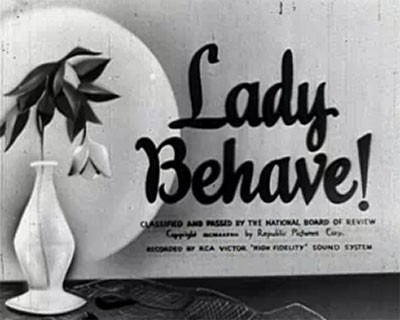
“Lady Behave” is a 1937 romantic comedy film directed by Lloyd Corrigan and starring Sally Eilers, Neil Hamilton, and Joseph Calleia. The story revolves around a young woman named Susan Lane (Sally Eilers), who is tired of being an obedient daughter and decides to break free from her controlling father’s grip.

Susan decides to move out and live on her own in a cheap hotel in New York City. There, she meets a struggling artist named Tony (Neil Hamilton), who is also her neighbor in the hotel. The two quickly develop feelings for each other, but Susan’s father disapproves of Tony and tries to intervene.

In the meantime, Susan’s father hires a private detective named Sheehan (Joseph Calleia) to spy on his daughter and bring her back home. However, Sheehan also develops feelings for Susan and starts to sympathize with her situation.

As the story progresses, Tony’s art career takes off, and he becomes successful, which impresses Susan’s father. In the end, Susan and Tony reconcile with her father’s approval, and Sheehan finds love with another woman.

“Lady Behave” is a lighthearted and entertaining film that showcases the themes of independence, romance, and family values in a comedic way.

Directors:
Lloyd Corrigan

Writer:
Joseph Krumgold, Olive Cooper

Stars:
Sally Eilers, Neil Hamilton, Joseph Schildkraut

Rate this Movie

The Private Life of Don Juan (1934)

4/5 (1)

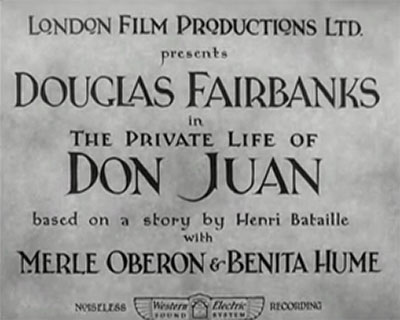
“The Private Life of Don Juan” is a 1934 film directed by Alexander Korda and starring Douglas Fairbanks Sr. as the legendary lover Don Juan de Marana. The film follows Don Juan, who has grown old and tired of his playboy lifestyle, as he returns to his hometown in Spain to retire.

However, Don Juan’s reputation precedes him and he is immediately recognized by the locals. He tries to keep a low profile, but his old flame Antonia (Merle Oberon) discovers his presence and tries to rekindle their romance. Don Juan resists at first, but eventually gives in and the two begin an affair.

Meanwhile, Don Juan’s former protégé, Count de Polan (Benita Hume), who has always been jealous of Don Juan’s fame and success, plots to destroy him. Count de Polan hires a group of assassins to kill Don Juan, but the plan fails and Don Juan is able to escape.

Don Juan and Antonia decide to leave Spain together, but as they are about to depart, Count de Polan reveals their plans to the authorities and Don Juan is arrested. In the end, Don Juan is released and allowed to leave Spain, but he realizes that his days of living the life of a womanizer are over and decides to retire for good.

“The Private Life of Don Juan” is a classic romantic adventure film that showcases Douglas Fairbanks Sr.’s charm and charisma as the legendary lover. The film was praised for its beautiful cinematography and costumes, as well as its witty script and engaging storyline.

Directors:
Alexander Korda

Writer:
Henry Bataille, Frederick Lonsdale, Lajos Biró

Stars:
Douglas Fairbanks, Merle Oberon, Bruce Winston

Rate this Movie

The Taming of the Shrew (1929)

3/5 (1)

“The Taming of the Shrew” is a 1929 American pre-code romantic comedy film directed by Sam Taylor and starring Mary Pickford and Douglas Fairbanks. The movie is an adaptation of William Shakespeare’s play of the same name.

The film follows the story of a wealthy merchant named Baptista who has two daughters, Bianca and Katherine. While Bianca is sweet and popular, Katherine is known for her sharp tongue and stubbornness, earning her the nickname “the shrew.” Baptista has declared that Bianca cannot marry until Katherine is wed, and so several suitors attempt to win her over, to no avail.

Meanwhile, Petruchio, a young man from Verona, arrives in town looking for a wealthy wife. Hearing about Katherine’s wealth, he sets his sights on her and sets out to tame her. He engages in a battle of wills with Katherine, employing various strategies to break her spirit and make her more submissive.

Despite initial resistance, Katherine eventually begins to soften towards Petruchio, and the two eventually marry. At their wedding, Katherine delivers a speech about the duties of a wife, revealing that she has truly been tamed.

The film was praised for its performances by Pickford and Fairbanks, as well as for its lively and colorful set designs. However, it has also been criticized for its portrayal of Katherine as a shrew who needs to be “tamed” by a man. Nonetheless, “The Taming of the Shrew” remains a popular and influential film adaptation of Shakespeare’s play.

Directors:
Sam Taylor

Writer:
William Shakespeare, Sam Taylor

Stars:
Mary Pickford, Douglas Fairbanks, Edwin Maxwell

Rate this Movie

Pygmalion (1938)

4/5 (1)

“Pygmalion” is a 1938 film adaptation of George Bernard Shaw’s play of the same name. The movie was directed by Anthony Asquith and Leslie Howard and stars Leslie Howard as Professor Henry Higgins and Wendy Hiller as Eliza Doolittle.

The film follows the story of Eliza Doolittle, a Cockney flower girl who is taken under the wing of Professor Henry Higgins, a phonetics expert. Higgins makes a bet with his friend Colonel Pickering that he can transform Eliza’s speech and manners and pass her off as a refined lady in high society.

Over the course of several months, Higgins and Pickering work tirelessly with Eliza, teaching her proper diction and behavior. Eliza’s transformation is successful, and she is able to pass as a member of high society at a ball. However, Eliza is also frustrated with Higgins’ rude and condescending behavior towards her, and she decides to leave him and strike out on her own.

In the end, Eliza returns to Higgins, but on her own terms. She has gained a sense of self-confidence and independence, and she no longer needs Higgins’ help. The movie ends with Eliza telling Higgins that she is leaving to marry Freddie, a young man who has fallen in love with her.

Overall, “Pygmalion” is a witty and charming movie that explores themes of class, language, and independence. It has become a classic of British cinema and a timeless story of self-discovery and transformation.

Directors:
Anthony Asquith, Leslie Howard

Writer:
George Bernard Shaw, W.P. Lipscomb, Cecil Lewis

Stars:
Leslie Howard, Wendy Hiller, Wilfrid Lawson

Rate this Movie

Indiscreet (1931)

3/5 (1)

“Indiscreet” is a romantic comedy film released in 1931, directed by Leo McCarey and starring Gloria Swanson and Ben Lyon. The film tells the story of a famous actress named Geraldine “Gerry” Trent (Swanson) who falls in love with a charming, but married, businessman named Tony Blake (Lyon).

Gerry and Tony meet on a train and immediately hit it off. Despite being aware that Tony is married, Gerry cannot resist his charms and the two begin an affair. However, their relationship becomes complicated when Tony’s wife finds out and threatens to sue for divorce, which would ruin his career.

The film was well-received by critics and audiences, with many praising Swanson’s performance as the witty and glamorous Gerry. It was also notable for its sophisticated dialogue and depiction of a more liberated view of relationships than was typical for the time period.

“Indiscreet” was remade in 1958, with Ingrid Bergman and Cary Grant in the lead roles, and directed by Stanley Donen.

Directors:
Leo McCarey

Writer:
Buddy G. DeSylva, Lew Brown, Ray Henderson

Stars:
Gloria Swanson, Ben Lyon, Monroe Owsley

Rate this Movie