admin

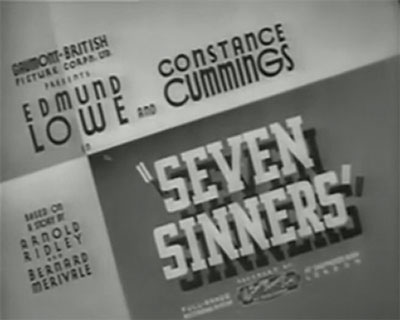
Seven Sinners (1936)

4/5 (1)

In this film, a quick-witted American private investigator embarks on a journey overseas with his romantic interest and trusted sidekick. While on their travels, they stumble upon a lifeless body, but before they can take any action, it vanishes into thin air. Determined to uncover the truth, the P.I. sets out to unravel a complex and malicious criminal organization. Along the way, he must use his intelligence and resourcefulness to outsmart the dangerous individuals behind the sinister plot. The film is filled with suspense, action, and unexpected twists and turns, keeping the audience on the edge of their seats until the very end.

Directors:
Albert de Courville

Writer:
Sidney Gilliat, Frank Launder, Austin Melford

Stars:
Edmund Lowe, Constance Cummings, Thomy Bourdelle

Rate this Movie

The Stranger (1946)

4/5 (1)

“The Stranger” is a 1946 film directed by Orson Welles. The movie follows the story of Franz Kindler, a notorious Nazi war criminal who has been in hiding in a small town in Connecticut under a false identity.

The film begins with the arrival of an investigator named Wilson who is looking for Kindler, although he does not know what he looks like. Wilson is aided in his search by Mary Longstreet, the daughter of a Supreme Court justice who is living in the town. Mary and Wilson fall in love while they try to uncover Kindler’s true identity.

As the investigation progresses, it becomes clear that Kindler is aware of Wilson’s presence and is trying to eliminate him. Wilson eventually discovers Kindler’s true identity and confronts him in a clock tower, where the two engage in a dramatic struggle that results in Kindler’s death.

The film’s themes revolve around guilt, justice, and the consequences of war. It portrays Kindler as a monstrous figure who is haunted by his past and unable to escape the consequences of his actions. The film is notable for its visual style and complex characters, and has been praised as one of Welles’ most underrated films.

Directors:

Writer:

Stars:

Rate this Movie

Rebecca (1940)

4.75/5 (4)

“Rebecca” is a 1940 psychological thriller directed by Alfred Hitchcock, based on the novel of the same name by Daphne du Maurier. The film tells the story of a young woman who marries a wealthy widower, only to find herself living in the shadow of his first wife, Rebecca, who died under mysterious circumstances.

The film begins with the unnamed narrator, a shy and inexperienced young woman, traveling to Monte Carlo with her employer, Mrs. Van Hopper. While there, she meets Maxim de Winter, a wealthy widower who is still haunted by the death of his first wife, Rebecca. The two quickly fall in love and get married, and the narrator becomes the new mistress of Maxim’s grand estate, Manderley.

However, the narrator soon finds herself struggling to fit in at Manderley, where she is constantly reminded of Rebecca’s presence. The housekeeper, Mrs. Danvers, is particularly hostile towards the new Mrs. de Winter, and seems to go out of her way to make her feel unwelcome. The narrator becomes obsessed with Rebecca and begins to investigate her death, hoping to uncover the truth behind the mystery.

As the story unfolds, the narrator discovers that Maxim’s marriage to Rebecca was not as perfect as it seemed, and that Rebecca had many secrets and affairs. The narrator also begins to suspect that Maxim may have had a hand in Rebecca’s death.

In the climactic scene, the narrator confronts Maxim, who reveals that he did, in fact, kill Rebecca. He explains that Rebecca was cruel and manipulative, and that she was planning to ruin his life. Maxim says that he shot her in a fit of rage and desperation, and that he has been haunted by her memory ever since.

In the end, the truth about Rebecca’s death is revealed, and the narrator and Maxim are able to move on with their lives. “Rebecca” is a masterful psychological thriller, with outstanding performances by Joan Fontaine and Laurence Olivier, and is considered one of Alfred Hitchcock’s greatest films.

Directors:
Alfred Hitchcock

Writer:
Daphne Du Maurier, Robert E. Sherwood, Joan Harrison

Stars:
Laurence Olivier, Joan Fontaine, George Sanders

Rate this Movie

The Monster Walks (1932)

3/5 (1)

“The Monster Walks” is a 1932 black-and-white horror film directed by Frank R. Strayer. The plot revolves around a wealthy but ill-tempered man named Robert Earlton who dies suddenly, leaving behind a sizable estate that includes a creepy mansion and a fortune in diamonds. His will stipulates that the diamonds are to be divided equally among his surviving relatives.

The film opens with Robert’s daughter Ruth, her fiancé Dr. Ted Clayton, and a group of other relatives arriving at the mansion for the reading of the will. They are met by the housekeeper, who warns them that strange things have been happening in the house and that there may be a monster on the loose.

Soon after the reading of the will, strange things start to happen. Doors mysteriously open and close, strange noises are heard, and someone or something seems to be lurking in the shadows. The tension escalates when the family’s butler, Hanns, is found dead, apparently killed by the monster.

As the family members try to figure out who or what is responsible for the murders, they discover that there are hidden passages and secret rooms in the mansion, and that someone is determined to get their hands on the diamonds at any cost.

As the bodies pile up, the remaining family members realize that they must work together to solve the mystery and stop the killer before it’s too late. In the end, the true identity of the monster is revealed, and justice is served.

Overall, “The Monster Walks” is a classic horror film with all the trappings of the genre – a creepy old mansion, hidden passages, secret rooms, and a monster on the loose. It’s a fun and entertaining movie that will keep you on the edge of your seat until the very end.

Directors:
Frank R. Strayer

Writer:
Robert Ellis

Stars:
Mischa Auer, Martha Mattox, Rex Lease

Rate this Movie

Invisible Ghost (1941)

3.75/5 (4)

“Invisible Ghost” is a 1941 American horror film directed by Joseph H. Lewis. The movie follows the story of a wealthy man named Charles Kessler (played by Bela Lugosi) who is haunted by the memory of his wife, who disappeared several years earlier.

Kessler’s wife, who was presumed dead, suddenly reappears in his life, but only he can see her. Whenever Kessler sees her, he becomes possessed and is driven to commit murder. Despite his attempts to control his actions, Kessler cannot resist the influence of his invisible wife, and the body count begins to rise.

As the murders continue, Kessler’s daughter Virginia (played by Polly Ann Young) and her fiancé Ralph (played by John McGuire) become suspicious of Kessler’s behavior. They begin to investigate the strange occurrences in the house and eventually discover the truth about Kessler’s invisible wife.

Overall, “Invisible Ghost” is a classic horror movie that blends elements of suspense, mystery, and the supernatural. The film is notable for Bela Lugosi’s performance as Charles Kessler, a man tormented by his own guilt and haunted by his past. The movie is also known for its eerie atmosphere and spooky soundtrack, which add to the overall sense of dread and unease.

Directors:
Joseph H. Lewis

Writer:
Helen Martin, Al Martin

Stars:
Bela Lugosi, Polly Ann Young, John McGuire

Rate this Movie

The Ghost Walks (1934)

4/5 (3)

“The Ghost Walks” is a 1934 American film directed by Frank R. Strayer. The movie follows the story of a group of strangers who are stranded in a creepy old house during a thunderstorm. The house is said to be haunted by the ghost of a murdered man, and the guests soon begin to experience strange and unexplainable events.

The group includes a playwright named John (played by John Miljan), his leading lady Marcia (played by June Collyer), a producer named Milton (played by Richard Carle), and several other characters. As they try to figure out who among them is behind the strange occurrences, they find themselves locked in the house with no way to escape.

As the night wears on, tensions rise, and suspicions mount. The group begins to suspect each other of being the murderer, but as the bodies start to pile up, they realize that the killer may be one of their own. With the help of a detective who arrives on the scene, they must solve the mystery before it’s too late.

Overall, “The Ghost Walks” is a classic mystery movie with elements of horror and suspense. It is notable for its atmospheric setting and eerie tone, which create a sense of unease throughout the film. The movie features a talented cast of actors who bring their characters to life with humor and wit, making for an entertaining and engaging viewing experience.

Directors:
Frank R. Strayer

Writer:
Charles Belden

Stars:
John Miljan, June Collyer, Richard Carle

Rate this Movie

Mysterious Mr. Wong (1934)

3/5 (1)

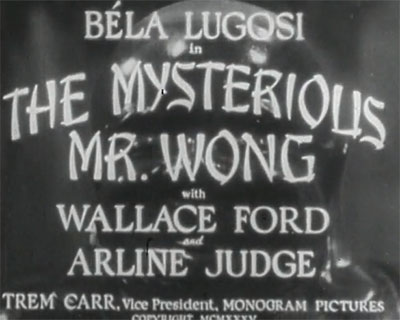
“Mysterious Mr. Wong” is a 1934 American film directed by William Nigh. The movie follows the story of a wealthy antique dealer, Brandon Edwards (played by Holmes Herbert), who is murdered by an unknown assailant. His daughter, Louise (played by Dorothy Revier), enlists the help of private investigator James Lee Wong (played by Boris Karloff) to solve the crime.

Wong soon discovers that the murder is linked to a valuable Chinese artifact, the Ming Jade Buddha. The artifact has been stolen by a group of criminals led by the mysterious Mr. Wong (played by E. Alyn Warren). Wong and Louise must race against time to recover the Buddha and bring Mr. Wong to justice before he can strike again.

As Wong investigates the case, he uncovers a web of deceit and treachery, including a secret society of Chinese criminals and a love triangle involving Louise’s fiancé and her best friend. With the help of his intelligence and expertise, Wong manages to solve the case and bring the criminals to justice.

Overall, “Mysterious Mr. Wong” is a classic mystery movie that combines elements of crime, drama, and suspense. It is notable for Boris Karloff’s performance as James Lee Wong, a character that he would reprise in several later films.

Directors:
William Nigh

Writer:
Harry Stephen Keeler, Lew Levenson, Nina Howatt

Stars:
Bela Lugosi, Wallace Ford, Arline Judge

Rate this Movie

Werewolf in a Girls’ Dormitory (1962)

3/5 (1)

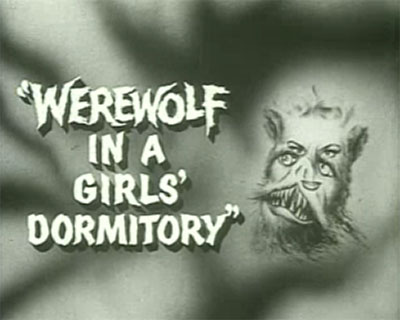
“Werewolf in a Girls’ Dormitory” is a horror movie directed by Paolo Heusch and starring Barbara Lass, Carl Schell, and Curt Lowens. The movie was released in 1962 and is also known as “Lycanthropus” and “Monster Among the Girls.”

The story is set in a remote girls’ boarding school in the Italian countryside, which is plagued by a series of brutal murders. The local police are baffled by the murders, and tensions rise when a new teacher, Dr. Julian Olcott (Carl Schell), arrives at the school. Dr. Olcott has a mysterious past, and some of the students suspect that he may be responsible for the killings.

As the murders continue, the students become increasingly frightened and paranoid. They suspect one another and even start to turn on Dr. Olcott, who they believe is hiding something. But as the full moon approaches, it becomes clear that there is a real werewolf on the loose, and the students must band together to survive the night.

In the end, the identity of the werewolf is revealed, and the surviving characters are left to pick up the pieces of their shattered lives. “Werewolf in a Girls’ Dormitory” is a classic example of 1960s horror, with Gothic atmosphere, suspenseful music, and over-the-top acting. It has gained a cult following over the years and is a must-see for fans of classic horror cinema.

Directors:
Paolo Heusch

Writer:
Ernesto Gastaldi

Stars:
Barbara Lass, Carl Schell, Curt Lowens

Rate this Movie

The Human Monster (1939)

3/5 (1)

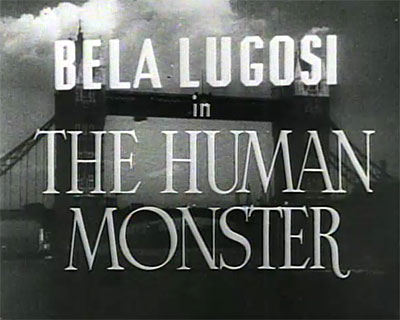
“The Dark Eyes of London” (1939), also known as “The Human Monster,” is a 1939 British thriller film directed by Walter Summers, based on the novel of the same name by Edgar Wallace. The film stars Bela Lugosi as a mysterious figure who preys on the vulnerable and murders them for their insurance policies. Detective Inspector Larry Holt (played by Hugh Williams) investigates the string of murders and uncovers a criminal organization behind them. Along the way, Holt becomes romantically involved with one of the potential victims, Anne (played by Greta Gynt), which complicates matters as he tries to solve the case.

The film is known for its dark and atmospheric cinematography, as well as Lugosi’s chilling performance as the villainous Dr. Orloff. Lugosi’s character is a master of disguise who poses as a wealthy philanthropist, using his position to lure his victims in and then murder them. As the investigation progresses, Holt and his team begin to unravel the tangled web of deception and criminal activity, leading to a dramatic confrontation with the killer in the film’s climax.

Overall, “The Dark Eyes of London” is a classic example of British horror cinema, with its eerie atmosphere, suspenseful plot, and memorable performances by its cast.

Directors:
Walter Summers

Writer:
Edgar Wallace, Patrick Kirwan, Walter Summers

Stars:
Bela Lugosi, Hugh Williams, Greta Gynt

Rate this Movie

Man with Two Lives (1942)

3/5 (1)

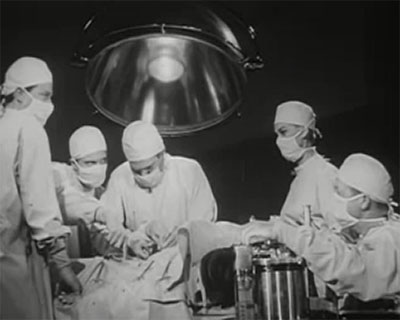
“Man with Two Lives” is a 1942 horror film directed by Phil Rosen. The movie follows Dr. John Meredith, a physician who is conducting experiments on the human brain to try and cure a wealthy patient’s paralysis. However, when the patient dies during the experiment, Meredith decides to transplant his brain into the body of a deceased man to keep the experiment going.

The procedure is successful, but the new body’s previous owner was a notorious criminal, and Meredith soon finds himself plagued by the man’s violent impulses and memories. As he struggles to control his new body and mind, Meredith is forced to confront the consequences of his unethical experiment.

As Meredith’s behavior becomes increasingly erratic, his wife and friend begin to suspect that something is wrong. Meanwhile, the criminal’s former accomplices seek out the new body in order to exact revenge.

“Man with Two Lives” is a classic horror film that explores the theme of identity and the consequences of playing god. The movie features strong performances by Edward Norris as Dr. Meredith and Marlo Dwyer as his wife, and is known for its atmospheric cinematography and suspenseful plot.

Directors:
Phil Rosen

Writer:
Joseph Hoffman

Stars:
Edward Norris, Marlo Dwyer, Eleanor Lawson

Rate this Movie

Hands Of A Stranger (1962)

3/5 (1)

“Hands of a Stranger” is a 1962 horror-thriller film directed by Newt Arnold. The movie follows a concert pianist named Vernon Paris who loses his hands in a car accident. After being fitted with prosthetic hands, Vernon begins to experience strange sensations and realizes that the hands belonged to a murderer.

As Vernon struggles to come to terms with his new hands and their sinister past, he becomes increasingly paranoid and begins to suspect those around him. His girlfriend, Francie, and his doctor, Dr. Benbow, try to help him through his trauma, but Vernon’s obsession with the hands and the crimes they committed leads him down a path of madness.

As Vernon becomes more unstable, he is eventually confronted by the real killer, who wants his hands back. In a dramatic finale, Vernon must fight for his life and overcome the evil influence of the hands.

“Hands of a Stranger” is a tense and unsettling film, featuring strong performances by Paul Lukather as Vernon Paris and Joan Harvey as Francie. The movie’s exploration of the psychological effects of trauma and the idea of being haunted by one’s own body parts has made it a classic of the horror genre.

Directors:
Newt Arnold

Writer:
Newt Arnold, Maurice Renard

Stars:
Paul Lukather, Joan Harvey, James Noah

Rate this Movie

The Demon Barber of Fleet Street (1936)

3/5 (1)

“The Demon Barber of Fleet Street” is a 1936 British crime-horror film directed by George King. The film is based on the story of Sweeney Todd, a fictional character who murders his customers and then sends their bodies to be turned into meat pies by his accomplice, Mrs. Lovett.

The film follows Todd, a barber who has returned to London after being wrongly imprisoned in Australia for 15 years. Todd sets up his barber shop above Mrs. Lovett’s pie shop and begins luring his customers into a trap, killing them with a razor and then disposing of their bodies. Mrs. Lovett then uses the corpses to make her meat pies, which quickly become popular in the neighborhood.

Todd’s crimes are eventually discovered by a young sailor named Mark Ingerstreet, who has fallen in love with Todd’s daughter, Johanna. Mark sets out to expose Todd and put an end to his reign of terror, but Todd has other plans for Mark and Johanna.

“The Demon Barber of Fleet Street” is a dark and suspenseful film, featuring strong performances by Tod Slaughter as Sweeney Todd and Stella Rho as Mrs. Lovett. The film’s blend of horror and crime elements has made it a cult classic and a notable adaptation of the Sweeney Todd legend.

Directors:
George King

Writer:
Frederick Hayward, H.F. Maltby, George Dibdin-Pitt

Stars:
Tod Slaughter, Stella Rho, John Singer

Rate this Movie

The City of the Dead (Horror Hotel) (1960)

4/5 (1)

“The City of the Dead,” also known as “Horror Hotel,” is a 1960 horror film directed by John Llewellyn Moxey. The movie follows a young student named Nan Barlow, who travels to the small town of Whitewood, Massachusetts to research witchcraft for her thesis.

Upon arriving in Whitewood, Nan finds the town to be unsettling and unwelcoming. She checks into the Raven’s Inn, run by the mysterious Mrs. Newless, and begins her research with the help of the local history professor, Alan Driscoll. However, Nan soon discovers that the town has a dark past involving witchcraft and human sacrifice, and that the residents are all part of a coven of witches who worship the devil.

As Nan delves deeper into the town’s history, she becomes the target of the witches’ sinister plot to sacrifice her in a ritual to bring back their deceased leader. With the help of Alan and a local pastor, Richard Cutts, Nan must fight for her life and escape the clutches of the coven before it’s too late.

“The City of the Dead” is a classic horror film known for its atmospheric cinematography, eerie score, and effective use of suspense and terror. The movie is a chilling exploration of witchcraft and the occult, and features a standout performance by Christopher Lee as the sinister Professor Driscoll.

Directors:
John Llewellyn Moxey

Writer:
Milton Subotsky, George Baxt

Stars:
Patricia Jessel, Dennis Lotis, Christopher Lee

Rate this Movie

House on Haunted Hill (1959)

4.75/5 (4)

“House on Haunted Hill” is a horror film directed by William Castle in 1959. The film stars Vincent Price as eccentric millionaire Frederick Loren, who invites five guests to spend the night in a supposedly haunted house in exchange for $10,000 each.

The guests, including a test pilot, a newspaper columnist, and the house’s owner, arrive at the house and are met by Loren and his wife Annabelle. As the night progresses, strange and terrifying events occur, including a severed head that appears out of nowhere, a ghostly apparition, and the discovery of a pit filled with acid.

As tensions rise, it becomes clear that one of the guests is trying to scare the others and possibly even murder them. In the end, the identity of the villain is revealed, and a dramatic confrontation takes place, resulting in a thrilling climax.

“House on Haunted Hill” is known for its use of gimmicks, such as “Emergo,” a skeleton that would fly over the audience during certain scenes in theaters. The film has since become a cult classic and is often cited as an influential horror film of its time.

Directors:
William Castle

Writer:
Robb White

Stars:
Vincent PriceCarol OhmartRichard Long

Rate this Movie

Der Golem (1920)

4/5 (1)

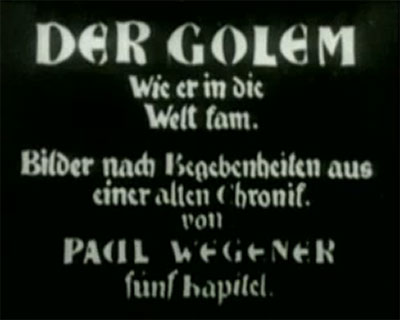
“Der Golem” is a silent horror film directed by Paul Wegener and Carl Boese in 1920. The film is based on Jewish folklore and follows the story of a Rabbi who creates a golem, a giant clay creature, to protect the Jewish people in the 16th century.

The golem, brought to life through a mystical ritual, proves to be a powerful protector for the Jewish community against the oppression of the city’s ruling class. However, as the golem becomes more and more uncontrollable, it starts to pose a threat to the people it was created to protect.

In the end, the Rabbi is forced to destroy the golem and bury it in the attic of the synagogue. However, the film ends with the suggestion that the golem may still be alive, and could be reawakened if needed.

“Der Golem” is considered a classic of German expressionist cinema, known for its innovative use of special effects and its haunting visual style. The film has been highly influential, inspiring numerous other horror films and has become a cult favorite among horror movie fans.

Directors:
Paul Wegener, Carl Boese

Writer:
Paul Wegener, Henrik Galeen

Stars:
Paul Wegener, Albert Steinrück, Ernst Deutsch

Rate this Movie