Horror

The Curse of the Cat People (1944)

3/5 (1)

“The Curse of the Cat People” is a 1944 American horror film directed by Gunther von Fritsch and Robert Wise. It is a sequel to the 1942 film “Cat People” and is known for its unusual combination of horror and fantasy elements.

The film follows the story of Amy Reed, a young girl who is the daughter of Alice and Oliver Reed, the couple who were at the center of the events in the first film. Amy is a dreamy and imaginative child who has difficulty making friends with other children her age. She becomes fascinated with a photograph of her father’s first wife, Irena, who was believed to be a cat person and died shortly after the events of the first film.

Amy begins to have vivid and increasingly realistic daydreams in which she imagines herself playing with Irena, who appears to her as a friendly and protective imaginary friend. Amy’s parents become concerned about her behavior and seek the help of Julia Farren, a local psychologist, who tries to convince Amy that her imaginary friend is not real.

Meanwhile, Amy befriends an elderly neighbor named Mrs. Farren, who tells her stories of fairies and other magical creatures. Amy’s daydreams become more frequent and intense, and she begins to believe that Irena is trying to communicate with her from beyond the grave.

The film builds to a dramatic conclusion in which Amy’s parents must confront their own fears and accept the reality of the supernatural world that their daughter has discovered.

Overall, “The Curse of the Cat People” is a haunting and atmospheric film that explores themes of childhood imagination, the supernatural, and the power of belief.

Directors:
Gunther von Fritsch, Robert Wise

Writer:
DeWitt Bodeen

Stars:
Simone Simon, Kent Smith, Jane Randolph

Rate this Movie

The Phantom of the Opera (1925)

4/5 (1)

“The Phantom of the Opera” is a silent horror film from 1925, based on the novel by Gaston Leroux. The movie was directed by Rupert Julian and starred Lon Chaney as the Phantom.

The film is set in the Paris Opera House, which is said to be haunted by a mysterious figure known as the Phantom. The Phantom, who lives in the catacombs beneath the opera house, becomes obsessed with Christine Daaé (played by Mary Philbin), a young soprano who is just beginning to make a name for herself in the opera world.

The Phantom begins to coach Christine in secret, using his influence to ensure that she gets the lead roles in the productions. He also begins to send her letters and gifts, leading her to believe that they are from an angel sent by her deceased father.

However, when Christine falls in love with Raoul (played by Norman Kerry), a handsome young nobleman, the Phantom becomes jealous and decides to take revenge. He kidnaps Christine and takes her to his lair in the catacombs, where he reveals his face to her for the first time, terrifying her with his grotesque appearance.

Meanwhile, Raoul, with the help of a group of police officers, sets out to rescue Christine and capture the Phantom. In a dramatic finale, the Phantom is pursued through the opera house, leading to a confrontation with Raoul and the police on the roof. The Phantom ultimately meets a tragic end, falling to his death from the roof of the opera house.

“The Phantom of the Opera” is considered a classic of the horror genre and is particularly notable for Lon Chaney’s incredible performance as the Phantom, which required him to wear a painful and elaborate makeup and prosthetic devices.

Directors:
Rupert Julian, Lon Chaney, Ernst Laemmle

Writer:
Gaston Leroux, Walter Anthony, Elliott J. Clawson

Stars:
Lon Chaney, Mary Philbin, Norman Kerry

Rate this Movie

The Haunted House (1921)

4/5 (1)

“The Haunted House” is a silent short film released in 1921 and directed by Buster Keaton and Edward F. Cline. The film follows Buster Keaton’s character, a bank clerk who finds himself stuck in a haunted house after being chased by a cop for a misunderstanding.

As Buster tries to find a way out, he encounters ghosts, hidden passages, and secret rooms. He meets a group of thieves who are trying to steal a hidden treasure from the house. Buster, initially mistaken as one of the thieves, decides to help them in exchange for their help to escape from the house.

The group faces a series of mishaps and comical situations while trying to steal the treasure, including trying to escape from the house while being chased by a cop. In the end, the group discovers that the “ghosts” were actually part of an elaborate scheme to scare away anyone who might try to steal the treasure.

Buster and the thieves manage to escape with the treasure, but they are chased by the cop again. Buster uses his wit to outsmart the cop and keep the treasure for himself.

“The Haunted House” is known for its physical comedy, visual gags, and inventive stunts, which were a hallmark of Buster Keaton’s films. It’s considered one of his early classics and helped establish him as a major star in the silent film era.

Directors:
Edward F. Cline, Buster Keaton

Writer:
Edward F. Cline, Buster Keaton

Stars:
Buster Keaton, Virginia Fox, Joe Roberts

Rate this Movie

Nightmare Castle (1965)

3/5 (1)

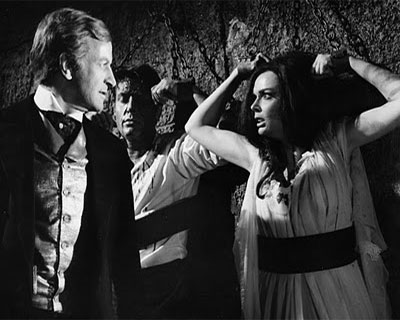
“Nightmare Castle” is a 1965 horror movie directed by Mario Caiano. The movie takes place in an isolated castle in the 19th century, where a wealthy scientist named Stephen Arrowsmith (Paul Muller) lives with his wife Muriel (Barbara Steele) and his mistress Solange (also played by Steele).

The story begins when Stephen discovers that Muriel has been unfaithful to him with his own doctor, and he decides to torture and kill both of them. Before dying, Muriel curses Stephen and Solange, and their souls are doomed to wander the castle forever.

Years later, a young couple, Jenny (Helga Liné) and her husband, arrive at the castle. Jenny has been invited by Stephen to stay there and help with his research. But as soon as they arrive, strange things start to happen. Jenny sees apparitions of Muriel and Solange, and Stephen’s behavior becomes increasingly erratic.

Jenny eventually discovers the truth about what happened to Muriel and Solange and finds herself in danger as she becomes the target of Stephen’s twisted experiments.

In the end, the curse is broken, and justice is served as Stephen meets his demise.

Directors:
Mario Caiano

Writer:
Mario Caiano, Fabio De Agostini

Stars:
Barbara Steele, Paul Muller, Helga Liné

Rate this Movie

Night of the Living Dead (1968)

4/5 (1)

“Night of the Living Dead” is a classic horror film released in 1968, directed by George A. Romero. The movie follows a group of people who are trapped in a rural Pennsylvania farmhouse during a zombie apocalypse.

The movie opens with siblings Barbara (Judith O’Dea) and Johnny (Russell Streiner) visiting their father’s grave in a cemetery. They are attacked by a strange man who appears to be a zombie, and Johnny is killed while trying to fend him off. Barbara manages to escape and takes refuge in a nearby farmhouse.

There, she meets Ben (Duane Jones), a resourceful and pragmatic man who has also taken shelter in the house. They are soon joined by other survivors, including a young couple named Tom (Keith Wayne) and Judy (Judith Ridley), and a family consisting of Harry (Karl Hardman), his wife Helen (Marilyn Eastman), and their daughter Karen (Kyra Schon).

As the night progresses, the group must fend off increasing numbers of zombies who are trying to break into the house. Tensions rise between the survivors as they argue about the best course of action, and they are further tested when Karen, who was bitten by a zombie earlier in the day, reanimates and attacks her mother.

In the end, Ben is the sole survivor, but he is shot and killed by a posse of zombie hunters who mistake him for one of the undead.

“Night of the Living Dead” is notable for its groundbreaking use of horror and gore, as well as its commentary on race relations in America, with Ben being portrayed as a strong and capable African American man at a time when such portrayals were rare in mainstream cinema.

Directors:
George A. Romero

Writer:
John A. Russo, George A. Romero

Stars:
Duane Jones, Judith O’Dea, Karl Hardman

Rate this Movie

Nosferatu (1922)

4/5 (1)

“Nosferatu” is a silent horror film directed by German filmmaker F.W. Murnau and released in 1922. The film is an adaptation of Bram Stoker’s novel “Dracula,” but due to copyright issues, the names and certain details were changed.

The plot revolves around a young real estate agent named Hutter, who is sent to Transylvania to sell a property to a wealthy nobleman named Count Orlok. Hutter’s journey is fraught with danger and he soon discovers that Orlok is actually a vampire.

When Hutter returns home, Orlok follows him and begins to terrorize the town, preying on its inhabitants. Hutter’s wife, Ellen, becomes convinced that she can defeat Orlok by sacrificing herself and offering him her blood.

In the climactic scene, Orlok is lured into Ellen’s bedroom and begins to feed on her, but the sunlight suddenly streams in through the window and he is destroyed.

The film is notable for its eerie atmosphere, striking visuals, and groundbreaking use of shadows and light. It has been highly influential in the horror genre, and is widely regarded as a classic of German Expressionist cinema.

Directors:
F.W. Murnau

Writer:
Henrik Galeen, Bram Stoker

Stars:
Max Schreck, Alexander Granach, Gustav von Wangenheim

Rate this Movie

Horrors of Spider Island (1960)

2/5 (1)

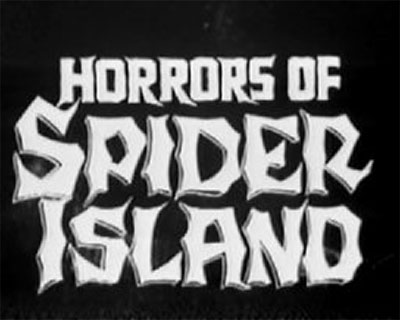
“Horrors of Spider Island,” also known as “Body in the Web,” is a 1960 German-American horror film directed by Fritz Böttger. The plot follows a group of dancers who crash land on a deserted island inhabited by giant spiders.

The film begins with a group of eight dancers and their manager, Gary, boarding a small airplane to perform in Singapore. However, the plane experiences mechanical issues and crashes into the ocean, leaving the survivors stranded on a remote island.

As they explore the island, they soon realize that they are not alone. Giant spiders, mutated by atomic radiation, roam the island and attack the group. One by one, the dancers are killed off in gruesome ways, while the remaining survivors try to find a way off the island and escape the spider creatures.

As tensions rise, Gary discovers a secret laboratory on the island that was conducting experiments on spiders. He learns that the spiders were injected with a serum that turned them into aggressive predators, and that they were intentionally released on the island to test their behavior in a natural environment.

The survivors eventually discover a way to signal for help and are rescued by a passing ship. However, Gary stays behind on the island, determined to destroy the laboratory and put an end to the spider experiments once and for all.

The film was notable for its use of scantily clad female dancers and its low-budget special effects, including the use of live tarantulas and cheap rubber spider props. It was also one of the first films to depict giant spiders as the main antagonists. Despite its flaws, the film has since gained a cult following and is considered a classic of the B-movie genre.

Directors:
Fritz Böttger

Writer:
Fritz Böttger, Eldon Howard, Albert G. Miller

Stars:
Harald Maresch, Helga Franck, Alexander D’Arcy

Rate this Movie

Fog Island (1945)

4/5 (2)

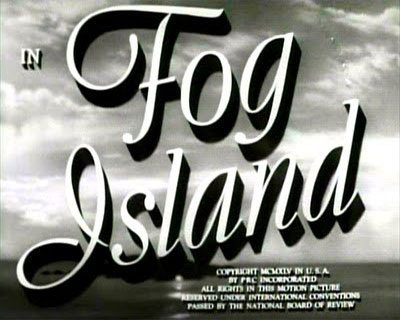
“Fog Island” is a 1945 mystery-thriller film directed by Terry O. Morse and starring George Zucco, Lionel Atwill, and Jerome Cowan. The plot centers around a group of people who are invited to a remote island by eccentric millionaire, Geoffrey Bishop, who they believe wants to discuss a business proposition with them. However, they soon realize that Bishop has other, more sinister plans.

As the group arrives on the fog-shrouded island, they discover that they are cut off from the mainland due to a storm. Strange occurrences begin to happen, and tension rises as each guest realizes that they are being targeted by an unknown assailant. The group soon learns that Bishop has invited them to the island to exact revenge on those he believes are responsible for his imprisonment and financial ruin.

As the story unfolds, the guests attempt to figure out who is behind the attacks and what Bishop’s true motives are. In the end, they discover that Bishop is not who he appears to be and that his twisted plan involves framing one of the guests for his crimes.

The film is notable for its moody atmosphere, eerie setting, and use of suspenseful music to heighten tension. It is considered a classic example of the “old dark house” genre of thriller films that were popular in the 1930s and 1940s.

Directors:
Terry O. Morse

Writer:
Pierre Gendron, Bernadine Angus

Stars:
George Zucc, oLionel Atwill, Jerome Cowan

Rate this Movie

Fall of the House of Usher (1928)

3/5 (1)

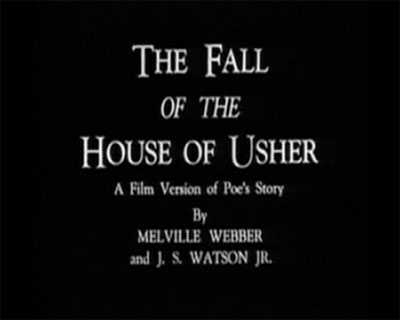
“The Fall of the House of Usher” is a silent horror film released in 1928, directed by James Sibley Watson and Melville Webber, and based on the 1839 short story of the same name by Edgar Allan Poe.

The film tells the story of a young man named Allan who visits the decaying mansion of his childhood friend Roderick Usher, who is suffering from a mysterious illness. Allan soon discovers that Roderick’s twin sister, Madeline, is also ill and appears to be suffering from a strange malady. As the story unfolds, Allan becomes increasingly disturbed by the strange events and eerie atmosphere surrounding the Usher family and their crumbling home.

As the plot thickens, the siblings’ condition worsens, and Madeline eventually dies. Roderick, who is convinced that she is still alive and buried alive, becomes more and more unhinged. In the climactic scene, as a violent storm rages outside the mansion, Madeline appears, seemingly risen from the dead, and attacks her brother, causing the house to collapse and bury them both alive.

The film is notable for its expressionistic cinematography, stark black-and-white imagery, and surreal dreamlike sequences that emphasize the psychological torment of the characters. It is considered a classic of early horror cinema and an important example of the avant-garde film movement.

Directors:
James Sibley Watson, Melville Webber

Writer:
Edgar Allan Poe

Stars:
Herbert Stern, Hildegarde Watson, Melville Webber

Rate this Movie

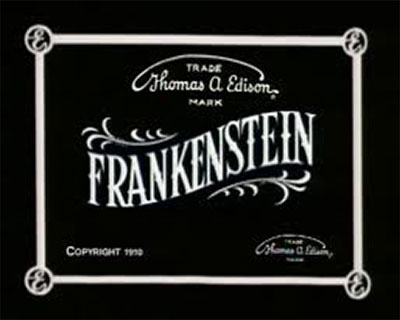
Frankenstein (1910) [Edison]

3/5 (1)

“Frankenstein” is a 1910 silent horror film produced by Thomas Edison and directed by J. Searle Dawley. It is based on Mary Shelley’s novel “Frankenstein; or, The Modern Prometheus”.

The film follows the story of Dr. Frankenstein (Augustus Phillips), a scientist who creates a monster (Charles Ogle) from various body parts. However, the creature becomes uncontrollable and wreaks havoc in the town, terrorizing the inhabitants and causing destruction.

The film’s plot follows the basic storyline of Shelley’s novel but condenses it significantly due to the limitations of the silent film medium. Despite its limitations, the film is notable for its pioneering special effects, including the use of makeup to create the monster’s gruesome appearance.

“Frankenstein” is a landmark film in the horror genre and is regarded as one of the earliest examples of a feature-length horror film. While its special effects and production values may seem primitive by modern standards, the film remains a significant piece of cinema history and an important influence on later horror films.

Directors:
J. Searle Dawley

Writer:
Mary Shelley, J. Searle Dawley

Stars:
Mary Fuller, Charles Ogle, Augustus Phillips

Rate this Movie

Dementia 13 (1963)

3/5 (1)

“Dementia 13” is a 1963 horror film directed by Francis Ford Coppola and produced by Roger Corman.

The film tells the story of the dysfunctional Haloran family, who gather at their Irish castle to commemorate the anniversary of the death of the youngest daughter Kathleen. However, the family is haunted by the tragedy, and tensions rise as they compete for the inheritance.

When John, the husband of the eldest Haloran daughter, Louise, arrives unexpectedly, he begins to investigate the circumstances surrounding Kathleen’s death. As he delves deeper into the family’s secrets, he discovers a sinister plot involving murder and deception.

As the family members begin to die one by one, John must race against time to uncover the truth and stop the killer before it’s too late.

“Dementia 13” is a classic horror film that showcases Coppola’s early talent as a director. The film’s moody atmosphere, Gothic setting, and suspenseful plot make it a must-see for horror fans. The film also features a haunting musical score by Ronald Stein and a memorable performance by Luana Anders as the troubled and enigmatic daughter-in-law.

Directors:
Francis Ford Coppola

Writer:
Francis Ford Coppola, Jack Hill

Stars:
William Campbell, Luana Anders, Bart Patton

Rate this Movie

Carnival of Souls (1962)

4/5 (1)

“Carnival of Souls” is a horror film released in 1962, directed by Herk Harvey and starring Candace Hilligoss. The film tells the story of Mary Henry, a young woman who survives a car accident and finds herself drawn to a mysterious abandoned carnival.

As Mary tries to resume her life after the accident, she begins to experience strange and terrifying visions of a pale-faced man who seems to be following her wherever she goes. She also becomes increasingly isolated and detached from the people around her, leading her to question her own sanity.

As she delves deeper into the mystery of the carnival and the strange man who haunts her, Mary discovers a shocking secret that forces her to confront the reality of her own existence.

The film is known for its eerie and atmospheric cinematography, which creates a sense of foreboding and unease throughout. It also features a haunting musical score, composed by Gene Moore, that adds to the film’s haunting and unsettling atmosphere.

“Carnival of Souls” is often cited as a cult classic and a landmark of independent horror cinema. It explores themes of identity, isolation, and the fear of death, while also utilizing innovative techniques to create a sense of horror and unease.

Directors:
Herk Harvey

Writer:
John Clifford, Herk Harvey

Stars:
Candace Hilligoss, Frances Feist, Sidney Berger

Rate this Movie

Bride of the Gorilla (1951)

3/5 (1)

“Bride of the Gorilla” is a 1951 horror film directed by Curt Siodmak and starring Barbara Payton, Lon Chaney Jr., and Raymond Burr. The film tells the story of a plantation owner named Barney Chavez (Burr) who is cursed by a local witch doctor and transforms into a gorilla at night.

Chavez is married to the beautiful Dina Van Gelder (Payton), who becomes suspicious of her husband’s strange behavior and begins to investigate the rumors of the curse. As she uncovers more about the curse and its origins, she becomes increasingly fearful for her own safety.

Meanwhile, the local police captain (Chaney Jr.) begins to investigate a string of murders that have been occurring in the area, which he suspects may be related to Chavez’s curse. As the investigation deepens and the truth is revealed, Dina must confront the terrifying reality of her husband’s transformation and the dark forces that have cursed their lives.

” Bride of the Gorilla” is known for its atmospheric setting and suspenseful plot, as well as the memorable performances of its cast. The film is considered a classic of the “jungle horror” subgenre, which was popular in the 1950s and often featured exotic settings, supernatural elements, and creatures of the jungle.

Directors:
Curt Siodmak

Writer:
Curt Siodmak

Stars:
Barbara Payton, Lon Chaney Jr., Raymond Burr

Rate this Movie

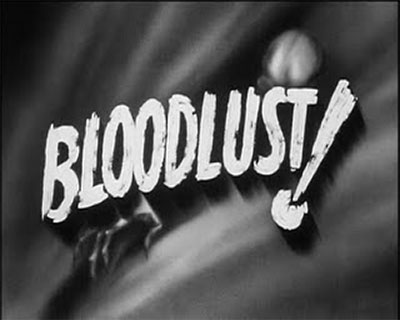
Bloodlust (1961)

3/5 (1)

“Bloodlust!” is a 1961 horror-thriller film directed by Ralph Brooke and starring Wilton Graff, June Kenney, and Robert Reed. The plot centers around a group of teenagers who go on a pleasure trip to a remote island owned by a wealthy big-game hunter, who is actually a crazed psychopath who enjoys hunting and killing human beings.

The teens are initially unaware of the hunter’s true nature, but as they explore the island, they begin to realize that they are in grave danger. They try to escape, but the hunter and his henchmen are always one step ahead of them, and soon they find themselves hunted like animals.

The film was heavily inspired by Richard Connell’s classic short story “The Most Dangerous Game,” and features a similar premise of humans being hunted for sport. “Bloodlust!” was made on a low budget and features amateurish acting and production values, but its tense and suspenseful atmosphere has earned it a small cult following among horror fans.

Directors:
Ralph Brooke

Writer:
Ralph Brooke, Richard Connell

Stars:
Wilton Graff, June Kenney, Walter Brooke

Rate this Movie

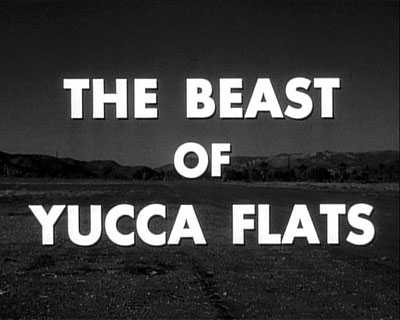
Beast of Yucca Flats (1961)

3/5 (1)

“Beast of Yucca Flats” is a low-budget science fiction horror film from 1961, directed by Coleman Francis. The film stars Tor Johnson as Joseph Javorsky, a Soviet scientist who defects to the United States and is pursued by KGB agents. While being chased, Javorsky is exposed to a nuclear blast and is transformed into a murderous beast with superhuman strength.

The film is infamous for its poor production values, nonsensical plot, and lack of coherent dialogue. Much of the film is narrated rather than spoken by the characters, which only adds to the confusion. The film has been widely panned by critics and is considered one of the worst movies ever made.

Despite its reputation, “Beast of Yucca Flats” has developed a cult following among fans of bad movies and has been parodied in various media. The film’s bizarre and nonsensical nature has made it a prime target for mockery and humor.

Directors:
Coleman Francis

Writer:
Coleman Francis

Stars:
Douglas Mello, Barbara Francis, Bing Stafford

Rate this Movie