Horror

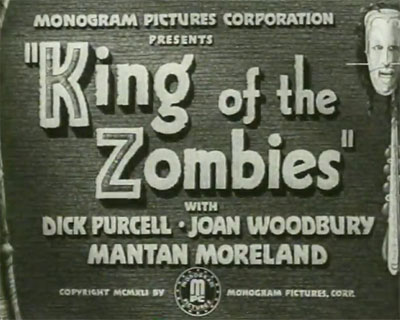
King of the Zombies (1941)

3/5 (1)

“King of the Zombies” is a horror-comedy film directed by Jean Yarbrough and released in 1941. The movie is set during World War II and follows a group of individuals who become stranded on a remote Caribbean island.

The film’s protagonist is James McCarthy (Dick Purcell), a pilot who, along with his assistant, Bill Summers (Mantan Moreland), and his socialite passenger, Barbara Winslow (Joan Woodbury), crash-lands on the island. They are taken in by Dr. Sangre (Henry Victor), a sinister scientist who is conducting experiments on zombies in his secluded mansion.

Sangre’s assistant, a voodoo priest named Momba (John Archer), is in charge of the zombies, which he uses to do his bidding. Momba hypnotizes Bill, forcing him to do his bidding, and they set out to find a secret formula that Sangre believes will help the Axis powers win the war.

James and Barbara, meanwhile, are locked up in the mansion and try to escape. They discover that the mansion is filled with zombies, which they must fight off to get to safety.

In the end, James and Barbara manage to escape, and Sangre and Momba are killed in a final confrontation with the zombies. James and his companions make their way back to civilization, but not before experiencing several more supernatural and comedic mishaps along the way.

Overall, “King of the Zombies” is a low-budget, campy horror-comedy film that is notable for its portrayal of zombies as mindless, obedient servants rather than the flesh-eating monsters they are commonly known as today.

Directors:
Jean Yarbrough

Writer:
Edmond Kelso

Stars:
Dick Purcell, Joan Woodbury, Mantan Moreland

Rate this Movie

One Body Too Many (1944)

4/5 (2)

“One Body Too Many” is a comedy-mystery movie released in 1944. The film follows the adventures of a timid insurance salesman named Albert Tuttle (played by Jack Haley) who visits an old mansion to deliver a large insurance policy to a wealthy millionaire named Cyrus J. Rutherford.

However, upon arriving at the mansion, Tuttle discovers that Rutherford has been murdered and his body has gone missing. The butler of the mansion, played by Bela Lugosi, tells Tuttle that he must keep the murder a secret and find the body before the police do.

Tuttle becomes embroiled in a web of mystery as he meets a cast of eccentric characters who may have had motives to kill Rutherford, including his greedy relatives, his beautiful secretary, and a mysterious woman who claims to be a medium.

As Tuttle tries to solve the murder mystery, he gets into all sorts of slapstick situations and comedic misunderstandings. The film culminates in a dramatic and hilarious finale, with Tuttle finally discovering the identity of the killer and saving the day.

Overall, “One Body Too Many” is a charming and entertaining film that blends comedy and mystery in a unique way, and features a strong cast of talented actors.

Directors:
Frank McDonald

Writer:
Winston Miller, Maxwell Shane

Stars:
Jack Haley, Jean Parker, Bela Lugosi

Rate this Movie

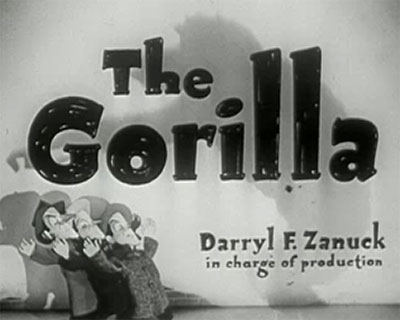
The Gorilla (1939)

3/5 (2)

“The Gorilla” is a horror-comedy film released in 1939, directed by Allan Dwan and based on a play by Ralph Spence. The film tells the story of a wealthy family that hires a detective to investigate a series of mysterious events in their mansion.

The family is convinced that a notorious killer known as “The Gorilla” is on the loose and is planning to strike at their home. The detective, played by the popular comedian The Ritz Brothers, arrives to investigate and discovers a cast of eccentric characters, including a butler with a dark past, a creepy doctor, and a mysterious woman with a hidden agenda.

As the detective and the family try to solve the mystery of the gorilla, they are also plagued by other strange occurrences, including disappearing money and eerie noises in the night. The film builds to a suspenseful climax, as the detective tries to outsmart the gorilla and save the family from danger.

The film features a talented cast, including Bela Lugosi as the creepy butler, Lionel Atwill as the doctor, and Patsy Kelly as a bumbling maid. The Ritz Brothers provide the film’s comedic moments with their trademark slapstick humor.

Overall, “The Gorilla” is a fun and entertaining film that combines elements of horror, mystery, and comedy. Its mix of suspenseful moments and comedic hijinks make it a classic of the genre.

Directors:
Allan Dwan

Writer:
Ralph Spence, Rian James, Sid Silvers

Stars:
The Ritz Brothers, Jimmy Ritz, Harry Ritz

Rate this Movie

The Little Shop of Horrors (1960)

4/5 (1)

“The Little Shop of Horrors” is a 1960 American horror-comedy film directed by Roger Corman. The story is about a young florist’s assistant named Seymour Krelborn (Jonathan Haze) who works in a flower shop on Skid Row in Los Angeles. He discovers a strange plant that he names “Audrey Jr.” after his co-worker and secret crush, Audrey Fulquard (Jackie Joseph).

Seymour soon learns that Audrey Jr. has a craving for human blood and can talk. As the plant grows, Seymour is forced to feed it more and more people to keep it alive. Seymour becomes increasingly conflicted about the plant’s demands and eventually tries to destroy it, but Audrey Jr. fights back and ultimately kills him.

The film features a memorable cast of characters, including Seymour’s sadistic dentist, Orin Scrivello (played by Jack Nicholson in one of his earliest roles), and the flower shop’s owner, Gravis Mushnick (Mel Welles). The film is notable for its low-budget production values and dark humor, and has since become a cult classic. It was later adapted into a successful stage musical and a 1986 film adaptation directed by Frank Oz.

Directors:
Roger Corman

Writer:
Charles B. Griffith, Roger Corman

Stars:
Jonathan Haze, Jackie Joseph, Mel Welles

Rate this Movie

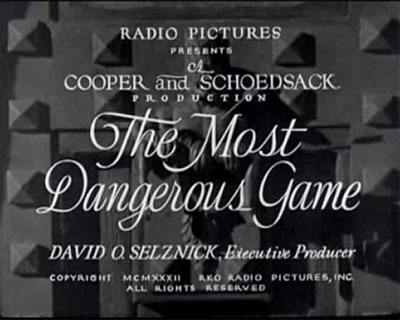
The Most Dangerous Game (1932)

4/5 (1)

“The Most Dangerous Game” is a 1932 pre-Code film directed by Irving Pichel and Ernest B. Schoedsack, based on the 1924 short story of the same name by Richard Connell. The film follows big game hunter Bob Rainsford (played by Joel McCrea) who becomes shipwrecked on a remote island in the Caribbean. He soon discovers that the island is home to another hunter, General Zaroff (played by Leslie Banks), who has grown bored with hunting animals and has taken to hunting humans for sport.

Zaroff invites Rainsford to stay as a guest, but soon reveals his true intentions and forces Rainsford to participate in a deadly game of hunting. Rainsford must evade Zaroff and his hounds for three days, and if he survives, he will be allowed to leave the island. The rest of the film follows Rainsford as he tries to outwit Zaroff and stay alive.

The film explores themes of survival, the morality of hunting, and the dangers of man’s primal instincts. It was praised for its suspenseful plot, atmospheric setting, and strong performances by the cast. Despite being made over 90 years ago, “The Most Dangerous Game” remains a classic thriller and has influenced countless films and TV shows that followed.

Directors:
Irving Pichel, Ernest B. Schoedsack

Writer:
James Ashmore Creelman, Richard Connell

Stars:
Joel McCrea, Fay Wray, Leslie Banks

Rate this Movie

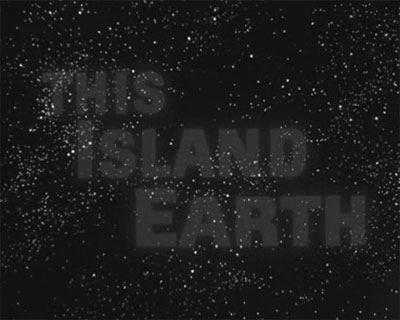
This Island Earth (1955)

3/5 (1)

“This Island Earth” is a science-fiction film released in 1955, directed by Joseph M. Newman and produced by William Alland. The film follows the story of Dr. Cal Meacham (Rex Reason), a brilliant scientist who is recruited by a mysterious organization called “Electronic Service Associates” to work on a top-secret project.

Dr. Meacham and his colleagues, including fellow scientist Dr. Ruth Adams (Faith Domergue), are transported to a remote laboratory where they are tasked with building a device that can generate unlimited energy. However, as they work on the project, they begin to realize that their employers may not be who they seem, and that there is more to the project than they were led to believe.

Dr. Meacham is contacted by a mysterious alien named Exeter (Jeff Morrow), who reveals that he and his people are in a desperate struggle for survival against an alien race known as the “Metalunans”. Exeter recruits Dr. Meacham and Dr. Adams to help him save his people by providing them with the technology to defeat the Metalunans.

The three of them embark on a dangerous journey to the alien planet, where they face a series of challenges and obstacles as they try to help Exeter and his people. They must use their scientific knowledge and expertise to outsmart the Metalunans and find a way to save themselves and Exeter’s people from certain doom.

“This Island Earth” is a classic sci-fi film that explores the themes of technology, intergalactic travel, and the struggle for survival against a hostile and technologically advanced enemy. The film’s special effects, including the alien technology and the futuristic sets, were groundbreaking for their time and have influenced many films in the genre that followed.

Directors:
Joseph M. Newman, Jack Arnold

Writer:
Raymond F. Jones, Franklin Coen, George Callahan

Stars:
Jeff Morrow, Faith Domergue, Rex Reason

Rate this Movie

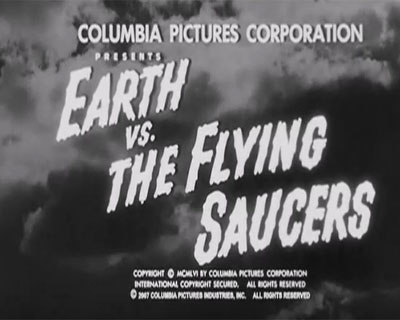
Earth vs the Flying Saucers (1956)

4/5 (1)

“Earth vs the Flying Saucers” is a science-fiction film released in 1956, directed by Fred F. Sears and produced by Charles H. Schneer. The film follows the story of Dr. Russell Marvin (Hugh Marlowe), a scientist who is working on a new project involving satellites in space.

However, one day, a flying saucer crashes into the headquarters of the project, and Dr. Marvin and his team are shocked to discover that the alien spacecraft is controlled by extraterrestrial beings who have come to Earth with hostile intentions.

As the aliens begin to attack major cities around the world, Dr. Marvin and his wife Carol (Joan Taylor), who is also a scientist, work together to figure out a way to stop them. They discover that the aliens are vulnerable to sound waves and develop a weapon to counter their attacks.

The film follows the epic battle between Earth’s forces and the alien invaders as they clash in a series of intense battles. Dr. Marvin and his team use their knowledge and ingenuity to come up with new strategies and tactics to defeat the aliens and save humanity from destruction.

“Earth vs the Flying Saucers” is a classic sci-fi film that explores the fear and paranoia of an alien invasion and the resilience of the human spirit in the face of overwhelming odds. The film’s special effects, including the flying saucers and the destruction they cause, were groundbreaking at the time of its release and have inspired many films in the genre that followed.

Directors:
Fred F. Sears

Writer:
Bernard Gordon, George Worthing Yates, Curt Siodmak

Stars:
Hugh Marlowe, Joan Taylor, Donald Curtis

Rate this Movie

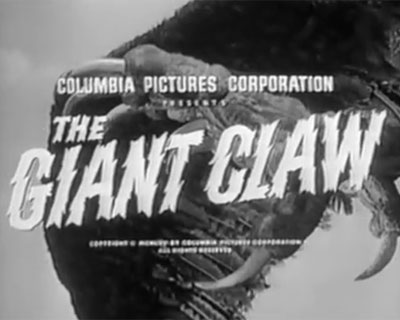
The Giant Claw (1957)

3/5 (1)

“The Giant Claw” is a science fiction film released in 1957. The movie tells the story of a giant, prehistoric bird-like creature that terrorizes North America.

The creature, which is said to be from an anti-matter galaxy, attacks planes and causes widespread destruction. A group of scientists, including the protagonist Dr. Karol Noymann and his love interest Sally Caldwell, work to find a way to stop the creature before it destroys humanity.

Through their research, the scientists discover that the creature is impervious to conventional weapons and can only be defeated with a special anti-matter weapon. They also learn that the creature is being controlled by a force from another dimension.

The scientists manage to build the anti-matter weapon and use it to destroy the creature, which is revealed to be a giant bird with a metal beak. The force controlling the bird is also destroyed, and humanity is saved from further destruction.

“The Giant Claw” is known for its comically unrealistic special effects, particularly in its depiction of the giant bird creature. Despite this, it has become a cult classic among fans of the genre and is noted for its unintentional humor.

Directors:
Fred F. Sears

Writer:
Samuel Newman, Paul Gangelin

Stars:
Jeff Morrow, Mara Corday, Morris Ankrum

Rate this Movie

The Man Who Could Cheat Death (1959)

3/5 (1)

“The Man Who Could Cheat Death” is a British horror film released in 1959, directed by Terence Fisher and starring Anton Diffring, Hazel Court, and Christopher Lee. The film is based on a play by Barré Lyndon and tells the story of a man who has discovered the secret to eternal youth.

The film’s protagonist is Dr. Georges Bonnet (Anton Diffring), a brilliant surgeon who has discovered a way to halt the aging process. He has been alive for over a century but looks and acts like a man in his forties. However, to maintain his youth, Bonnet must undergo a secret medical procedure every ten years, using glands from human victims.

Bonnet is pursued by a young artist named Janine (Hazel Court), who has fallen in love with him. However, Bonnet sees her only as a potential donor for his next procedure. When Bonnet’s former lover, a fellow scientist, discovers his secret, she threatens to expose him to the authorities.

Bonnet must take drastic measures to protect his secret and eliminate anyone who threatens to expose him. This leads to a series of murders and a final confrontation with the police, who are closing in on him.

The film is known for its atmospheric visuals and performances, especially that of Anton Diffring as the enigmatic and sinister Bonnet. It explores themes of mortality, obsession, and the price of immortality. Despite receiving mixed reviews upon its release, “The Man Who Could Cheat Death” has since gained a cult following among fans of classic horror cinema.

Directors:
Terence Fisher

Writer:
Jimmy Sangster, Barré Lyndon

Stars:
Anton Diffring, Hazel Court, Christopher Lee

Rate this Movie

The Amazing Transparent Man (1960)

4/5 (2)

“The Amazing Transparent Man” is a 1960 science fiction film directed by Edgar G. Ulmer. The movie tells the story of a convicted criminal named Joey Faust (played by Douglas Kennedy), who is broken out of prison by a mysterious scientist named Dr. Peter Ulof (played by Ivan Triesault).

Ulof offers Faust a deal: in exchange for his help with a top-secret experiment, he will give Faust his freedom and a share of the profits. Faust agrees, not realizing that Ulof’s experiment involves turning him invisible.

With his newfound invisibility, Faust becomes the perfect tool for Ulof’s plan to steal a top-secret formula from a government laboratory. Faust is initially hesitant, but Ulof uses mind control to force him to do his bidding.

As the theft is carried out, Faust begins to realize the true extent of Ulof’s evil plan. Ulof plans to use the formula to create an army of invisible soldiers, which he will use to take over the world. Faust decides to turn against Ulof and stop him from carrying out his plan.

The climax of the movie features a showdown between Faust and Ulof, with Faust using his invisibility to outsmart Ulof and destroy his laboratory. In the end, Faust is captured by the authorities but is offered a chance at redemption by helping the government develop a countermeasure against Ulof’s invisibility formula.

“The Amazing Transparent Man” is a low-budget film with cheesy special effects, but it has become a cult classic among science fiction fans. The movie explores themes of power, greed, and morality, as Faust must navigate his way through a world of corruption and manipulation.

Directors:
Edgar G. Ulmer

Writer:
Jack Lewis

Stars:
Marguerite Chapman, Douglas Kennedy, James Griffith

Rate this Movie

Bela Lugosi Meets a Brooklyn Gorilla (1952)

3/5 (1)

“Bela Lugosi Meets a Brooklyn Gorilla” is a low-budget comedy film from 1952, directed by William Beaudine. The film follows two nightclub performers, Duke Mitchell and Sammy Petrillo, who are stranded on a tropical island after their plane crashes. They soon discover that the island is inhabited by a mad scientist, Dr. Zabor (played by Bela Lugosi), who has been experimenting on animals to turn them into humans.

Dr. Zabor mistakes Duke for a famous scientist he has been waiting for and decides to use him in his experiments. Meanwhile, Sammy falls in love with Nona, a native girl who has been turned into a gorilla by Dr. Zabor’s experiments. The rest of the film follows the duo’s attempts to escape the island and foil Dr. Zabor’s evil plans.

The film is known for its bizarre plot, cheesy special effects, and amateurish acting. Despite being panned by critics upon its release, it has gained a cult following over the years and is often cited as an example of “so bad it’s good” cinema.

Directors:
William Beaudine

Writer:
Tim Ryan, Leo ‘Ukie’ Sherin, Edmond Seward

Stars:
Bela Lugosi, Duke Mitchell, Sammy Petrillo

Rate this Movie

The Mad Monster (1942)

3/5 (1)

“The Mad Monster” is a horror movie from 1942 directed by Sam Newfield. The movie follows the story of a mad scientist named Dr. Lorenzo Cameron (played by George Zucco) who has developed a serum that can turn animals into monsters.

Dr. Cameron uses his serum to transform his loyal servant Petro (played by Glenn Strange) into a werewolf-like creature that he plans to use as a weapon against his enemies. However, Petro’s transformation is unstable and he becomes increasingly violent and uncontrollable.

Meanwhile, Dr. Cameron’s daughter Lenora (played by Anne Nagel) becomes suspicious of her father’s experiments and teams up with a reporter named Tom Gregory (played by Johnny Downs) to investigate.

The film explores themes of science and the consequences of playing with nature. The special effects and production values are typical of low-budget horror films of the era, but the film has gained a cult following for its campy charm and entertaining storyline.

In the end, Tom and Lenora are able to stop Dr. Cameron’s plans and destroy the serum, but not before Petro wreaks havoc on the town. The film concludes with a warning about the dangers of unchecked scientific experimentation and the importance of ethical boundaries.

Directors:
Sam Newfield

Writer:
Fred Myton

Stars:
Johnny Downs, George Zucco, Anne Nagel

Rate this Movie

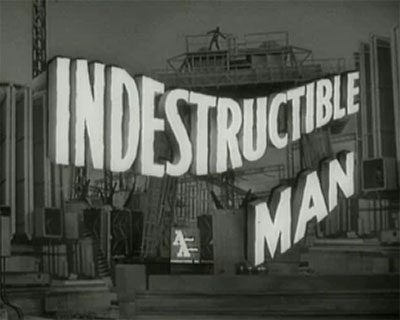
Indestructible Man (1956)

3/5 (1)

“Indestructible Man” is a science fiction and horror film from 1956 directed by Jack Pollexfen. The movie follows the story of a notorious criminal named Butcher Benton (played by Lon Chaney Jr.) who is sentenced to death for his crimes.

However, before his execution, a group of scientists experiment with a new serum that is supposed to make a person indestructible. They inject the serum into Butcher Benton’s body, hoping to study the effects.

Butcher Benton survives the execution and returns from the dead as an indestructible monster with superhuman strength. He sets out to exact revenge on those who wronged him, including the people who testified against him at his trial and the scientists who experimented on him.

The film explores themes of science and the consequences of tampering with nature. The special effects and production values are typical of low-budget science fiction films of the era, but the film has gained a cult following for its campy charm and entertaining storyline.

In the end, Butcher Benton is ultimately defeated when the scientists use their knowledge of the serum to weaken him and bring him down. The film concludes with a warning about the dangers of playing God and the need for caution in scientific experimentation.

Directors:
Jack Pollexfen

Writer:
Vy Russell, Sue Dwiggins

Stars:
Lon Chaney Jr., Max Showalter, Marian Carr

Rate this Movie

The Brain That Wouldnt Die (1962)

3/5 (1)

“The Brain That Wouldn’t Die” is a science fiction and horror film from 1962 directed by Joseph Green. The movie follows the story of a brilliant scientist named Dr. Bill Cortner (played by Jason Evers) who is obsessed with the idea of transplanting human brains into new bodies.

After a car accident that kills his fiancée, Jan Compton (played by Virginia Leith), Dr. Cortner decides to use her head to experiment with his brain transplant theory. He keeps her head alive in a laboratory, while searching for a new body to attach it to.

Dr. Cortner’s experiments become increasingly gruesome and unethical as he uses his assistant to lure women into his laboratory for potential body donors. Meanwhile, Jan’s head becomes increasingly unstable and develops telepathic powers.

The film explores themes of science and ethics, as well as the dangers of obsession and unchecked ambition. The special effects and production values are typical of low-budget science fiction films of the era, but the film has gained a cult following for its campy charm and entertaining storyline.

In the end, Jan’s head begs Dr. Cortner to let her die, and she uses her telepathic powers to cause a fire that destroys the laboratory and kills them both. The film ends with a warning about the dangers of tampering with nature and the consequences of scientific arrogance.

Directors:
Joseph Green

Writer:
Joseph Green, Rex Carlton

Stars:
Jason Evers, Virginia Leith, Anthony La Penna

Rate this Movie

Atom Age Vampire (1960)

3/5 (1)

“Atom Age Vampire” is a black and white Italian horror movie from 1960 directed by Anton Giulio Majano. The movie follows the story of a young exotic dancer named Jeanette Moreneau (played by Susanne Loret) who is horribly disfigured in a car accident. Desperate to restore her beauty, she seeks the help of a scientist named Dr. Levin (played by Alberto Lupo) who has been experimenting with a revolutionary new serum that can regenerate damaged tissue.

Initially, the treatment seems to be successful, and Jeanette’s beauty is restored. However, it soon becomes apparent that the serum has a dangerous side effect – it turns the recipient into a vampire-like creature that feeds on the blood of others to maintain its youth and beauty.

Dr. Levin becomes increasingly obsessed with Jeanette, and despite her protests, he continues to administer the serum, turning her into a monster. The situation spirals out of control as Jeanette becomes increasingly unstable and violent, and the police become involved in the search for the killer.

The movie has a tragic ending as Jeanette realizes the terrible fate that awaits her and begs Dr. Levin to end her suffering. The film explores themes of vanity, obsession, and the dangers of playing with science and nature. Despite its low-budget production values and somewhat campy special effects, “Atom Age Vampire” remains a cult classic of the horror genre.

Directors:
Anton Giulio Majano

Writer:
Piero Monviso, Gino De Santis, Alberto Bevilacqua

Stars:
Alberto Lupo, Susanne Loret, Sergio Fantoni

Rate this Movie