Mystery

Case of the Frightened Lady (1940)

3/5 (1)

“Case of the Frightened Lady” is a 1940 British crime thriller film directed by George King and based on a play by Edgar Wallace. The film stars Marius Goring as Lord Lebanon, a wealthy nobleman who is desperate to keep his family line going, but whose unmarried daughter, Lady Lebanon (Penelope Dudley-Ward), is terrified of marriage.

When a series of mysterious deaths occur in the family’s ancestral home, Mark’s Priory, a detective named Inspector Tanner (played by Felix Aylmer) is called in to investigate. He soon discovers that there is a sinister plot afoot involving Lady Lebanon’s inheritance and a conspiracy to keep her unmarried.

With the help of the family’s secretary, Isla Crane (played by Helen Haye), Tanner sets out to uncover the truth behind the murders and protect Lady Lebanon from harm. Along the way, he must navigate a web of deceit and treachery, as well as the strange and unsettling behavior of Lady Lebanon herself.

As the investigation unfolds, Tanner uncovers a shocking secret that has been hidden for years and is ultimately able to bring the perpetrators to justice. The film builds to a thrilling conclusion, with plenty of twists and turns along the way.

Directors:
George King

Writer:
Edgar Wallace, Edward Dryhurst, Robert Stevenson

Stars:
Marius Goring, Penelope Dudley-Ward, Helen Haye
Rate this Movie

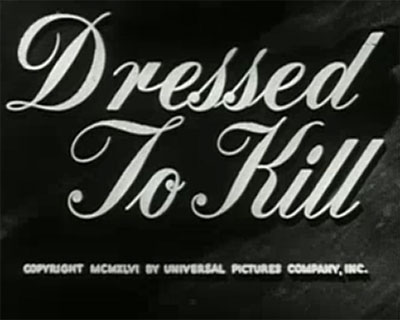
Sherlock Holmes, Dressed To Kill (1946)

4/5 (1)

“Sherlock Holmes, Dressed to Kill” is a 1946 American film directed by Roy William Neill and starring Basil Rathbone, Nigel Bruce, and Patricia Morison. The movie is part of the Sherlock Holmes film series, based on the detective stories of Sir Arthur Conan Doyle.

The film follows Sherlock Holmes and Dr. Watson as they are hired to investigate a series of seemingly unrelated murders. They soon discover that the murders are connected by the presence of three identical music boxes that were sold at an auction house. As Holmes and Watson investigate the owners of the boxes, they uncover a web of greed, deception, and murder.

Their investigation leads them to a criminal mastermind who will stop at nothing to get his hands on the music boxes and the valuable jewels hidden within them. With their lives on the line, Holmes and Watson must use all of their wit and ingenuity to outsmart the dangerous criminal and bring him to justice.

“Sherlock Holmes, Dressed to Kill” is a thrilling and suspenseful mystery film that showcases the brilliant detective work of Holmes and the unwavering loyalty of Watson. With its intricate plot, colorful characters, and clever twists, it is a must-see for fans of the detective genre.

Directors:
Roy William Neill

Writer:
Leonard Lee, Frank Gruber, Arthur Conan Doyle

Stars:
Basil Rathbone, Nigel Bruce, Patricia Morison

Rate this Movie

Curtain at Eight (1933)

3/5 (1)

“Curtain at Eight” is a 1933 American pre-Code mystery film directed by E. Mason Hopper and starring C. Aubrey Smith, Dorothy Mackaill, and Paul Cavanagh. The movie is based on the play of the same name by Charles George.

The film follows a group of actors who are preparing to perform a play, “The Fatal Hour,” but things take a deadly turn when the leading lady is murdered backstage. The stage manager, Christopher Brent, takes it upon himself to investigate the murder and clear the name of the leading man, who has become the prime suspect.

As Brent delves deeper into the case, he uncovers a web of secrets and lies among the cast and crew, including the victim’s jealous husband, a bitter rival actress, and a blackmailing producer. With the help of his assistant, Brent sets a trap to catch the killer before they strike again.

The film features excellent performances and a gripping plot that keeps the audience guessing until the very end. “Curtain at Eight” is a must-see for fans of classic whodunits and is sure to leave audiences satisfied.

Directors:
E. Mason Hopper

Writer:
Edward T. Lowe Jr., Octavus Roy Cohen

Stars:
C. Aubrey Smith, Dorothy Mackaill, Paul Cavanagh

Rate this Movie

Behind Green Lights (1946)

3/5 (1)

“Behind Green Lights” is a film noir from 1946, directed by Otto Brower and starring Carole Landis, William Gargan, and Richard Crane. The movie revolves around the murder of a young socialite named Sheila Lamar, whose body is found in a parked car behind the Green Gate Club.

Captain Johnny Williams (William Gargan), the lead investigator on the case, is determined to find the killer, despite resistance from both his superiors and the wealthy patrons of the club who want the investigation to end quickly and discreetly. As he delves deeper into the case, Williams uncovers a web of corruption and deceit, and he soon realizes that the murder is just the tip of the iceberg.

Meanwhile, Sheila’s sister, Phyllis (Carole Landis), becomes involved in the investigation when she hires private investigator Michael Shayne (Richard Crane) to find her sister’s killer. Shayne and Phyllis work together to unravel the mystery, but their lives are put in danger as they get closer to the truth.

As the investigation continues, Williams, Shayne, and Phyllis discover that the killer is someone close to Sheila, and they race against time to prevent another murder from taking place. The film ends with the killer finally being exposed and brought to justice.

“Behind Green Lights” is a classic film noir with all the hallmarks of the genre, including a dark and moody atmosphere, a complex plot, and flawed but compelling characters. The movie is notable for its strong performances by the lead actors, as well as its suspenseful and engaging storyline.

Directors:
Otto Brower

Writer:
Scott Darling, Charles G. Booth

Stars:
Carole Landis, William Gargan, Richard Crane

Rate this Movie

Death From a Distance (1935)

3.5/5 (2)

During a lecture by a distinguished astronomer in a planetarium, a gunshot suddenly echoes through the room, and one of the attendees is discovered dead. As the investigation unfolds, a no-nonsense detective and a bold and outspoken female reporter clash as they each try to uncover the truth behind the murder.

Directors:
Frank R. Strayer

Writer:
John W. Krafft

Stars:
Russell Hopton, Lola Lane, George F. Marion

Rate this Movie

The Fatal Hour (1940)

3/5 (1)

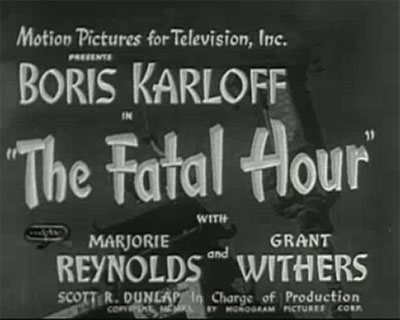
“The Fatal Hour” is a 1940 American crime film directed by William Nigh and starring Boris Karloff, Marjorie Reynolds, and Grant Withers. The film tells the story of a police detective named James Lee Wong (played by Boris Karloff) who is tasked with solving a murder case in San Francisco’s Chinatown.

The murder victim is a wealthy businessman named Gordon McLeod, who is found dead in his office with a Chinese character painted on his chest. The police suspect that the killer is someone from Chinatown, and Wong is brought in to help with the investigation.

Wong is a brilliant detective who is respected by both the police and the Chinese community. He begins to investigate the case, and he quickly realizes that the murder is linked to a smuggling ring operating in Chinatown. He also discovers that McLeod had been secretly working with the smugglers to bring in a valuable jade Buddha statue from China.

As Wong delves deeper into the case, he becomes the target of the smugglers, who are determined to stop him from uncovering their operation. They hire a hitman named Marloff (played by Grant Withers) to kill Wong, but the detective manages to outwit him and gather enough evidence to solve the case.

In the final scenes of the movie, Wong confronts the smugglers and reveals their scheme to the police. He also clears the name of a young Chinese man who had been wrongly accused of the murder. The film ends with Wong being hailed as a hero and a symbol of justice for the Chinese community.

“The Fatal Hour” is a classic crime film that explores themes of race, identity, and cultural conflict. It is notable for its portrayal of a Chinese-American detective as the main character, which was a rarity in Hollywood films of the time. The movie is also remembered for Boris Karloff’s commanding performance as James Lee Wong, which helped establish him as a leading actor in the detective genre.

Directors:
William Nigh

Writer:
Scott Darling, George Waggner, Hugh Wiley

Stars:
Boris Karloff, Marjorie Reynolds, Grant Withers

Rate this Movie

Inner Sanctum (1948)

3/5 (1)

“Inner Sanctum” is a 1948 film noir directed by Lew Landers and starring Charles Russell and Mary Beth Hughes. The movie follows the story of a woman named Mary who is found murdered, and her husband, a successful physician named Richard, is the prime suspect in her death. Richard becomes increasingly paranoid as the investigation unfolds, and he begins to see visions of Mary’s ghost, which seem to be trying to lead him to the real killer.

As Richard’s mental state deteriorates, he becomes more and more convinced that his neighbor, a wealthy and eccentric old man named Melton, is the murderer. Meanwhile, Richard’s secretary, Evelyn, has developed romantic feelings for him and is determined to help clear his name.

As the investigation continues, the true identity of the killer is revealed, and Richard is finally exonerated. However, the experience has taken a toll on his mental health, and the film ends with him being taken away to a sanitarium for treatment.

Directors:
Lew Landers

Writer:
Jerome T. Gollard

Stars:
Charles Russell, Mary Beth Hughes, Billy House

Rate this Movie

Rebecca (1940)

4.75/5 (4)

“Rebecca” is a 1940 psychological thriller directed by Alfred Hitchcock, based on the novel of the same name by Daphne du Maurier. The film tells the story of a young woman who marries a wealthy widower, only to find herself living in the shadow of his first wife, Rebecca, who died under mysterious circumstances.

The film begins with the unnamed narrator, a shy and inexperienced young woman, traveling to Monte Carlo with her employer, Mrs. Van Hopper. While there, she meets Maxim de Winter, a wealthy widower who is still haunted by the death of his first wife, Rebecca. The two quickly fall in love and get married, and the narrator becomes the new mistress of Maxim’s grand estate, Manderley.

However, the narrator soon finds herself struggling to fit in at Manderley, where she is constantly reminded of Rebecca’s presence. The housekeeper, Mrs. Danvers, is particularly hostile towards the new Mrs. de Winter, and seems to go out of her way to make her feel unwelcome. The narrator becomes obsessed with Rebecca and begins to investigate her death, hoping to uncover the truth behind the mystery.

As the story unfolds, the narrator discovers that Maxim’s marriage to Rebecca was not as perfect as it seemed, and that Rebecca had many secrets and affairs. The narrator also begins to suspect that Maxim may have had a hand in Rebecca’s death.

In the climactic scene, the narrator confronts Maxim, who reveals that he did, in fact, kill Rebecca. He explains that Rebecca was cruel and manipulative, and that she was planning to ruin his life. Maxim says that he shot her in a fit of rage and desperation, and that he has been haunted by her memory ever since.

In the end, the truth about Rebecca’s death is revealed, and the narrator and Maxim are able to move on with their lives. “Rebecca” is a masterful psychological thriller, with outstanding performances by Joan Fontaine and Laurence Olivier, and is considered one of Alfred Hitchcock’s greatest films.

Directors:
Alfred Hitchcock

Writer:
Daphne Du Maurier, Robert E. Sherwood, Joan Harrison

Stars:
Laurence Olivier, Joan Fontaine, George Sanders

Rate this Movie

The Monster Walks (1932)

3/5 (1)

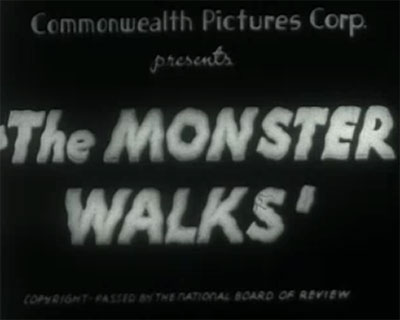
“The Monster Walks” is a 1932 black-and-white horror film directed by Frank R. Strayer. The plot revolves around a wealthy but ill-tempered man named Robert Earlton who dies suddenly, leaving behind a sizable estate that includes a creepy mansion and a fortune in diamonds. His will stipulates that the diamonds are to be divided equally among his surviving relatives.

The film opens with Robert’s daughter Ruth, her fiancé Dr. Ted Clayton, and a group of other relatives arriving at the mansion for the reading of the will. They are met by the housekeeper, who warns them that strange things have been happening in the house and that there may be a monster on the loose.

Soon after the reading of the will, strange things start to happen. Doors mysteriously open and close, strange noises are heard, and someone or something seems to be lurking in the shadows. The tension escalates when the family’s butler, Hanns, is found dead, apparently killed by the monster.

As the family members try to figure out who or what is responsible for the murders, they discover that there are hidden passages and secret rooms in the mansion, and that someone is determined to get their hands on the diamonds at any cost.

As the bodies pile up, the remaining family members realize that they must work together to solve the mystery and stop the killer before it’s too late. In the end, the true identity of the monster is revealed, and justice is served.

Overall, “The Monster Walks” is a classic horror film with all the trappings of the genre – a creepy old mansion, hidden passages, secret rooms, and a monster on the loose. It’s a fun and entertaining movie that will keep you on the edge of your seat until the very end.

Directors:
Frank R. Strayer

Writer:
Robert Ellis

Stars:
Mischa Auer, Martha Mattox, Rex Lease

Rate this Movie

The Ghost Walks (1934)

4/5 (3)

“The Ghost Walks” is a 1934 American film directed by Frank R. Strayer. The movie follows the story of a group of strangers who are stranded in a creepy old house during a thunderstorm. The house is said to be haunted by the ghost of a murdered man, and the guests soon begin to experience strange and unexplainable events.

The group includes a playwright named John (played by John Miljan), his leading lady Marcia (played by June Collyer), a producer named Milton (played by Richard Carle), and several other characters. As they try to figure out who among them is behind the strange occurrences, they find themselves locked in the house with no way to escape.

As the night wears on, tensions rise, and suspicions mount. The group begins to suspect each other of being the murderer, but as the bodies start to pile up, they realize that the killer may be one of their own. With the help of a detective who arrives on the scene, they must solve the mystery before it’s too late.

Overall, “The Ghost Walks” is a classic mystery movie with elements of horror and suspense. It is notable for its atmospheric setting and eerie tone, which create a sense of unease throughout the film. The movie features a talented cast of actors who bring their characters to life with humor and wit, making for an entertaining and engaging viewing experience.

Directors:
Frank R. Strayer

Writer:
Charles Belden

Stars:
John Miljan, June Collyer, Richard Carle

Rate this Movie

Mysterious Mr. Wong (1934)

3/5 (1)

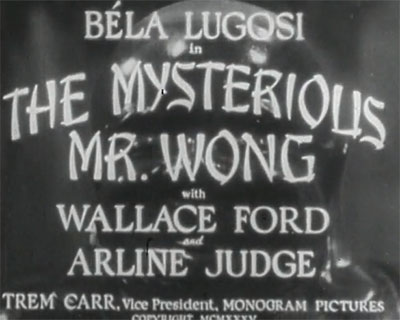
“Mysterious Mr. Wong” is a 1934 American film directed by William Nigh. The movie follows the story of a wealthy antique dealer, Brandon Edwards (played by Holmes Herbert), who is murdered by an unknown assailant. His daughter, Louise (played by Dorothy Revier), enlists the help of private investigator James Lee Wong (played by Boris Karloff) to solve the crime.

Wong soon discovers that the murder is linked to a valuable Chinese artifact, the Ming Jade Buddha. The artifact has been stolen by a group of criminals led by the mysterious Mr. Wong (played by E. Alyn Warren). Wong and Louise must race against time to recover the Buddha and bring Mr. Wong to justice before he can strike again.

As Wong investigates the case, he uncovers a web of deceit and treachery, including a secret society of Chinese criminals and a love triangle involving Louise’s fiancé and her best friend. With the help of his intelligence and expertise, Wong manages to solve the case and bring the criminals to justice.

Overall, “Mysterious Mr. Wong” is a classic mystery movie that combines elements of crime, drama, and suspense. It is notable for Boris Karloff’s performance as James Lee Wong, a character that he would reprise in several later films.

Directors:
William Nigh

Writer:
Harry Stephen Keeler, Lew Levenson, Nina Howatt

Stars:
Bela Lugosi, Wallace Ford, Arline Judge

Rate this Movie

Werewolf in a Girls’ Dormitory (1962)

3/5 (1)

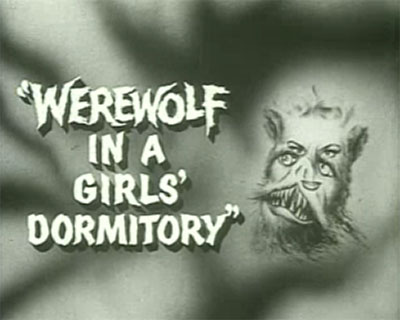
“Werewolf in a Girls’ Dormitory” is a horror movie directed by Paolo Heusch and starring Barbara Lass, Carl Schell, and Curt Lowens. The movie was released in 1962 and is also known as “Lycanthropus” and “Monster Among the Girls.”

The story is set in a remote girls’ boarding school in the Italian countryside, which is plagued by a series of brutal murders. The local police are baffled by the murders, and tensions rise when a new teacher, Dr. Julian Olcott (Carl Schell), arrives at the school. Dr. Olcott has a mysterious past, and some of the students suspect that he may be responsible for the killings.

As the murders continue, the students become increasingly frightened and paranoid. They suspect one another and even start to turn on Dr. Olcott, who they believe is hiding something. But as the full moon approaches, it becomes clear that there is a real werewolf on the loose, and the students must band together to survive the night.

In the end, the identity of the werewolf is revealed, and the surviving characters are left to pick up the pieces of their shattered lives. “Werewolf in a Girls’ Dormitory” is a classic example of 1960s horror, with Gothic atmosphere, suspenseful music, and over-the-top acting. It has gained a cult following over the years and is a must-see for fans of classic horror cinema.

Directors:
Paolo Heusch

Writer:
Ernesto Gastaldi

Stars:
Barbara Lass, Carl Schell, Curt Lowens

Rate this Movie

House on Haunted Hill (1959)

4.75/5 (4)

“House on Haunted Hill” is a horror film directed by William Castle in 1959. The film stars Vincent Price as eccentric millionaire Frederick Loren, who invites five guests to spend the night in a supposedly haunted house in exchange for $10,000 each.

The guests, including a test pilot, a newspaper columnist, and the house’s owner, arrive at the house and are met by Loren and his wife Annabelle. As the night progresses, strange and terrifying events occur, including a severed head that appears out of nowhere, a ghostly apparition, and the discovery of a pit filled with acid.

As tensions rise, it becomes clear that one of the guests is trying to scare the others and possibly even murder them. In the end, the identity of the villain is revealed, and a dramatic confrontation takes place, resulting in a thrilling climax.

“House on Haunted Hill” is known for its use of gimmicks, such as “Emergo,” a skeleton that would fly over the audience during certain scenes in theaters. The film has since become a cult classic and is often cited as an influential horror film of its time.

Directors:
William Castle

Writer:
Robb White

Stars:
Vincent PriceCarol OhmartRichard Long

Rate this Movie

The Testament of Dr. Mabuse (1933)

4/5 (1)

“The Testament of Dr. Mabuse” is a German film directed by Fritz Lang and released in 1933. The movie is a sequel to Lang’s earlier work, “Dr. Mabuse the Gambler,” and it follows the story of a criminal mastermind named Dr. Mabuse who has been institutionalized in an insane asylum.

At the beginning of the film, a group of criminals begins to carry out a series of bizarre crimes that seem to be inspired by Dr. Mabuse’s writings. The police are at a loss to explain the crimes, and it is suggested that Dr. Mabuse may be communicating with the criminals from his asylum.

Meanwhile, a new criminal mastermind, known only as “The Great Unknown,” emerges and begins to carry out his own elaborate schemes. The police begin to suspect that The Great Unknown is somehow connected to Dr. Mabuse and his writings.

As the film progresses, it becomes clear that Dr. Mabuse is indeed communicating with the criminals and that he is behind many of the crimes. He has been using his writings to control and manipulate them from his cell.

In the end, the police manage to capture Dr. Mabuse, but not before he has caused chaos and destruction throughout the city. The film ends with a warning that the forces of evil are still at work and that the struggle between good and evil will continue.

Directors:
Fritz Lang

Writer:
Norbert Jacques, Fritz Lang, René Sti

Stars:
Rudolf Klein-Rogge, Otto Wernicke, Thomy Bourdelle

Rate this Movie

Midnight Manhunt (1945)

4/5 (2)

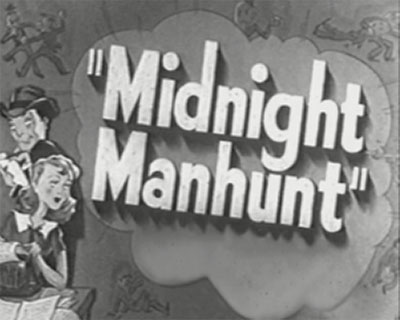
“Midnight Manhunt” is a mystery-thriller film directed by William C. Thomas and released in 1945. The movie follows the story of a manhunt for a killer who is on the loose in a large city.

The film’s protagonist is James A. Brooks (William Gargan), a private detective who is hired to investigate the murder of a famous actor. The police believe that the actor’s assistant, Steve Randall (George Zucco), is the killer and are actively searching for him.

As James investigates the case, he discovers that there may be more to the story than what the police initially believed. He begins to suspect that the killer may be someone else entirely and sets out to uncover the truth.

As the manhunt for Steve Randall intensifies, James races against the clock to solve the case before an innocent man is wrongfully convicted. Along the way, he encounters a cast of suspicious characters, including a shady nightclub owner and a femme fatale.

In the end, James is able to solve the case and catch the real killer, who is revealed to be someone unexpected. The film ends with James triumphant and the city safe once again.

Overall, “Midnight Manhunt” is a classic whodunit-style thriller that keeps the audience guessing until the very end. The film features a strong performance by William Gargan as the determined detective and a cast of memorable characters.

Directors:
William C. Thomas

Writer:
David Lang

Stars:
William Gargan, Ann Savage, Leo Gorcey

Rate this Movie